

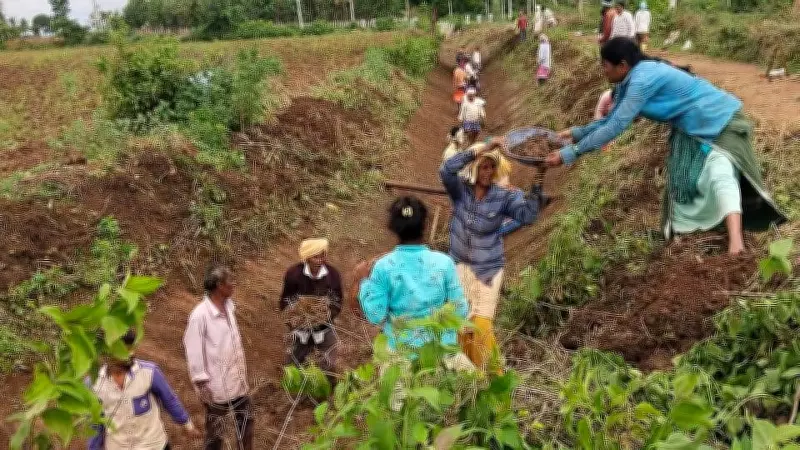
MGNREGS Work Shortage Drives North Karnataka Laborers to Urban Centers
A critical shortage of employment opportunities under the Mahatma Gandhi National Rural Employment Guarantee Scheme (MGNREGS) in North Karnataka is compelling a significant number of rural workers to leave their villages and seek jobs in major cities. This migration trend underscores deepening rural distress and economic challenges in the region.
Rural Exodus Amidst Employment Crunch
Reports indicate that many districts in North Karnataka, including Belagavi, Vijayapura, and Kalaburagi, are experiencing a sharp decline in MGNREGS work availability. The scheme, which guarantees 100 days of wage employment per year to rural households, has failed to meet demand, leaving laborers with few local options. As a result, workers are migrating to urban hubs such as Bengaluru, Hyderabad, and Pune in search of better livelihoods.
This situation highlights a growing crisis in rural employment, with families struggling to sustain themselves amid limited agricultural and non-farm work. The migration is not only affecting the local economy but also putting pressure on urban infrastructure and services.

Impact on Communities and Economy
The lack of MGNREGS work has far-reaching consequences:
- Increased financial hardship for rural households, leading to debt and reduced spending on essentials like education and healthcare.
- Disruption of social structures as families split, with some members moving to cities while others stay behind.
- Strain on urban areas, where incoming workers often face challenges such as high living costs and competition for low-skilled jobs.
Experts point to factors like delayed fund allocations, administrative bottlenecks, and seasonal variations in work demand as key reasons behind the MGNREGS shortfall. This has exacerbated existing economic pressures in North Karnataka, a region already grappling with issues like water scarcity and crop failures.
Broader Implications for Rural Development
The migration trend raises concerns about the effectiveness of rural employment schemes in addressing poverty and inequality. While MGNREGS aims to provide a safety net, its implementation gaps are forcing workers to seek alternatives in cities, often in informal sectors with unstable incomes.
Addressing this issue requires urgent policy interventions, including improved fund flow, better planning of work projects, and enhanced monitoring to ensure MGNREGS meets its objectives. Without such measures, rural-urban migration is likely to intensify, with long-term impacts on both rural and urban economies in Karnataka and beyond.






