NCP at a Crossroads, Maratha Politics in Flux: Does BJP Stand to Gain?
Ajit Pawar's tragic death in an air crash has sent shockwaves through the Pawar clan, convulsing the Nationalist Congress Party (NCP) and leaving the Maratha community, a key support base, feeling suddenly orphaned. This event has plunged Maharashtra into a new political phase, ripe with uncertainties and potential realignments.
A Swift Transition and Divided Reactions
When Sunetra Pawar took the oath as Maharashtra's Deputy Chief Minister on January 31, succeeding her husband just three days after his demise, it marked a rapid and controversial transition. In Godawali, a village in Satara district with an 80% Maratha population and traditional NCP stronghold, reactions were mixed. A daughter-in-law in a Maratha-Kunbi family praised Sunetra, stating she was the best person to carry forward Ajit's work and might address women's concerns as the first female Deputy CM. However, her mother-in-law criticized the unseemly haste of the swearing-in, suggesting they should have waited for the customary 13 days. Her politically savvy husband countered, arguing that a political vacuum cannot be left for long, highlighting the urgency in such situations.
Leadership Vacuum and Maratha Insecurity
The Marathas, who constitute an estimated 35% of Maharashtra's population and have long underpinned the NCP, now sense a leadership void with Ajit's death and Sharad Pawar's advanced age of 85. This community, historically at the helm since the state's formation in 1960, feels insecure. The role of the NCP's non-Maratha quartet—Praful Patel, Chagan Bhujbal, Sunil Tatkare, and Dhananjay Munde—in swiftly installing Sunetra before Sharad Pawar could intervene has added to the turmoil. Some speculate that Shiv Sena leader and Deputy CM Eknath Shinde, also a Maratha, could gain from this, while others see a potential return to Sharad Pawar or a renewed look at the Congress if it plays its cards right.

Internal Conflicts and Unanswered Questions
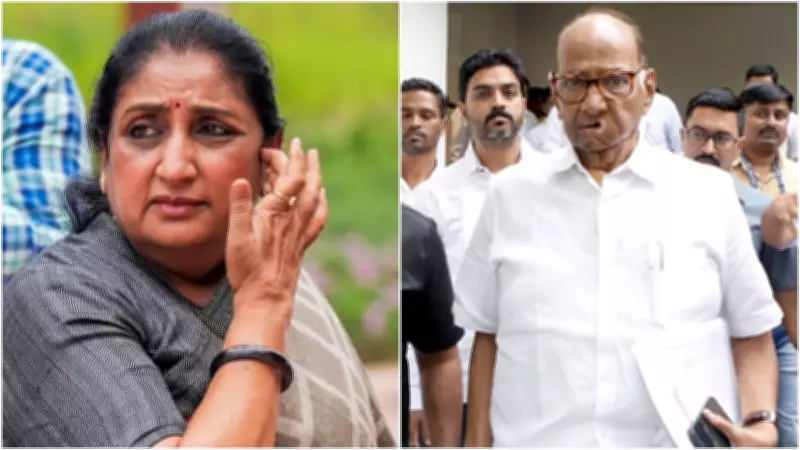
Sharad Pawar has publicly expressed that he was neither consulted nor informed about Sunetra's appointment, and neither he nor his daughter, Baramati MP Supriya Sule, attended the swearing-in ceremony. This has led to visible rifts, with Sunetra and her sons skipping a meeting called by Pawar senior to discuss the future. After the oath, Sharad Pawar declared the reunification process discontinued, further weakening the NCP. A critical unanswered question remains: if the two NCP factions had merged, would they have sided with the BJP-led Mahayuti in Maharashtra and the NDA in Delhi, as Ajit Pawar advocated, or stayed with the Opposition INDIA bloc, which includes Pawar's NCP (SP)?
BJP's Strategic Advantage
In this fluid scenario, the BJP appears poised to gain. The Devendra Fadnavis-led coalition has welcomed Sunetra's induction, with the Chief Minister retaining key portfolios like Finance and Planning that her husband held. Sunetra may also help Fadnavis manage pressures from Eknath Shinde, who has been demanding rotational leadership of the cash-rich Brihanmumbai Municipal Corporation (BMC). The ground voices from villages like Godawali and recent developments in Baramati and Mumbai indicate a situation loaded with new possibilities, which the BJP is likely to exploit skillfully.
Conclusion: A Political Landscape in Transition
The NCP's weakened state, the halted reunification efforts, and the Maratha community's search for leadership create a volatile political environment in Maharashtra. As Sharad Pawar navigates his next moves and Sunetra settles into her role, the BJP stands to benefit from this instability, leveraging it to strengthen its position in the state. The coming months will be crucial in determining how these dynamics unfold and reshape Maharashtra's political future.