The ongoing pen-down strike by National Health Mission (NHM) employees in Punjab has intensified, with union leaders announcing a major escalation. Despite the state government issuing a sanction letter for November salaries, the employees have refused to back down, planning to gherao the NHM directorate office in Chandigarh on December 4.
Strike Hardens as Assurances Fail to Convince
On the second day of their strike, NHM employees across Punjab remained steadfast in their agitation. Officials from the NHM directorate in Chandigarh contacted union leaders, urging them to call off the protest. However, the employees flatly refused, stating they would return to work only after their pending salaries for October and November are physically credited to their bank accounts.
The core issue is the non-payment of salaries to nearly 9,000 NHM employees in the state. While the Punjab government has issued a sanction letter approving a budget of Rs 44.85 crore for November salaries, the workers remain deeply skeptical. Union members pointed out that a similar letter was issued for October, but the salaries never materialized.
"We cannot trust assurances without actual funds credited to our accounts," said union representatives, highlighting the breach of trust. The strike intensified on Tuesday as employees engaged in a complete pen-down after marking attendance and prepared to submit memorandums to civil surgeons in all districts to highlight the crisis.
December 4 Gherao and Allegations of Discrimination
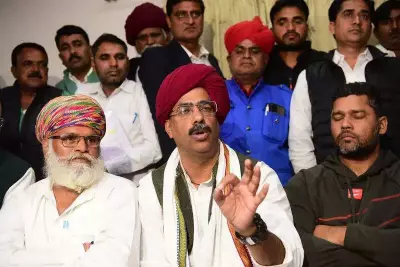
Instead of withdrawing, the NHM Employees Union Punjab has decided to amplify their protest. Sukhjeet Kamboj, a state committee member, announced that employees will gherao the office of NHM project director Ghanshyam Thori, who is also the Special Secretary of Health and Family Welfare, on December 4.
The protest will be held at Prayas Bhawan in Sector 38, Chandigarh, which houses the NHM Punjab office. Employees from multiple districts will converge at a common point in Mohali or Chandigarh and march to the location. The union is finalizing the exact route for the demonstration.
During the agitation, employees have also raised serious allegations of discriminatory practices within the department. Kamboj alleged that around 100 NHM staff posted at the Prayas Bhawan headquarters receive their salaries regularly every month, while the rest of the workforce faces endless delays.
"Mohali is barely five kilometres from Prayas Bhawan, yet the budget seems to finish after paying only those posted at the directorate," Kamboj claimed. "This is done to avoid protests at the headquarters while others suffer."
Broader Crisis: ASHA Workers and Systemic Hurdles
The salary crisis extends beyond the striking employees. Although Accredited Social Health Activist (ASHA) workers are not part of the current strike, they are also facing prolonged payment delays. Amarjeet Kaur, president of the ASHA Workers Union, stated that over 18,000 ASHAs under NHM have not received their performance-based incentives for three to six months in many districts.
ASHAs receive a fixed pay of only Rs 2,500, with the rest of their income—which totals between Rs 5,000 to Rs 10,000 monthly—dependent on immunisation, maternal health, and other assignments. The delay in these incentives severely impacts their livelihoods.
The root of the salary crisis is linked to a recent change in the fund-flow mechanism mandated by the Union government. For NHM, 60% of the salary burden is borne by the Centre and 40% by the state. The Centre now requires states to upload complete staff and salary details on the SNA-SPARSH portal, a new "just-in-time" system for all Centrally Sponsored Schemes.
This system integrates the Centre’s Public Financial Management System, the state treasury, and the RBI’s e-Kuber platform. It is designed to release funds only at the moment of actual expenditure to curb idle funds and prevent leakages. However, the transition to this real-time, transparent system has resulted in months-long salary delays for NHM employees in Punjab, pushing them towards a major confrontation in the state capital.
With the December 4 gherao planned, the stalemate between the Punjab government and its crucial NHM health workforce shows no signs of immediate resolution, threatening to disrupt health services across the state.