Odisha Government Seeks Nine-Month Extension for Mahanadi Water Tribunal
In a significant development concerning the protracted Mahanadi water dispute, the Odisha government has formally requested the Centre to grant a nine-month extension for the Mahanadi Water Disputes Tribunal. Revenue Minister Suresh Pujari announced this move on Friday, while launching a sharp critique against the previous Biju Janata Dal (BJD) government for what he described as positions that ultimately benefited the neighboring state of Chhattisgarh.
Vacancy in Tribunal Leadership Stalled Proceedings
Minister Pujari explained that the tribunal remained non-functional for a critical nine-month period due to a vacancy in the chairperson's position. Justice A M Khanwilkar resigned from the post in March 2024, and it remained vacant until Justice Bela M Trivedi's appointment in December 2024. "Since the tribunal was non-functional for nine months, we have requested the Centre to extend its tenure by an equivalent period," Pujari stated after attending a high-level review meeting chaired by Deputy Chief Minister Kanak Vardhan Singh Deo.
The tribunal, originally constituted in March 2018, had its effective date recalculated by the Centre as December 2019, excluding previous non-functional periods. Following Odisha's earlier requests, the Centre had already extended the tribunal's tenure by two years, from April 2024 to April 2026. The tribunal's standard tenure is two and a half years, extendable only once up to five years.

Accusations Against Previous BJD Government
Pujari presented a scathing assessment of the previous BJD government's handling of the Mahanadi dispute during its 24-year tenure. "The present government inherited this dispute from the previous regime, which did little during its 24 years in power to safeguard Odisha's interests," he asserted. The minister specifically alleged that between 2014 and 2022, Chhattisgarh constructed over 500 barrages while the then BJD government "failed to raise meaningful objections" and dismissed subsequent protests as mere "lip service."
The revenue minister further criticized what he characterized as the previous administration's weakening of Odisha's case before the tribunal. "In six years, only one of the 21 listed witnesses was examined, and the state did not even submit an affidavit," Pujari revealed, emphasizing that the current administration is actively "exploring the best possible course to protect Odisha's rights."
Historical Statements Haunt Current Proceedings
Pujari highlighted a particularly damaging development: statements made by former water resources ministers are now being used by Chhattisgarh before the tribunal. He specifically referenced a 2010 assembly statement where then Parliamentary Affairs Minister Raghunath Mohanty, speaking on behalf of then Chief Minister Naveen Patnaik (who held the water resources portfolio), declared that Chhattisgarh's barrages would have no adverse impact on Odisha. These historical declarations are now complicating Odisha's current legal position in the dispute.
BJD Counters Allegations
Responding to the allegations, BJD spokesperson Lenin Mohanty offered a robust defense of his party's record. He countered that despite the presence of "triple-engine" governments at the Centre, in Odisha, and in Chhattisgarh, "commitment to Odisha's interests is lacking." Mohanty argued that the present government should "take responsibility instead of passing the buck" and dismissed the allegations as "laughable."
Reiterating the party's stance, BJD vice-president Sanjay Dasburma affirmed the party's unwavering commitment to protecting the Mahanadi River. Dasburma confirmed that the BJD had agreed to participate in an all-party meeting on the water dispute that was scheduled for Friday but was subsequently cancelled by the government without any cited reason. "There will be no compromise on safeguarding Odisha's interests or the flow of the Mahanadi," he insisted.

Government's Strategic Shift
In a notable administrative shift, the government cancelled the planned all-party meeting on Friday and instead convened a high-level review meeting chaired by the deputy chief minister. This move suggests a strategic recalibration in the government's approach to handling the sensitive and complex water dispute, opting for internal review before broader political consultations.
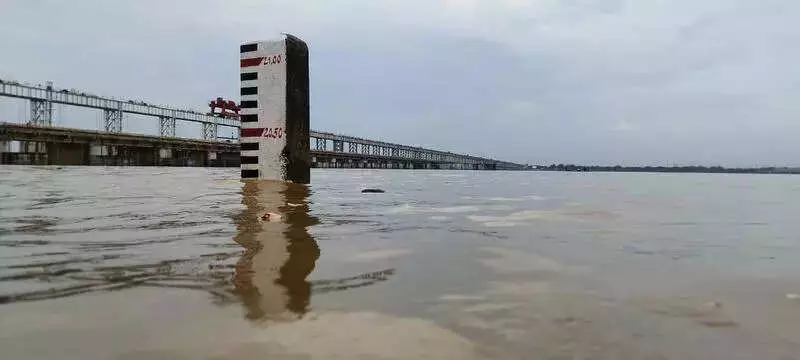
The Mahanadi water dispute represents one of the most significant inter-state water conflicts in eastern India, with profound implications for agriculture, drinking water supply, and industrial development in both Odisha and Chhattisgarh. The current government's aggressive posture and the extended timeline for the tribunal's proceedings indicate that a resolution to this long-standing issue may still be some distance away, with both legal arguments and political rhetoric continuing to shape the narrative.