

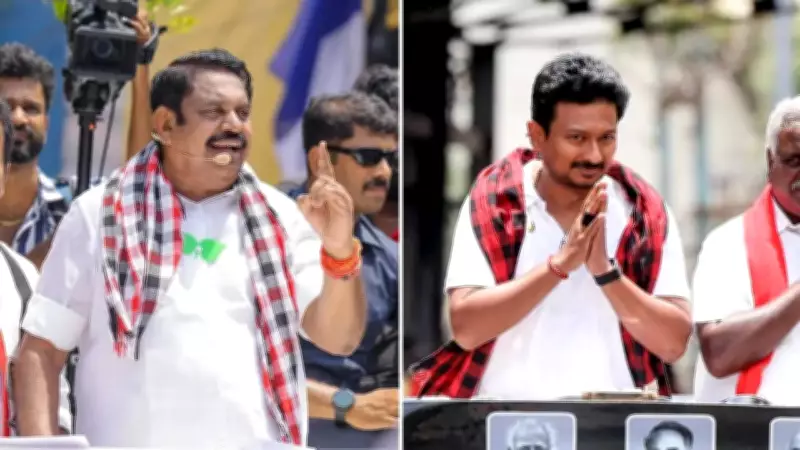
AIADMK Chief Palaniswami Fires Back at DMK's 'Slave' Allegation in Heated Political Exchange
In a sharp political confrontation, AIADMK general secretary Edappadi K Palaniswami launched a forceful counterattack on Sunday against Tamil Nadu deputy chief minister Udhayanidhi Stalin over his controversial "slave" remark. The verbal duel has intensified the already charged atmosphere ahead of the crucial state elections.
Palaniswami's Strong Rebuttal to DMK Criticism
Palaniswami categorically rejected the derogatory label, stating emphatically: "Neither I nor my party cadres are slaves. While DMK may be a sewer, AIADMK cadres are proud followers of MG Ramachandran and will never accept such labels." He further asserted that the "DMK is unable to accept the strength of the AIADMK," suggesting that criticism from the ruling party stems from their inability to acknowledge opposition strength.
The AIADMK leader accused the DMK leadership of focusing excessively on personal attacks rather than substantive governance issues. "MK Stalin and Udhayanidhi Stalin are focusing only on criticising me in their campaigns, rather than speaking about people's welfare or government schemes," Palaniswami remarked, highlighting what he perceives as the DMK's diversion from public service priorities.

Background of the Controversial 'Slave Team' Remark
The exchange originated from Udhayanidhi Stalin's characterization of the AIADMK-led NDA alliance as a "slave team" during recent campaign rhetoric. The deputy chief minister had framed the upcoming election as "between the Delhi team and the Tamil Nadu team," positioning the DMK as representing state interests against what he portrayed as AIADMK's subservience to central authority.
Udhayanidhi specifically targeted Palaniswami's record on the NEET examination issue, stating: "The NEET examination was implemented during the AIADMK regime under his leadership. He failed to raise his voice for Tamil Nadu's welfare. He is subservient to the Central Government." This criticism touches on a sensitive educational policy matter that has significant political resonance in Tamil Nadu.
Election Context and Political Landscape
Tamil Nadu is scheduled to go to polls in a single phase on April 23, with vote counting set for May 4. The electoral battle is primarily expected between two major alliances:
- The DMK-led Secular Progressive Alliance
- The NDA coalition led by AIADMK
Adding an intriguing third dimension to the contest is actor-turned-politician Vijay, who is poised to make his electoral debut with his newly formed party, Tamilaga Vettri Kazhagam (TVK). This development introduces additional complexity to what was already shaping up as a fiercely competitive election.
Strategic Implications of the Exchange
Political analysts suggest this exchange represents more than mere rhetoric. Palaniswami's invocation of MG Ramachandran's legacy serves to reinforce AIADMK's historical identity and connect with traditional voter bases who revere the former chief minister. Meanwhile, the DMK's framing of the election as a contest between "Delhi" and "Tamil Nadu" teams attempts to position itself as the authentic defender of state interests.
The NEET issue remains particularly contentious, with both parties seeking to leverage it for political advantage. While Udhayanidhi criticizes Palaniswami's handling of the matter during AIADMK's tenure, Palaniswami's response emphasizes party strength and independence from central influence.
As campaigning intensifies in the coming weeks, such exchanges are likely to become more frequent and heated. The political discourse appears to be shifting toward personal attacks and identity politics, potentially overshadowing substantive policy discussions about governance, development, and public welfare.
The outcome of this electoral battle will significantly influence Tamil Nadu's political trajectory for the next five years, with implications for both regional dynamics and national political equations.






