

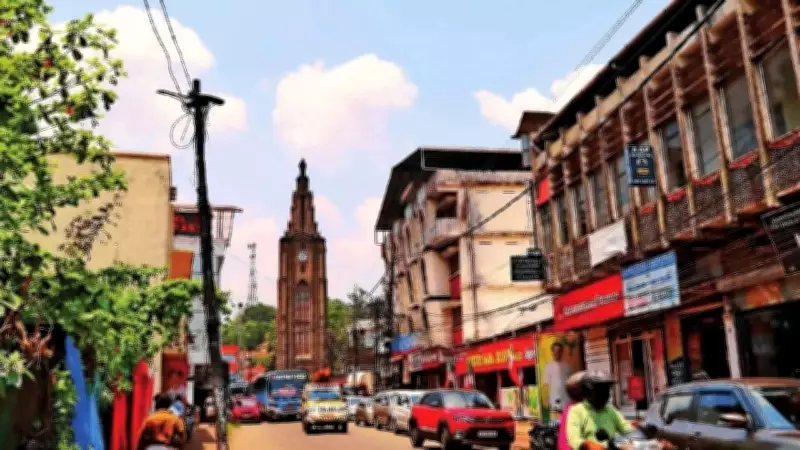
Pala's Political Transformation: From Pensioners' Paradise to Electoral Battleground
Pala, once celebrated as a tranquil pensioners' paradise nestled near scenic hill stations, has undergone a remarkable transformation. Known as the heartland of Syrian Christian culture and often called the 'Mini Vatican', this region's fertile land historically supported prosperous rubber plantations. The wealth generated from rubber brought early modernity to Pala, with imported cars, western music, and new food habits appearing well before many other small towns caught up. More recently, Pala has reinvented itself as a significant educational hub, home to several prominent entrance coaching centers that attract students from across Kerala.
The End of a Political Dynasty
For over five decades, Pala's political identity was inextricably tied to one man: K M Mani. From the constituency's formation in 1967 until his death in 2019, Mani won an astonishing twelve consecutive elections, making Pala his unassailable fortress. His passing created a political vacuum that fundamentally changed the region's electoral dynamics. In the 2019 by-election that followed Mani's death, Mani C Kappan, contesting with LDF backing, broke the KC(M) stranglehold that had lasted generations. Kappan then retained the seat in 2021, this time under the UDF banner.
The defeat of Mani's son, Jose K Mani, in 2021—by a substantial margin of 15,378 votes—represented a significant blow to the party's legacy, though KC(M) managed to retain some relevance by remaining within the ruling LDF coalition. This marked the end of an era and set the stage for Pala's new political reality.

A New Triangular Contest Emerges
As another election approaches, Pala finds itself navigating unfamiliar territory: a genuine triangular contest with BJP's Shone George adding a compelling new dimension to what was traditionally a bipolar political landscape. The BJP had signaled its growing strength in Pala as far back as 2016, when its candidate N Hari polled an impressive 24,821 votes. Shone George has built strategically on that foundation and is actively working to expand BJP's reach in this historically Christian-dominated constituency.
Shone George has established a significant lead in campaign activities and ground mobilization. However, the church's strong opposition to the Foreign Contribution (Regulation) Amendment (FCRA) Bill, 2026 has emerged as a potential setback for his campaign. The Pala diocese has openly raised concerns with the BJP-led central government, introducing considerable uncertainty over the Catholic vote in the constituency, which could potentially swing in any direction.
The Contenders and Their Strategies
Jose K Mani remains a formidable contender despite his 2021 defeat. His extensive experience, well-established organizational network, and the urgent need to reclaim lost ground keep him firmly in the contest. For Jose K Mani, this election represents a crucial opportunity for redemption. He is campaigning vigorously on his track record as an MP—particularly highlighting his role in transforming Pala into an educational hub—while drawing attention to what he describes as seven years of stalled development under the incumbent.
Kappan, contesting as a UDF independent, brings his own compelling narrative to the race. He first stood in Pala in 2006, losing to K M Mani in his first three attempts before finally winning the 2019 by-election following Mani's death. His 2021 victory further cemented his position as a serious political force. Kappan's primary campaign weapon this time is anti-incumbency sentiment—though whether that sentiment is strong enough to deliver a hat-trick victory remains uncertain.
Ground Realities and Voter Concerns
Among Pala's voters, concerns remain firmly grounded in everyday issues rather than purely ideological considerations. Eby J Jose notes that a lack of visible development is evident throughout the constituency, pointing specifically to the economic distress caused by the cooperative banking crisis and declining rubber prices that have affected many families.

Alex Menamparambil, a retired bank employee who now focuses on rubber farming, acknowledges that the sector's downturn cannot be pinned on any single government, but stresses the urgent need for its revival to restore economic stability to the region.
The UDF is countering Jose K Mani's development narrative by highlighting their own developmental work in rural areas, while also arguing that Jose K Mani's presence within the ruling LDF coalition actually hampered progress in the constituency during his tenure.
The Statistical Landscape and Electoral Mathematics
Local body poll results offer Kappan some statistical comfort—the UDF controls the Pala municipality and seven panchayats, compared to five for the LDF. N Hari, who set BJP's vote record in Pala in 2016, expresses confidence about the party's current trajectory. "The election rally in Pala is proof of how far we've grown. Youngsters are rallying behind Shone, and there is a clear Modi effect even among minority voters," he observed.
Yet in a tight three-way race where Shone George's vote share could prove decisive, numbers alone rarely tell the full story. Pala's political equation in 2024 has grown far too complex for simple predictions, with traditional loyalties, development concerns, religious considerations, and anti-incumbency sentiment all playing significant roles in shaping voter decisions.
What was once K M Mani's impregnable fortress has become Kerala's most intriguing political laboratory, where three distinct political forces are testing their strength in a constituency that reflects both Kerala's political traditions and its emerging realities.





