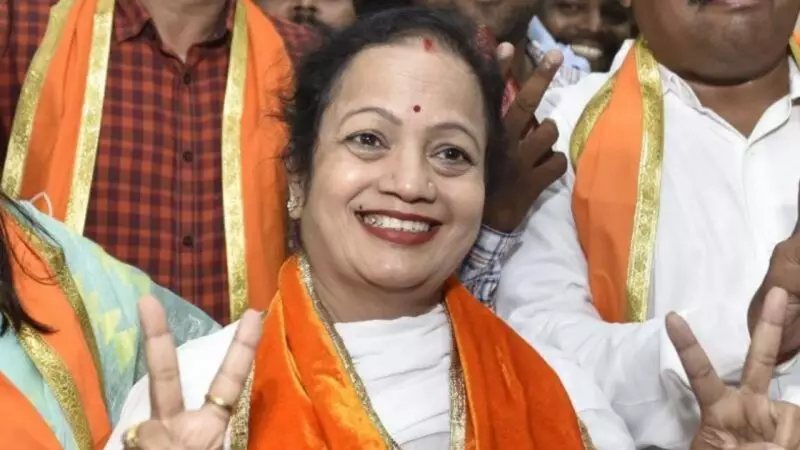
In a significant political development, former Mumbai Mayor Kishori Pednekar was elected as the leader of the Shiv Sena (UBT) corporators on Wednesday. This elevation follows her recent victory in the Mumbai Municipal Corporation polls from Ward No. 199, where she defeated Rupal Kusale of the Eknath Shinde-led Shiv Sena faction.
Mahayuti Alliance's Sweeping Victory in Maharashtra Civic Elections
Pednekar's appointment comes against the backdrop of a comprehensive triumph by the Bharatiya Janata Party-led Mahayuti alliance in the Maharashtra civic elections. The alliance secured control of 25 out of 29 municipal corporations, including the prestigious Brihanmumbai Municipal Corporation (BMC). This outcome effectively ended the Thackeray family's nearly three-decade-long dominance over the BMC, marking a pivotal shift in Mumbai's political landscape.
Detailed Breakdown of BMC Election Results
In the 227-member BMC, the Mahayuti alliance comfortably crossed the majority threshold of 114 seats by securing 118 seats. The BJP emerged as the single largest party with an impressive tally of 89 seats, while the Eknath Shinde-led Shiv Sena faction captured 29 seats.

The Shiv Sena (UBT), now led by Pednekar among corporators, finished with 65 seats to lead the opposition bloc. The Indian National Congress secured 24 seats, while the All India Majlis-e-Ittehad-ul-Muslimeen (AIMIM) made notable gains with eight seats in Mumbai. The Maharashtra Navnirman Sena (MNS) obtained six seats in the corporation.
Vote Share Analysis and Alliance Performance
The electoral statistics reveal interesting patterns in voter behavior. The Shiv Sena (UBT), which contested in alliance with the MNS, polled 7,17,736 votes, representing a 13.13% vote share. The MNS contributed an additional 74,946 votes, accounting for 1.37% of the total. Meanwhile, the Congress secured 2,42,646 votes, translating to a 4.44% vote share in Mumbai.
Beyond Mumbai, the Shinde-led Shiv Sena maintained its stronghold in Thane by winning 75 out of 131 seats. In Navi Mumbai, the BJP achieved a historic milestone by capturing the civic body for the first time with 65 seats. Among smaller political parties, the Nationalist Congress Party secured three seats, the Samajwadi Party obtained two seats, and the NCP (Sharadchandra Pawar) managed to win one seat.
Overall Electoral Landscape and Voter Participation
The broader electoral picture shows that candidates from recognized political parties collectively polled 26,07,612 votes, representing 47.72% of the total 54,64,412 votes cast across the elections. Notably, 11,677 voters exercised their right to reject all candidates by opting for NOTA (None of the Above).
These results highlight a fragmented yet highly competitive civic mandate, where strategic alliances played a decisive role in shaping the final outcome of the BMC and other municipal corporations. The election underscores the evolving dynamics of urban governance in Maharashtra, with new political configurations emerging to challenge established power structures.