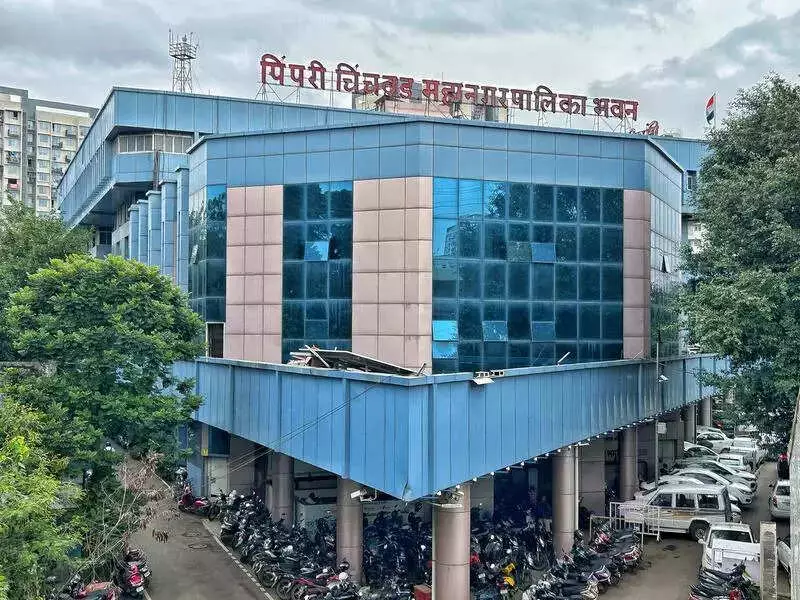
Pimpri Chinchwad, often projected as a vital growth engine for the country with its robust automobile manufacturing base and strategic proximity to the Hinjewadi IT park, presents a striking educational paradox in its recently concluded civic elections. The educational profile of its newly elected municipal representatives tells a markedly different story from the city's industrial and technological aspirations.
Educational Qualifications of Elected Corporators Reveal Surprising Trends
Data released by the Pimpri Chinchwad Municipal Corporation's election department, compiled from affidavits submitted by candidates for the January 15 election, reveals that of the 128 corporators elected, a significant 74 representatives (58%) have studied only up to Standard XII, including those who passed this level. Furthermore, 43 corporators (34%) have educational qualifications limited to Standard X, including those who completed this stage.
Professional Backgrounds Remain Limited Among Elected Representatives
The data further illustrates that except for two doctors, three engineers, and two lawyers among the elected corporators, the remaining representatives are either graduates in common academic streams or diploma holders. This composition emerges from a competitive electoral field that saw 692 candidates contesting across 32 wards in the municipal corporation.

In terms of political outcomes, the Bharatiya Janata Party secured a clear majority by winning 84 seats, while the Nationalist Congress Party stood second with 37 seats following the counting on January 16.
Persistent Village-Based Political Dominance in Urbanizing Landscape
Political activists and observers note that political dominance in Pimpri Chinchwad continues to rest firmly with areas that were once villages, where influential communities and families with specific surnames play a decisive role in candidate selection for civic elections. Over successive election cycles, political parties have consistently aligned with the preferences set by these local power centers, often regardless of their official ideological positions.
"It is true that though the city witnessed a rise in the number of people living in housing societies and large residential towers, local politics in Pimpri Chinchwad remains dominated by village ties and family relations, particularly in areas that were recognized as villages before the formation of the municipal corporation," noted activist Vijay Kumbhar.
Lack of Educated Participation and Perception Challenges
Kumbhar further identified a lack of interest among educated residents as a key contributing factor to this educational disparity in political representation. "There persists a prevailing sentiment among educated individuals that politics constitutes a dirty game they should avoid entering. Consequently, our local political landscape becomes dominated by caste considerations and financial influence rather than development-oriented agendas," he explained.
Transparency Measures Show Limited Impact on Voter Behavior
The Pimpri Chinchwad Municipal Corporation's election department implemented transparency measures during the voting process, installing banners at polling stations across the city that displayed candidate details including educational qualifications, assets, and criminal records. However, political analysts observed that this initiative had minimal impact on actual voting patterns and outcomes.
Political analyst Parimal Maya Sudharakar noted that educational qualification never became a significant part of the electoral discourse. "This aspect remained absent from campaign narratives as no political party emphasized it, resulting in little to no impact on voting decisions," he stated.
Familiarity Over Qualifications in Voter Decision-Making
Sudharakar explained that most electoral aspirants began their campaigning well before the official election announcement, allowing voters to become familiar with candidates through their names and faces rather than their educational backgrounds. This personal familiarity often outweighed formal qualifications in influencing voter choices.

Nevertheless, Sudharakar highlighted the paradoxical nature of a city renowned for its economic growth and strong educational ecosystem electing representatives whose educational profiles don't necessarily reflect that institutional background. This disconnect between Pimpri Chinchwad's progressive urban identity and the educational composition of its political leadership raises important questions about representation and governance in rapidly developing urban centers.