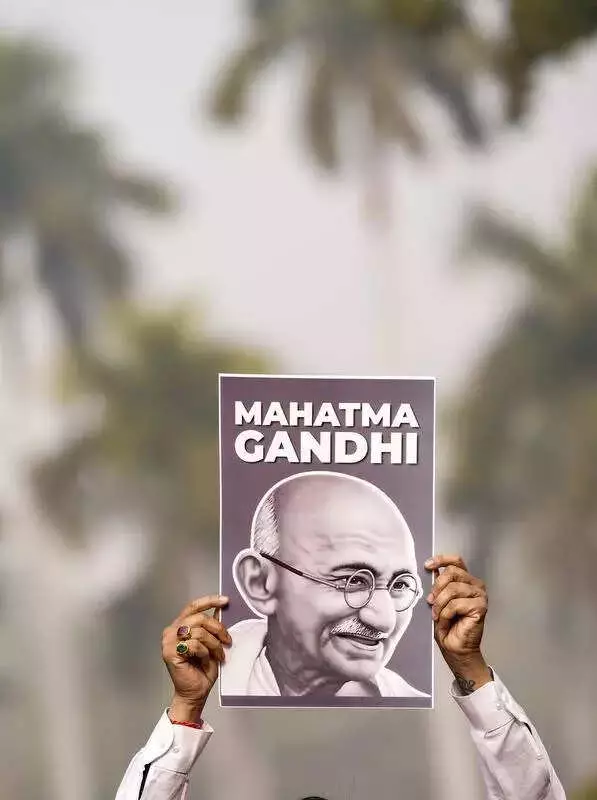
A heated debate in the Punjab legislative assembly over the Mahatma Gandhi National Rural Employment Guarantee Act (MGNREGA) has escalated into a significant political confrontation, with the ruling Aam Aadmi Party (AAP) accused of deliberately morphing a class-based economic issue into a volatile caste-centric narrative. The party's leaders have aggressively projected recent central government actions concerning the scheme as an "anti-Dalit step," a move seen as a direct counter to the Bharatiya Janata Party's (BJP) concerted efforts to woo Dalit voters in the state.
The Political Narrative and Dalit Voter Calculus
This strategic narrative push coincides with the BJP's declared intention to contest the 2027 Punjab elections independently, aiming to expand its social base. Historically, the Scheduled Castes (SCs) have constituted a strong vote bank for the Congress, the principal opposition party in the state. SCs comprise approximately one-third of Punjab's total population, making them an electorally crucial demographic. The AAP's attempt to 'play the Dalit card' is viewed as an effort to outflank Congress on its traditional turf while simultaneously blunting the BJP's outreach.
The political tussle intensified last August when the Punjab government, led by AAP, ordered a crackdown on BJP's village outreach camps. These camps, ostensibly held to "spread awareness," were also enrolling eligible beneficiaries for central welfare schemes. The state government and Punjab Police alleged that personal data was collected in violation of the law. The outreach strategically targeted overlapping caste and class segments, with SCs forming a major portion of the economically weaker sections.

MGNREGA Data and the Core of the Controversy
The centrality of SCs to MGNREGA in Punjab is underscored by official data. According to figures maintained by the Union Ministry of Rural Development, SC workers account for 70.56% of the total 14.99 lakh active MGNREGA workers in the state. Broader statistics reveal a total of 20.21 lakh job cards issued, 30.15 lakh total workers, and 11.91 lakh active job cards. This heavy reliance makes any perceived threat to the scheme a sensitive issue for the community.
In the assembly, AAP legislators extended their attack beyond the BJP to include the Shiromani Akali Dal (SAD), claiming its reluctance to oppose the related VB-GRMG Bill indicated a search for alliance with the 'saffron party.' However, the Sukhbir Singh Badal-led SAD has strongly opposed replacing MGNREGA both inside and outside Parliament. The Akali Dal has historically drawn support from sections of SC Sikhs, bolstering its base through welfare programmes like the Atta-Dal scheme.
Internal Criticism and Electoral Backdrop
Within the debate, Congress MLA Aruna Chaudhary, who hails from an SC community, sought to "correct" the ruling party's narrative. She emphasized that MGNREGA was designed for all poor people, irrespective of caste. Despite this, political rhetoric often outweighs factual corrections in shaping public perception.
The AAP government faces mounting scrutiny on multiple fronts. While the party secured a cross-caste mandate in the 2022 assembly elections, its performance is now under question. Its vote share plummeted from 42% in the 2022 assembly polls to 26% in the recent parliamentary elections, though the promise of 300 free power units remained a popular measure. Currently, the government is grappling with criticism from farm groups and faced significant backlash over its now-withdrawn land pooling policy, causing adverse publicity among the agriculturally pivotal community.
As the 2027 elections loom, the battle over MGNREGA in Punjab has become a microcosm of the larger struggle for the Dalit vote, with each party—AAP, BJP, Congress, and SAD—maneuvering to claim the mantle of the community's true protector.