

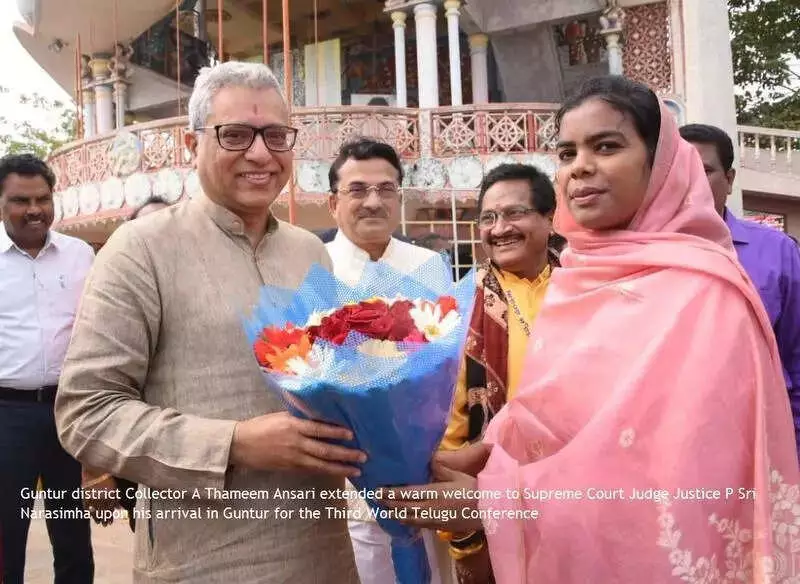
In a significant push for linguistic pride and administrative accessibility, Supreme Court judge Justice Pamidighantam Sri Narasimha emphasized the profound role of language beyond mere communication. Speaking on Saturday, he declared language a fundamental force that shapes cultural identity and cognitive thought processes.
A Call for Telugu in Official Spaces
Justice Narasimha stressed the urgent need for the wider adoption of Telugu in official administration. He made a concrete recommendation, stating that court proceedings up to the district level should be conducted in Telugu wherever possible. This move, he implied, would bring the judiciary closer to the people and uphold the dignity of the regional language.
He delivered these remarks after inaugurating the 3rd World Telugu Mahasabha (World Telugu Conference) in Guntur. The inaugural session was a culturally rich affair, commencing with the rendering of Annamayya Kirtans. The event saw the presence of notable dignitaries including Vishwayogi Vishwamji, Andhra Pradesh assembly speaker Chintakayala Ayyannapatrudu, and Guntur mayor Kovelamudi Ravindra.

Celebrating Telugu Heritage and History
The conference featured a dedicated Ramoji Rao handicrafts pavilion set up near the main stage. This exhibition served as a window into the glorious past of the Telugu people, displaying ancient Telugu manuscripts, old coins, and traditional Telugu cuisine. Presiding over the conference, Andhra Saraswata Parishad president Ghazal Srinivas highlighted that Telugu boasts a history spanning nearly 2,000 years. He paid homage to the foundational contributions of classical poets Nannayya, Tikkana, and Errana in sculpting the language.
The evening schedule included the Andhra Sri Purna Kumbh Awards ceremony, which was to be attended by Odisha governor Kambhampati Haribabu. Other prominent figures like AP high court judge Justice CH Manavendranath Roy, former MLA Mandali Buddha Prasad, Vishwa Hindi Parishad member Yarlagadda Lakshmi Prasad, and MP Daggubati Purandeswari were slated to participate in various sessions of the mahasabha.
Focus on Mother Tongue Education and Legislative Action
The discussions at the conference extended beyond culture into policy. Former CBI joint director Lakshminarayana pointed to the National Education Policy (NEP), which emphasizes education in the mother tongue at the primary level. He noted that strong subject knowledge, often best imparted in one's native language, is crucial for unlocking career opportunities. He urged governments and public representatives to prioritize strengthening mother-tongue education systems.
Echoing the concern for the language's future, Speaker Ayyannapatrudu raised an alarm about the declining use of Telugu, even in rural heartlands. He stressed the necessity for the state legislature to discuss and enact concrete measures to protect and promote the Telugu language, ensuring its vitality for generations to come.






