The political landscape of Ulhasnagar has been thrown into turmoil as the long-standing alliance between the Shiv Sena and the Bharatiya Janata Party (BJP) has shattered for the upcoming municipal elections. This rupture has set the stage for a fiercely competitive and unpredictable contest, marked by dramatic last-minute defections and strategic gambits that are redrawing traditional political boundaries in the city.
A Fractured Alliance Triggers a Political Exodus
The situation escalated significantly during the nomination process after the Shiv Sena decided to go it alone by forging a local alliance with Team Omie Kalani (TOK) and the SAI Party. This move directly challenged the BJP in its traditional Sindhi-dominated strongholds, where the new allies are considered influential.
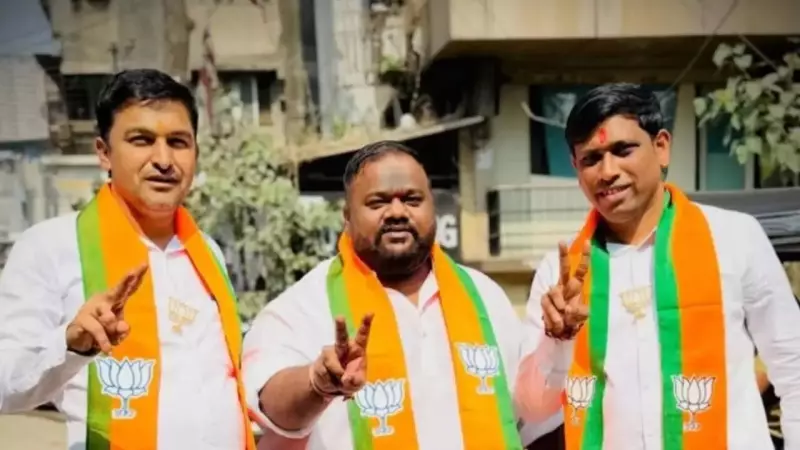
In a swift and damaging countermove, the BJP capitalized on the discontent within the Shiv Sena ranks. Several Sena aspirants who were denied tickets switched sides at the eleventh hour, filing their nominations as BJP candidates. The most significant blow came on Tuesday, the final day for nominations, when Shiv Sena’s Yuva Sena city president, Bala Shrikhande, and party office-bearer Keshav Ovelekar, abruptly quit the party. Both leaders submitted their nomination papers as BJP candidates from different wards under Panel No. 1.

They were not alone. Other prominent Shiv Sena figures also crossed over, including Surekha Awhad (Panel No. 4), and Sandeep Dongre and Sunita Ghage (Panel No. 13), all now contesting on BJP tickets. This exodus is seen as a major erosion of the Shiv Sena's organizational muscle in Ulhasnagar.
Strategic Battles in Marathi and Sindhi Strongholds
The electoral history of Ulhasnagar has largely seen the Shiv Sena and BJP contest together, with the BJP holding sway in Sindhi-majority areas and the Sena maintaining its base in Marathi-dominated localities. The current split has turned this equation on its head.
By aligning with TOK and SAI, the Shiv Sena is now making a direct foray into the BJP's Sindhi bastions. Conversely, the BJP's strategy of offering tickets to disgruntled Sena leaders in Marathi-dominated areas is a clear attempt to weaken its former ally at its core and make inroads into Sena territory.
Despite its aggressive poaching, the BJP's campaign was not without internal surprises. The party dropped two former sitting corporators, Dr Prakash Nathani and Rekha Thakur, at the last moment, opting for new faces instead. Adding to the intrigue, the BJP initially issued AB forms to two candidates—Rakesh Pathak and Juhi Khuslani—from the same ward, allowing both to file nominations before later declaring Khuslani as the official candidate.
A Multi-Cornered Contest Takes Shape
The political field in Ulhasnagar is now crowded and complex. Apart from the now-separate Shiv Sena and BJP, the third Mahayuti alliance partner, the NCP (Ajit Pawar group), is also contesting independently on all panels. The Maharashtra Navnirman Sena (MNS) and Shiv Sena (UBT) are fighting in an alliance, while the Congress has fielded its candidates separately. This multi-polar contest ensures that no single party can take any vote bank for granted.
The final day of nominations has fundamentally altered political equations in Ulhasnagar. What was once a managed alliance has exploded into a free-for-all, where local loyalties, community dynamics, and individual influence will be tested like never before. The upcoming municipal elections are poised to be a highly competitive and closely watched battle, with outcomes that could signal new political trends in the region.