The political landscape in Maharashtra's Solapur district witnessed an unexpected twist when an announcement surfaced about an electoral alliance between the rival Shiv Sena and Shiv Sena (UBT) factions for the upcoming zilla parishad and panchayat samiti elections in Barshi tehsil. This development, which emerged through a social media post by Sena (UBT) MLA Dilip Sopal on Saturday, has sent shockwaves through political circles and prompted immediate clarifications from senior leadership of both camps.
Social Media Announcement and Mega Alliance Claims
Dilip Sopal, the Sena (UBT) legislator representing Barshi, took to social media to declare the surprising tie-up between the two Shiv Sena factions that have been locked in a bitter political feud since 2022. In his post, Sopal went further to claim that both camps of the Nationalist Congress Party (NCP) had also come together to form what he termed a 'Maha Aghadi' or mega alliance against the Bharatiya Janata Party (BJP).
The accompanying poster shared in the social media post featured prominent political figures including Uddhav Thackeray, Eknath Shinde, Sharad Pawar, Ajit Pawar, and other senior members from both factions of Shiv Sena and NCP. This visual representation of unity among traditionally rival groups added fuel to the political speculation surrounding the announcement.

Swift Denials and Official Distancing
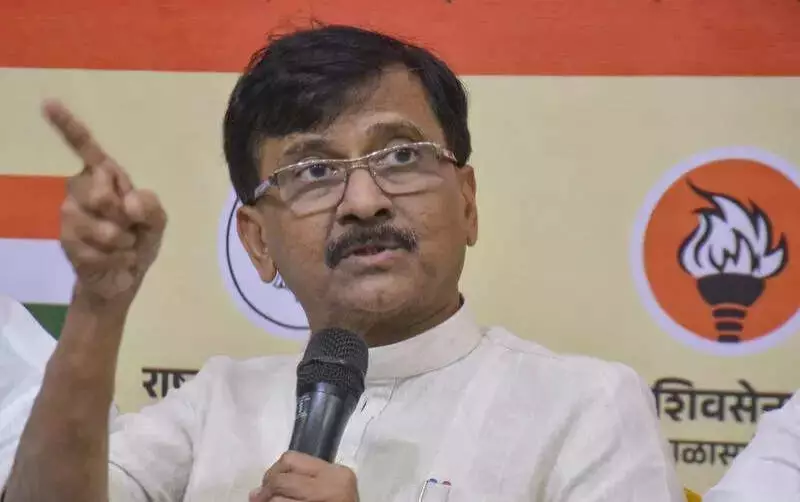
Reacting swiftly to the development, senior Sena (UBT) leaders moved to distance the party from the purported alliance. Sanjay Raut, the party's Rajya Sabha member, stated unequivocally that "the decision was not made officially with the consent of party seniors." He added, "I do not have information about Uddhav Thackeray taking such a call and, knowing him, he would never do that."
Echoing this position, Sachin Ahir, MLC and Sena (UBT) spokesperson, explained the party's firm stand against aligning with the faction that engineered the split in Shiv Sena. "We are getting proposals for a tie-up with the Shinde faction in various places," Ahir revealed. "Such an offer came from Pune district's Junnar tehsil, but we declined it. We do not mind losing some seats in elections, but we will not compromise on our stand."
BJP's Reaction and Political Analysis
From the ruling coalition's perspective, Solapur's guardian minister Jaykumar Gore interpreted the development as evidence of BJP's strength in the district. "All the other parties were compelled to come together, which shows how strong BJP is in the district," Gore commented. However, he cautioned Mahayuti partners to "rethink before going together with parties that are not our allies in the state."
On the Shiv Sena side, cabinet minister and senior party member Uday Samant expressed unawareness about any such tie-up between the factions. "I will seek more information on the matter, but I do not think that such an alliance is possible," Samant stated, reflecting the official uncertainty surrounding the announcement.
Historical Context and Political Significance
The backdrop to this development is marked by significant political splits that have reshaped Maharashtra's political landscape. Eknath Shinde engineered a major split in Shiv Sena in 2022, creating two distinct factions that have remained at loggerheads since. Similarly, Ajit Pawar executed a parallel division within NCP in 2023, creating another political rift.
Interestingly, during recent civic polls, both NCP factions demonstrated political pragmatism by setting aside their rivalry and joining hands in several municipal corporations. However, the Barshi development represents what would be the first instance of the two Shiv Sena camps contesting an election together since their separation, making it particularly noteworthy despite the official denials.

The Barshi tehsil announcement, whether it materializes or remains an isolated social media claim, highlights the complex and evolving dynamics of Maharashtra politics. It underscores how local electoral considerations sometimes create unexpected possibilities, even as senior leadership maintains ideological positions against reconciliation with rival factions. The coming days will reveal whether this represents a genuine shift in political strategy or merely a localized initiative that lacks broader party endorsement.