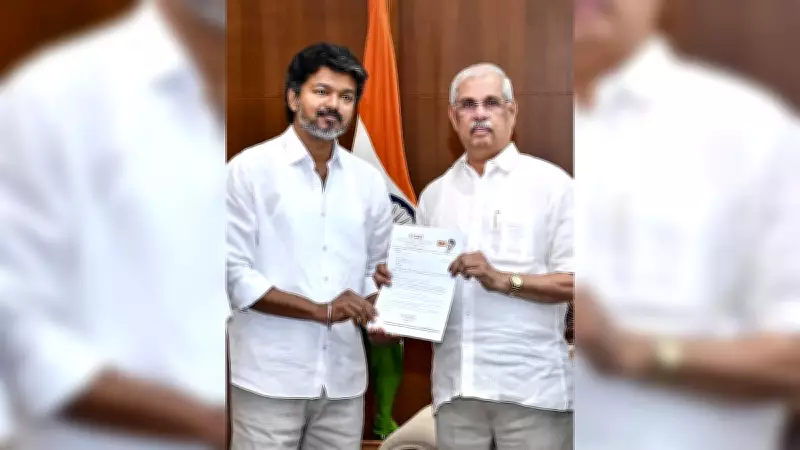
The 2026 Tamil Nadu Assembly election results have placed the state in a political deadlock, with actor-turned-politician Vijay's Tamilaga Vettri Kazhagam (TVK) emerging as the single largest party but falling short of a clear majority. Legal experts and constitutional precedents now point to four primary options before the Governor for government formation.
Option 1: Invite TVK to Form Government
The Governor may invite TVK, as the single largest party, to prove its majority on the floor of the Assembly within a stipulated time frame. If TVK manages to secure support from independents or smaller parties, it could form a minority government. However, this option hinges on TVK's ability to muster the required numbers.
Option 2: Explore a Coalition Government
If TVK fails to demonstrate majority support, the Governor could invite other parties or pre-poll alliances to stake claim. The DMK-led alliance or the AIADMK combine, if they can collectively command a majority, may be asked to form a coalition government. This path has been used in several past instances in Tamil Nadu and other states.

Option 3: President's Rule
If no party or alliance is able to form a stable government, the Governor may recommend President's Rule under Article 356 of the Constitution. This would suspend the state government and impose central rule, pending fresh elections. However, this is considered a last resort, as it has often faced legal and political scrutiny.
Option 4: Dissolution and Fresh Elections
Another possibility is dissolution of the Assembly and calling for fresh elections. This option is rarely exercised unless the House is unable to function or form a government even after multiple attempts. It would require the Governor to consult with the Election Commission and the central government.
Legal and Precedential Context
Constitutional experts note that the Governor's role is largely discretionary in such scenarios, guided by the Sarkaria Commission and Punchhi Commission recommendations. Past examples, including the 1988 Tamil Nadu crisis and the 1996 President's Rule, serve as references. The Governor must ensure a stable government while respecting democratic mandates.
As the political situation evolves, all eyes are on the Raj Bhavan for the next move. The coming days will be crucial in determining whether Tamil Nadu gets a new government or heads for another electoral exercise.