

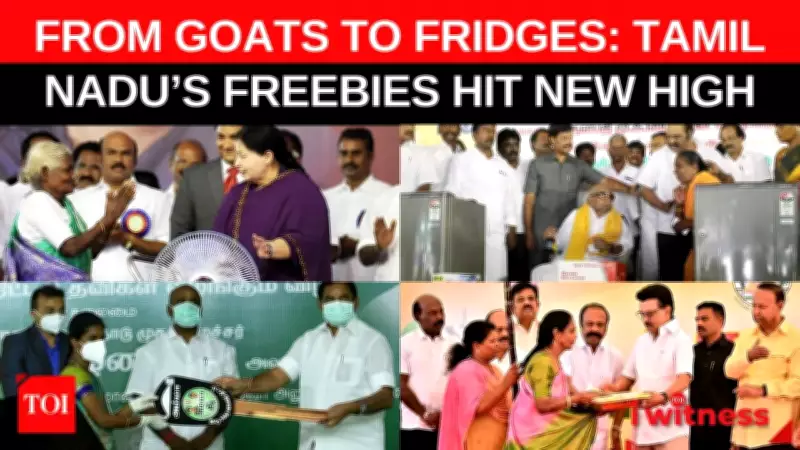
Tamil Nadu's Escalating Freebie Culture: A Political Spiral with One Dissenting Voice
In Tamil Nadu, the competition between political leaders M.K. Stalin of the DMK, Edappadi K. Palaniswami (EPS) of the AIADMK, and actor-politician Vijay is intensifying, with each outbidding the other on promises of freebies. This trend, however, is not new; it traces back to 1967 when DMK founder C.N. Annadurai won elections by pledging rice at Re 1 per kilogram. Over six decades, this has evolved into one of Indian democracy's most extraordinary political spirals, where a two-party state with minimal ideological differences sees each election cycle introduce more expensive giveaways.
The Historical Roots and Modern Manifestations
The freebie culture in Tamil Nadu began long before Karunanidhi's iconic promise of colour TVs. From kitchen appliances and goats to laptops and direct cash transfers, the 2026 election manifestos have collectively touched an astonishing ₹75,000 crore. This escalation reflects a relentless race to win voter favor, blurring the lines between genuine welfare and perceived bribery.
Some initiatives, like free bus rides for women, the noon meal scheme, and subsidised co-working spaces, have delivered tangible social benefits, improving accessibility and nutrition. Yet, the state has repeatedly crossed the boundary from welfare to electoral inducement, raising questions about fiscal sustainability and political ethics.

The Lone Opponent: Seeman and the NTK's Stand
Amid this backdrop, Seeman of the Naam Tamilar Katchi (NTK) emerges as a quiet outlier. He is the only Tamil politician openly campaigning against the freebie culture, contesting every seat alone and fielding 50% women candidates. His party has steadily grown its vote share to 8.4% in recent elections—more than double the BJP's presence in the state.
While Seeman is not expected to win major seats, his consistent opposition challenges the status quo. In a political race with no clear finish line, he may be the sole voice asking critical questions about the long-term impacts of such promises on governance and economy.
Broader Implications for Indian Democracy
The situation in Tamil Nadu highlights a broader trend in Indian politics, where freebies become central to electoral strategies. As DMK and AIADMK continue their bidding war, the NTK's stance offers a alternative perspective, emphasizing policy over populism. This dynamic underscores the complex interplay between voter expectations, political accountability, and social welfare in a vibrant democracy.






