

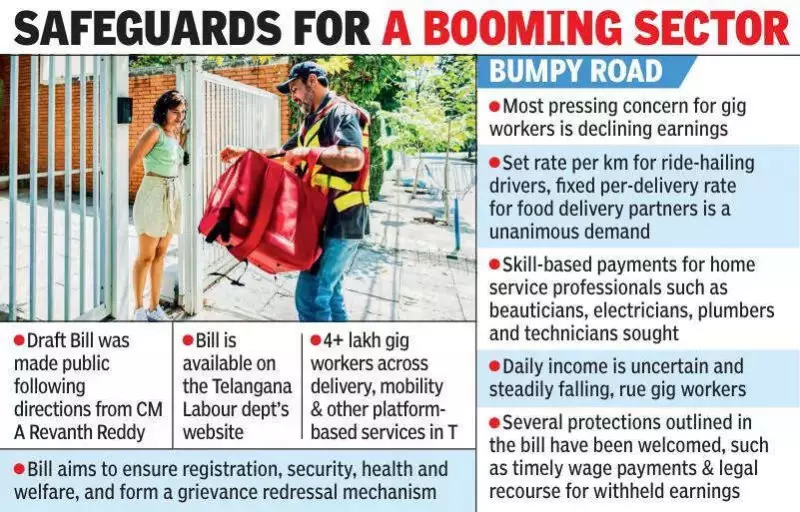
The Telangana government is poised to seek fresh legal advice before presenting the Telangana Gig and Platform Workers (Registration, Social Security and Welfare) Act, 2025, in the state assembly. This move comes amid rising concerns that key provisions of the proposed state law, particularly those related to collecting a welfare cess from app-based companies, could directly conflict with the Centre's new labour codes.
The Core Conflict: Who Collects the Cess?
The draft Bill, which was already approved by the state cabinet, grants the Telangana government the authority to impose and collect a cess from platform aggregators like ride-hailing and food delivery services. This cess is proposed to be levied at a rate of 1% or 2% on each transaction facilitated through these platforms.
However, officials have flagged a significant overlap. The central government's Social Security Code, 2020, also includes a dedicated chapter for collecting a cess from the same category of aggregators. The central law fixes this cess at 2% of the total annual turnover of the aggregator. Crucially, under the central framework, this cess is to be collected by the Union government and subsequently shared with the states.

Legal Conundrum and Possible Paths Forward
The fundamental legal principle that both the Centre and a state cannot levy a cess on the same entities for the same purpose has created this impasse. This jurisdictional overlap necessitates clear legal clarity before the Bill can proceed.
State officials have outlined two primary options for the government. The first is to remove the cess clause entirely from the state Act and introduce a revised Bill in the assembly for approval, which would then go to the Governor. The second, more complex route is to retain the cess provision and pass the existing version of the Bill. This path would almost certainly require the assent of the President of India, given the conflict with central legislation.
It is important to note that states retain the power to enact their own laws even after the central labour codes. However, the exclusive authority to collect the specific social security cess has become a contentious point of debate. Officials clarified that the state can introduce amendments or supplementary rules to the central code on other matters without conflict, but the cess collection mechanism remains the sole sticking point.
Seeking a Clear Legal Opinion
In light of these complexities, the state's law department is expected to scrutinize the proposed Act meticulously. The department will need to verify the alignment of the state Act with the central Social Security Code and provide a definitive opinion on the way forward. This legal vetting will determine whether the Bill is presented in its current form or sent back for substantial revisions.
The outcome of this legal examination will have significant implications for lakhs of gig workers in Telangana and the platform companies that employ them. The state's attempt to pioneer a robust social security net for this growing workforce now hinges on resolving this constitutional and administrative overlap with central laws.






