

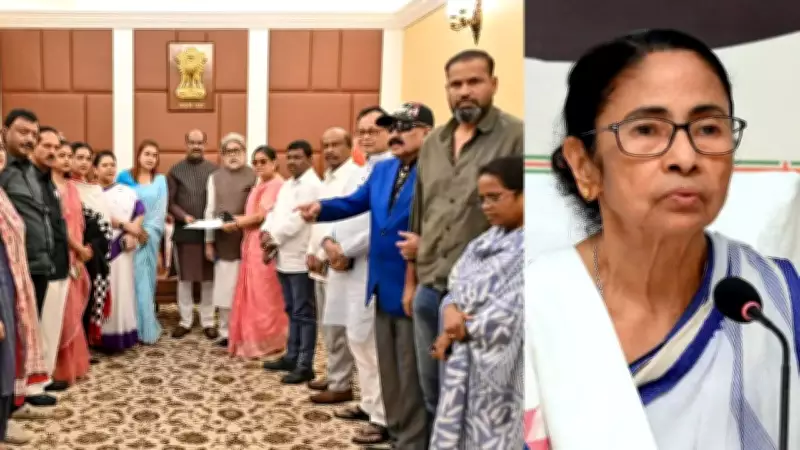
A deepening internal crisis within the Trinamool Congress (TMC) unfolded on Sunday as a group of dissident Members of Parliament (MPs) asserted their breakaway from the party and announced a merger with the Nationalist Citizens Party. The rebel MPs met with Lok Sabha Speaker Om Birla, seeking formal recognition as a distinct parliamentary group.
Rebel MPs Claim Majority Support
Following the meeting, rebel MP Kakoli Ghosh Dastidar told reporters that two-thirds of the TMC's Lok Sabha members had endorsed the move. She stated, "Two-thirds MPs of TMC have given a letter to the Speaker for a separate seating arrangement. We will merge with the Nationalist Citizens Party and support the NDA."
Senior TMC leader and Lok Sabha MP Sudip Bandyopadhyay confirmed that the dissident group had already merged with the Nationalist Citizens Party, describing it as a regional party. The Nationalist Citizens Party is a lesser-known registered but unrecognized political entity based in Tripura.

Dispute Over the 'Real TMC'
The development has ignited a fresh political battle over which faction represents the authentic TMC. When questioned about the claims made by the Mamata Banerjee-led faction, Bandyopadhyay remarked that the matter would ultimately be decided by the courts. He said, "Court will decide later who is the real TMC. We met the Speaker and gave him our request." He added that the faction would also stake claim to the party's electoral symbol of two flowers.
In response, TMC leaders Kirti Azad and Sagarika Ghosh met Speaker Birla, submitting a letter from TMC Lok Sabha leader Abhishek Banerjee. The letter, dated June 10 and previously sent via email, urged the Speaker not to recognize any separate faction. It argued that the Constitution does not permit the creation of a separate group within an existing political party and that the anti-defection law prohibits such a split.
Political Reactions and Calls for Disqualification
Rajya Sabha MP Kapil Sibal criticized the rebel MPs and called for their disqualification, asserting that they cannot merge with another party. In a post on X, Sibal stated, "TMC rebels: Will merge with Nationalist Citizens Party (NCP). Indian democracy has become the 'theatre of the absurd'. A joke!" He further argued, "The rebels of the TMC legislative party cannot merge with a political party; that can happen only if the TMC wished to do so! Disqualify them!"
Precedents of Party Splits
This situation echoes previous party splits in India. In the Shiv Sena split (2022-23), the Election Commission recognized the Eknath Shinde faction as the real Shiv Sena, retaining the "bow and arrow" symbol. Similarly, in the Nationalist Congress Party split (2023-24), the Ajit Pawar faction was recognized as the real NCP with the "clock" symbol. The AIADMK dispute (2017) saw the Palaniswami faction entitled to the party name and "two leaves" symbol. In the Samajwadi Party dispute (2017), the Akhilesh Yadav faction was recognized and allowed to keep the "cycle" symbol.
How Are 'Real Party' Disputes Decided?
The Election Commission resolves disputes over a party's name and election symbol by examining rival factions' claims. Factors considered include the support each faction enjoys among elected representatives and within the party organization. The EC's decisions can later be challenged in courts.






