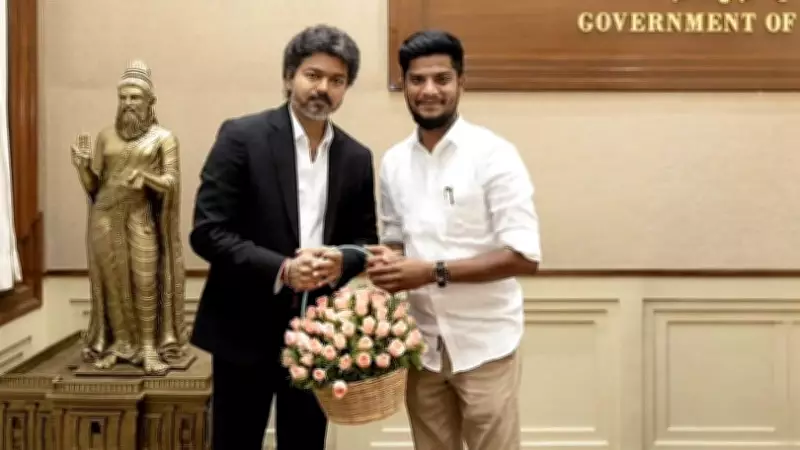
Tamil Nadu minister Ramesh has dismissed allegations that his Brahmin identity played a role in his appointment to a key department. Responding to remarks on social media, he clarified that members of the Tamilaga Vettri Kazhagam (TVK) were appointed without any consideration of caste. Ramesh emphasized that the votes received in the recent elections were a mandate for party chief Joseph Vijay, not for individual party members.
No Caste-Based Appointments
Speaking to reporters in Chennai on Friday, Ramesh stated, "The TVK leadership has always prioritized merit and party loyalty over caste. My appointment, like that of other ministers, is based on my work and dedication to the party's vision. The claim that my Brahmin identity was a factor is baseless." He added that the party's focus remains on inclusive governance and development for all communities.
Mandate for Vijay, Not Individuals
Ramesh further explained that the overwhelming victory of TVK in the assembly elections was a reflection of public trust in Vijay's leadership. "People voted for the party's ideology and for Vijay's promise of a corruption-free, progressive Tamil Nadu. Individual identities do not matter in this mandate," he said. The minister urged critics to focus on developmental work rather than divisive narratives.

Background of the Controversy
The remarks come after a section of social media users alleged that Ramesh's Brahmin background influenced his elevation to a high-profile portfolio. However, party insiders have consistently maintained that appointments are based on expertise and grassroots experience. TVK has positioned itself as a secular, caste-neutral political force since its inception.
Reactions from Political Analysts
Political observers note that the controversy highlights the lingering caste sensitivities in Tamil Nadu politics. "While TVK has made efforts to break traditional caste barriers, such debates are inevitable in a state where caste has historically influenced political appointments," said analyst K. S. Ravi. He added that Ramesh's categorical denial is an attempt to reinforce the party's image of meritocracy.
Ramesh concluded by calling for unity and focusing on the government's agenda of education, healthcare, and infrastructure. "Let us not be distracted by baseless claims. Our work will speak for itself," he said.