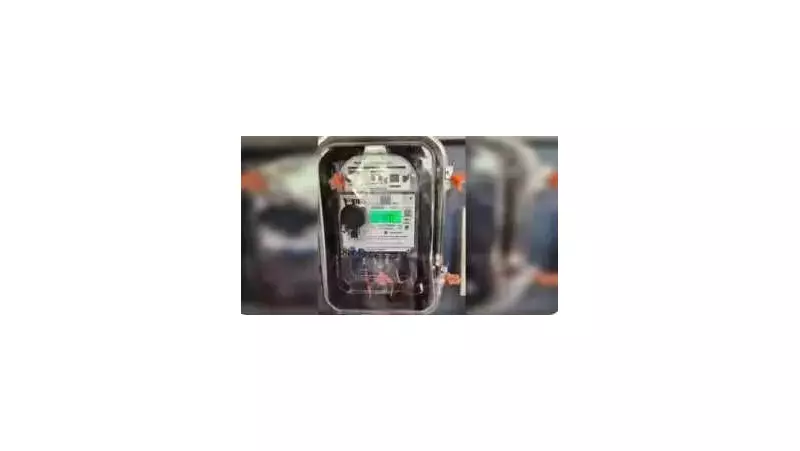
In a move that appears to contradict recent government assurances, the Uttar Pradesh Power Corporation Limited (UPPCL) has formally approached the state's electricity regulator seeking permission to pass on the costs of smart prepaid meters to consumers. This development comes shortly after State Power Minister Arvind Kumar Sharma told the Vidhan Sabha that no existing electricity user would be charged for the installation and maintenance of these meters under the central government's Revamped Distribution Sector Scheme (RDSS).
Regulatory Request for Cost Recovery
The UPPCL submitted a detailed communication to the Uttar Pradesh Electricity Regulatory Commission (UPERC), seeking consent to include smart meter expenditure within the electricity tariffs that will be applicable from the 2026–27 tariff cycle. This upcoming tariff order is expected to take effect from April 2026. The letter, signed by UPPCL Managing Director Pankaj Kumar, specifically requests the commission to treat expenses related to the maintenance, installation, and operation of smart meters as costs eligible for recovery through consumer tariffs.
This action by the power corporation follows a recent advisory from the Union Ministry of Power (MoP), dated November 28. The central advisory encourages state electricity regulators to allow distribution companies (discoms) to pass through smart metering expenditure to consumers, subject to regulatory prudence checks.

UPPCL's Stance and the Contradiction
Speaking to the media, UPPCL Chairman Ashish Kumar Goel stated that the corporation had merely forwarded the central advisory to the state regulator. "We have only forwarded the ministry's Nov 28 advisory to UPERC, which relates to smart meter operating expenses, recurring costs, IT-related costs, and other OPEX components. We have not added anything beyond what the ministry has stated," he explained. Goel clarified that while current tariffs remain unchanged, the advisory deals with tariff treatment for future cycles, and therefore UPPCL was obligated to place it before UPERC for consideration.
"Whatever expenditure we incur, we place it before UPERC. It is the commission that decides what to allow and what not to allow. Tariff setting is a very complex process," Goel emphasized, noting that not all costs submitted by discoms are automatically approved.
However, consumer advocates see a clear contradiction. Avadhesh Kumar Verma, a member of both the Central and State Advisory Committee and chairman of the Uttar Pradesh Rajya Vidyut Upbhokta Parishad, highlighted the conflicting sequence of events. "While the minister clearly stated that meter replacement would be free, UPPCL's communication to UPERC seeks permission to include these costs in the tariff framework. Ultimately, 3.61 crore consumers will pay higher bills," he said.
Financial Impact and National Context
According to the tariff proposal for 2026–27, UPPCL has included approximately Rs 3,837 crore under the TOTEX (Total Expenditure) model for smart prepaid meters. Should UPERC approve this component, electricity tariffs in Uttar Pradesh may rise by an estimated 6–7% solely due to smart metering costs.
Nationally, this issue has significant implications. Over 4.76 crore smart meters have been installed under RDSS, a public-private partnership (PPP) initiative aimed at modernizing distribution networks, reducing losses, and improving billing accuracy. The development in Uttar Pradesh highlights a growing national debate over who should bear the cost burden of this modernization.
UPPCL's letter to UPERC reiterates that RDSS smart metering in the state is being executed under the TOTEX model. Under this approach, Advanced Metering Infrastructure Service Providers (AMISPs) handle the supply, installation, operation, and maintenance of the meters. Discoms make fixed per-meter-per-month (PMPM) payments covering both capital and operational components, which UPPCL now wants treated as tariff-eligible expenditure.

This move also comes days after reports highlighted that the Union power ministry's November 28 advisory could lead discoms across India to seek similar tariff-based cost recovery for smart meters. This appears to contradict the ministry's own order from September 16, 2023, which barred discoms from shifting smart meter costs to consumers, as RDSS was originally designed as a self-sustaining scheme supported by efficiency gains.