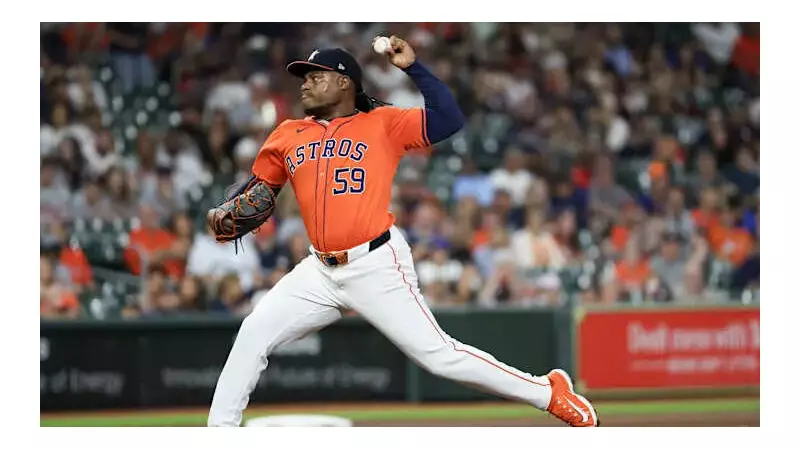
The Houston Astros are reportedly pursuing a financially prudent strategy to strengthen their pitching staff, with Cincinnati Reds right-handed starter Brady Singer emerging as a prime trade candidate. This potential move gains urgency as star pitcher Framber Valdez approaches free agency in 2025, and the Astros seek dependable arms to support ace Hunter Brown.
The Proposed Trade Structure and Key Players
As outlined by analyst Joel Reuter of Bleacher Report, the deal is straightforward: the Astros would acquire 29-year-old pitcher Brady Singer, while the Reds would get Houston's number two prospect, outfielder Jacob Melton. Singer is entering his final year of arbitration and is estimated to earn between $12 to $14 million in 2026, making him a valuable, cost-controlled trade piece for the Reds, who acquired him last offseason.
For Cincinnati, Melton represents a long-term investment. The 25-year-old made his MLB debut in 2025 but managed only a .157 batting average across 70 at-bats. However, scouts highly regard his elite speed and defensive range in the outfield, seeing significant upside if his hitting develops.

Why Singer Fits the Astros' Immediate Needs
Brady Singer's profile appears tailor-made for Houston's current situation. In the 2025 season, he proved to be a durable innings-eater, logging 169.2 innings over 32 starts with a 14-12 record and a 4.03 ERA. His 3.1 WAR and 1.24 WHIP underscore his reliability as a mid-rotation arm. For an Astros team plagued by rotation injuries, Singer's ability to consistently take the mound is a major asset.
His acquisition would provide the Astros with multiple benefits:
- Rotation Stability: A reliable starter behind Hunter Brown.
- Innings Consumption: Reduces strain on a overworked bullpen.
- Affordable Depth: Cost-effective pitching with control through 2026.
- Insurance Policy: A hedge against the potential departure of Framber Valdez.
Reds' Perspective and Potential Trade Impact
The Cincinnati Reds benefit by converting a pitcher with one year left on his contract into a high-ceiling prospect. Melton's 60-grade speed and defensive skills offer future value without impacting their payroll immediately. This move would also help replenish the Reds' prospect capital following previous trades.
However, the trade carries risks for both sides. For Houston, Singer's 4.03 ERA might worsen in the hitter-friendly Minute Maid Park, and they would be surrendering a top prospect from a thin farm system. For Cincinnati, the gamble is on Melton's development; his bat remains unproven at the highest level, and his impact may not be immediate.
Who Stands to Gain More?
In the short term, the Houston Astros seem to be the clear winners. They would address a critical need for durable, starting pitching without a massive financial outlay, perfectly aligning with their window to contend. Swapping a prospect for a proven starter makes strategic sense for their timeline.
The Cincinnati Reds, meanwhile, secure a long-term asset. If Melton's raw tools translate into major league production, this trade could be viewed as a masterstroke in the coming years. It's a classic deal where a contending team prioritizes the present, while a building team bets on the future.
With the Winter Meetings on the horizon, the alignment of needs, affordability, and talent makes this a logical trade scenario to monitor closely. If executed, it would signal Houston's decisive intent to solidify their rotation ahead of an uncertain future for their pitching core.