The Uninvited Companions of an Australian Summer
House flies, bush flies, horse flies, fruit flies, hover flies, signal flies. Thirty-thousand species of them. These uninvited companions accompany my long walks, interrupting a friend's golf swing without permission. Yet, it's the Australian summer, and you're outdoors where you should be. The heat? Ah, mate, who cares.
Memories of a Simpler Time
In the early 1980s, my friend Peter, nicknamed Tommy, now living in a Victorian country town of 900, recalls freezing cordial overnight. He'd grab his terry towelling hat, inspired by Gordon Greenidge, and rush out the door in an age before sunscreen was commonplace. These days, Tommy waters his town's field or mows its grass. Everyone has a stake in the play, and visitors aren't exempted. Last year, he handed me a roughed-up machine filled with paint to mark the cricket boundary. I walked a crooked, swearing line—a quintessential day out, Australian style.
The Inevitable Leak of Sport into Conversation
I'm back in Melbourne from Singapore for six weeks, arriving on Christmas Eve and leaving after the Australian Open final. Sport inevitably seeps into every conversation here. Play is more than a fundamental right; it's a secular commandment. I remember a late-night incident in a Melbourne newspaper corridor involving a quick-bowling fellow named Rod and a resulting broken clock. Everywhere, competition flares.

Sketching the Australian Summer of Sport
Each year, I attempt to capture the essence of the Australian summer of sport, as if it deserves witness. In Torquay, a two-hour drive from Melbourne, I wander to a field for my early morning sexagenarian shuffle. A young man handballs a footy against a post, polishing his hand-eye dance months before his season begins. One footy player once said that in pre-season, he's so fit and tuned that he finds it hard to walk—always wanting to break into a run.
The Nation in Bloom
An ibis walks contemplatively. Trams rumble. Scullers cut through the Yarra River like a scalpel through skin. A coach on a cycle megaphones instructions. The air is inviting, feeling like a nation in bloom. According to the Department of Foreign Affairs and Trade, Australia exports iron ore, coal, natural gas, wheat, and copper, but it's their sport that travels the furthest.
Statues and Sporting Legends
This year, I missed the MCG where Shane Warne is immortalized in stone, yet I communed as always with the statue of John Landy helping Ron Clarke. As sport sometimes loses its manners, Landy's act stands like a lighthouse. He stopped mid-race in the 1956 Australian mile championship to check on a fallen Clarke, forfeiting a world record chance, then resumed and won. A plaque quotes sportswriter Harry Gordon's 1956 open letter, calling Landy an exception among heroes.
The Boundless Land Beckons
Behind Landy's statue lies a field, with another to the right and the Open courts in front. This vast land feels boundless, beckoning sneakers and sweat. Those born into India's suffocating urban spaces might appreciate the privilege of these empty spaces more fully.
The Harsh Reality of Bushfires
There's a hard, glittering light on days when the sun glowers. Tommy notes that on total fire ban days, cricket is called off in his area. Instead of playing, people watch over their properties. Bushfires sound like a freight train, as described in a 2018 post by the Katoomba/Leura Rural Fire Brigade. In the city, some mornings carry the smell of the country's tragedy.
Boxing Day Traditions and Commentary
Every Boxing Day, I watch with the same people. India Pale Ale flows alongside frustration as the English team lacks humility, unlike Rafael Nadal. Ricky Ponting offers perceptive TV commentary, while Isa Guha adds sophistication when others stray into laddishness. Peter Roebuck is gone, and Greg Baum writes intermittently, leaving Mitch Starc's bowling deserving of their cultured pens. Bharat Sundaresan's piece on race and inclusivity resonates deeply.

Crowds and Identity
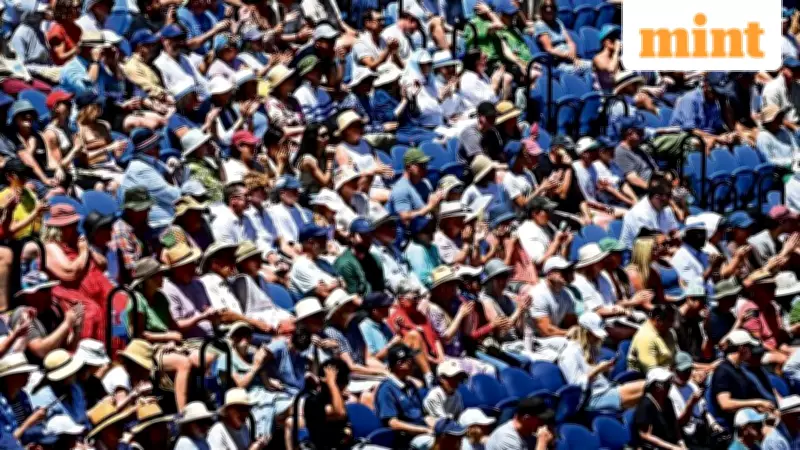
Fans flow onto the field when the Sydney Test ends, thrilled to walk on sacred grounds. At the MCG, 94,199 attended on Day One; at the Open, record crowds gathered. Sport pulls people in, reaffirming identity. The only way to protect a sport is to come to it. Fans stay late as tennis players accelerate, while diasporas take sentimental journeys, hailing those from their homelands.
The Soul of the Open
The Open is a commercial carnival but not absent of soul. It acknowledges the past with legends like Rod Laver, Tony Roche, Margaret Court, and John Newcombe. Heroes here have a normal shape—a friend spotted Pat Cummins in a taxi line at the Open, just another fan enjoying the summer.
Final Walks and Connections
At 7 a.m., I walk the dogs with my daughter past rugby goalposts rising into pale blue. In my last week, I watched a young woman in yellow boots run between cones—an AFLW player doing a fitness test. The dogs pant, the sun sharpens. We're strangers of varying accents and ages, tied by the fine threads of sport. Summers never last, but they always return.