The Milwaukee Bucks' Fateful Decision: How Firing Adrian Griffin Sparked a Downward Spiral
Exactly two years ago, on January 23, 2024, the Milwaukee Bucks organization made a coaching change that many basketball analysts and fans now regard as the pivotal moment that initiated their current decline. Despite possessing an impressive 30-13 record and holding the second-best winning percentage across the entire league at that time, the Bucks' front office made the controversial decision to dismiss head coach Adrian Griffin.
A Panic Move Without Contingency Plan
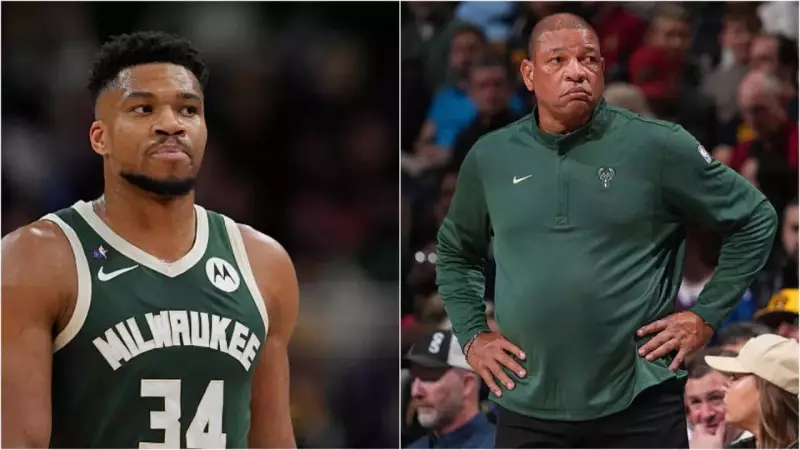
This decision was widely characterized as a vibes-based move executed without any clear backup strategy in place. The abrupt firing ultimately led to what many describe as a panic-driven hiring of veteran coach Doc Rivers. Fast forward to the present 2025-26 NBA season, and the consequences of that decision have become undeniably clear. The Bucks currently find themselves in 11th place within the Eastern Conference standings, sporting a disappointing 18-26 record. More alarmingly, their gravitational superstar talent, Giannis Antetokounmpo, is reportedly considering his exit from the franchise.
Statistical Regression Under New Leadership
The transition from Adrian Griffin to Doc Rivers represented far more than a simple change in coaching personality; it marked a significant statistical regression for the team. Under Griffin's leadership during the 2023-24 season, the Bucks maintained a top-5 offensive rating of 118.4, which effectively compensated for their 19th-ranked defensive performance. Despite defensive inconsistencies, the team continued to secure victories consistently.

In stark contrast, the Bucks' offensive efficiency plummeted to 24th in the league during Doc Rivers' initial tenure, and the current 2025-26 squad is struggling with a dismal -3.5 net rating. This statistical decline highlights how the coaching change has fundamentally altered the team's competitive identity and performance metrics.
The Failed Quest for Defensive Stability
The primary rationale behind dismissing Adrian Griffin centered on the belief that a veteran coach with extensive experience could implement a more effective defensive system and process. Instead of achieving this objective, the Bucks essentially traded high-octane winning basketball for what has become stagnant mediocrity. As one league insider observed during Milwaukee's recent blowout loss to the Oklahoma City Thunder:
"The Bucks fired a coach who was 17 games over .500 because they feared a potential second-round playoff exit. Now, they're staring directly at the lottery. They traded a coach who allowed Giannis to play to his strengths for one who has overseen the total erosion of team chemistry. You simply don't fire a winning coach when you lack a coherent plan, and Milwaukee has become living proof of that principle."
Locker Room Dynamics and Star Discontent
Back in 2024, following Griffin's dismissal, analyst Kendrick Perkins suggested that the Bucks still possessed one of the league's best duos in Giannis Antetokounmpo and Damian Lillard, and that bringing in the right authoritative voice could transform the team. However, the front office appears to have failed in securing a coach who could command respect from their superstar player.
Recent incidents, including Giannis visibly ignoring head coach Doc Rivers during a timeout in their loss against the Thunder, suggest deepening fractures. The current locker room atmosphere has been described as bleak, with Antetokounmpo recently vocalizing concerns about team selfishness and deteriorating chemistry.
Giannis Antetokounmpo's Uncertain Future
While Doc Rivers continues to publicly deny any trade discussions involving his star player, multiple reports indicate that Giannis and his representatives have already engaged in meetings with team management to discuss his future with the franchise. This situation has been further complicated by Giannis's recent no-contact injury against the Denver Nuggets, which he self-diagnosed as a calf strain. Following standard medical protocol, this injury is expected to sideline him for approximately 4-6 weeks.

The ten-time All-Star's growing dissatisfaction appears increasingly evident, yet the organization seems hesitant to address these concerns directly, largely because his potential trade would dramatically shift the competitive balance across the entire NBA landscape.
The Consequences of Short-Term Thinking
If 2024 represented the year the Bucks attempted to take a shortcut toward championship contention, 2026 has become the year they're confronting the reality that this shortcut led directly off a competitive cliff. With their defensive identity completely dismantled, their offensive rhythm fundamentally broken, and palpable friction between their franchise player and coaching staff, Doc Rivers and the front office now face urgent damage control challenges.
Without significant intervention and strategic recalibration, the organization's championship aspirations appear destined to sink beneath the weight of these accumulated missteps. The Milwaukee Bucks' story serves as a cautionary tale about the risks of impulsive decision-making in professional sports, particularly when those decisions involve disrupting successful team dynamics without adequate planning for the consequences.