Delhi Winter and New ISSF Rules Create Unprecedented Challenges at Asian Shooting Championships
The Asian Shooting Championships at Delhi's Dr Karni Singh Range have become a testing ground not just for marksmanship but for adaptability, as two significant factors converge to challenge competitors: the capital's biting winter chill and recent rule changes implemented by the International Shooting Sport Federation (ISSF).
ISSF's Stricter Stiffness Test Requirements
The International Shooting Sport Federation has introduced more stringent regulations regarding shooting jacket stiffness, significantly reducing the time allowed for gear to pass official tests. Previously, shooters had one minute to demonstrate their jacket's compliance, but this has been dramatically shortened under the new rules.
The updated ISSF regulations now state: "The upper area must pass the stiffness test when measured with the official stiffness-testing device and achieve a deflection of 3 mm within a maximum time of thirty (30) seconds." Furthermore, "The jacket below the lowest point of the shoulder blades, plus the sleeves (single thickness), must pass the same test within fifteen (15) seconds."

These changes represent the federation's ongoing efforts to curb excessively stiff shooting equipment that can potentially provide unfair advantages by helping athletes maintain specific positions for extended periods during competition.
Delhi's Winter Exacerbates Compliance Issues
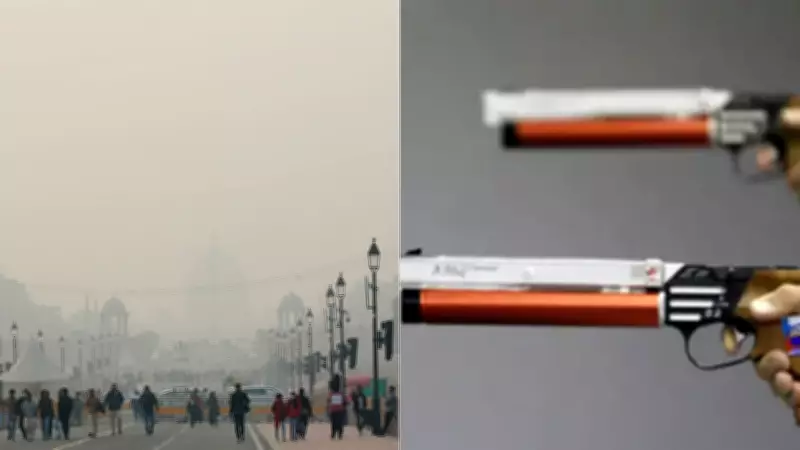
The timing of these rule changes has proven particularly challenging as Delhi's winter conditions have created unexpected complications for international competitors. The cold weather has caused shooting jacket materials to become unusually stiff, making it difficult for many foreign athletes to pass the newly implemented thickness tests during gear clearance procedures.
Indian national coach Deepali Deshpande explained the phenomenon: "Because of the material, a lot of foreign athletes were complaining that it's not passing through the thickness test because it's so cold. Now it's already foggy, and there are clouds. In this weather, the material becomes thick. And as the temperature rises, it gets softer."
Indian Shooters' Adaptation Advantage
While foreign competitors faced unexpected hurdles, Indian shooters entered the championships with a distinct advantage. Having participated in national trials at the same venue in January, they had already encountered and adapted to both the weather conditions and the new gear requirements.
Coach Deshpande revealed the creative solutions Indian athletes developed: "So we did everything possible so that it would pass. We had to make cuts, we hammered it (jacket) and everything. So I don't think our athletes have that issue."
She further illustrated the extent of adaptation required, sharing that during January's national trials, Paris Olympic bronze medallist Swapnil Kusale had to modify his competition trousers significantly: "His trouser was cut so badly. It was like a Chinese lantern. But still, he shot his normal scores."
International Teams Scramble for Solutions
The technical area at the Karni Singh 10m final pistol range transformed into an improvised workshop as teams from various countries struggled to modify their equipment. Shooters from Kazakhstan and Japan particularly faced challenges, with most of their jackets initially failing to receive clearance according to team officials.
Olga Dovgun, a former World Championship, Asian Games and Asian Championships gold medallist from Kazakhstan, described her team's approach: "The shooters started at 8 and only now (12 AM on Tuesday morning) did four shooters pass the test." Kazakh athletes resorted to rolling their jackets repeatedly to make the material softer and more compliant with the new standards.
Meanwhile, Bangladesh's lone representative at the championships found a simpler solution. Mohammad Robiul Islam, using a jacket manufactured by Indian company Capapie, discovered that repeatedly rubbing the material sufficiently softened it to pass the stiffness tests.

Broader Implications for Competitive Shooting
This year's Asian Shooting Championships, serving as the first international tournament of 2026 and the inaugural competition to implement the ISSF's revised stiffness regulations, has highlighted several important considerations for the sport's future:
- The interaction between environmental conditions and equipment regulations
- The advantage held by athletes who compete regularly at specific venues
- The need for standardized solutions to equipment compliance issues
- The creative problem-solving required at elite competitive levels
As the championships progress, the adaptability demonstrated by various teams underscores how competitive shooting continues to evolve, balancing technological innovation with fair play considerations while accounting for environmental variables that can significantly impact performance and equipment compliance.