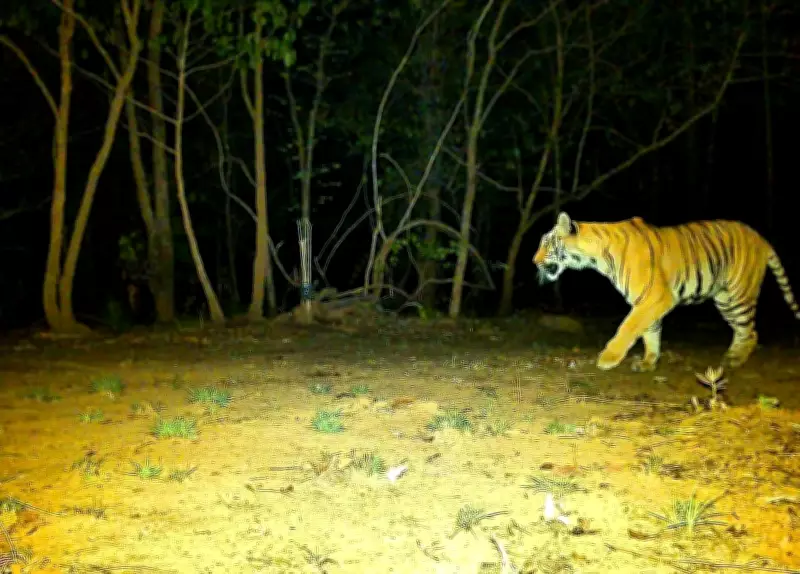
In a meticulously planned operation, poachers from neighbouring Odisha attempted to kill a tiger inside Chhattisgarh's Udanti-Sitanadi tiger reserve by poisoning a forest stream. However, the forest department, acting on precise intelligence, foiled the plot and arrested seven accused, six of whom were caught red-handed while lacing the water with toxic substances.
The Conspiracy Unraveled
The conspiracy came to light after the detention of an elderly man, Raman Herna, who was caught with deer antlers. During interrogation, he revealed a larger network involving a contract to kill a tiger, with local operatives activated to contaminate shared water sources. The plan involved using bows and arrows to finish the kill after poisoning the stream, a method capable of wiping out entire chains of wildlife.
According to Varun Jain, deputy director of Udanti Sitanadi tiger reserve, the first clue came almost incidentally. Herna's disclosure led teams deep into Odisha's Katfad and Kusumkhunta villages, where the network was traced back to the forest where the final act was underway.

Arrests and Evidence
On May 10, six more accused were caught near Ranibarjhola nullah inside the reserve, allegedly poisoning the stream. Officials recovered poison vials, along with dead fish and crabs, evidence of a method designed to wipe out wildlife at shared watering points. All seven accused, residents of Katfad village in Nuapada district, were produced before a court in Rajim and remanded to 14 days of judicial custody.
Investigators believe more members of the network are still at large. A high alert has been sounded across the reserve, with thermal drones scanning dense patches and patrols intensified along the inter-state border.
Organized Wildlife Crime
Forest officials noted that this episode underscores a darker shift in wildlife crime, which is no longer just about opportunistic poaching but is now organized, commissioned, and increasingly invisible until it is almost too late. Under the Wildlife Protection Act, 1972, poaching or conspiracy to hunt a tiger can invite up to seven years' imprisonment along with fines. Further arrests are likely as the probe deepens.