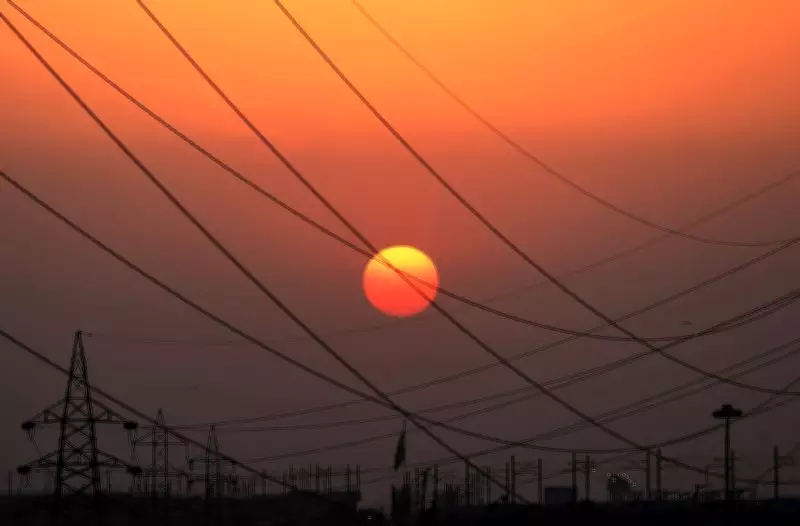
Delhi's power demand reached an unprecedented 8,748 MW on Monday, June 29, 2026, as the city endured a severe heatwave with maximum temperatures hitting 42.2 degrees Celsius. According to the India Meteorological Department (IMD), the Safdarjung base station recorded the temperature five degrees above normal, while the minimum settled at 31.1 degrees Celsius, 3.2 degrees above normal. This marked the second consecutive warmest morning in two years.
Record Power Demand Amid Heatwave
The peak demand of 8,748 MW was recorded at 3:17 pm, surpassing the previous all-time high of 8,656 MW set on June 19, 2024. Despite the surge, power supply remained stable, with authorities attributing this to advance planning, grid upgrades, and improved demand forecasting. Data from the Delhi State Load Dispatch Centre revealed that this was the third time in June 2026 that peak demand crossed the 8,000 MW mark. Between June 1 and June 29, peak demand exceeded corresponding days of the previous year on 22 out of 29 days, highlighting the sustained impact of the ongoing heatwave.
Weather Relief on the Horizon
The IMD reported heatwave conditions across several parts of Delhi on Monday but predicted relief from Tuesday due to thunderstorm activity over Haryana and Delhi. By 5 pm, Palam recorded wind speeds of 52 kmph, while light rain and drizzle were reported from parts of south Delhi, signaling a change in weather. The IMD has forecast partly to generally cloudy skies over the next few days, with spells of light rain, thunderstorms, lightning, and gusty winds reaching 40-60 kmph.

Impact on Daily Life
The prolonged heatwave has strained power infrastructure and tested the resilience of the capital's grid. The record demand occurred as residents relied heavily on cooling appliances. The stable supply indicates effective load management, but the repeated crossing of 8,000 MW underscores the need for continued infrastructure investment. The IMD's forecast of thunderstorms and rain offers hope for respite, though the heatwave's intensity has already set new benchmarks for June.