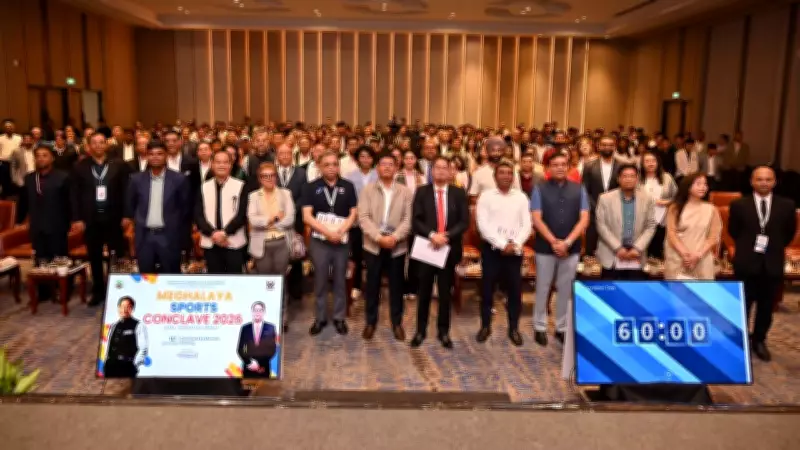
When a champion stands on the podium, the world sees only the medal. But the journey is built in the quiet shadows of perseverance, failure, and systematic support. This reality took centre stage on June 16, 2026, as the Meghalaya Sports Conclave convened in Shillong.
While the state actively prepares to host the 39th National Games in 2027, the gathering was far from a routine administrative check-in. Instead, it became a candid forum where Olympic legends, global administrators, and policymakers dissected what it truly takes to build a world-class sporting ecosystem capable of nurturing talent from the grassroots level to the international stage.
Voices of resilience and the realities of elite sport
The most powerful moments of the conclave emerged not from policy documents, but from the lived experiences of India's sporting icons.

Indian Hockey legend PR Sreejesh, a two-time Olympic medallist, offered a profound lesson on the mental rigours of high-performance sport. Reflecting on his own struggles and growth on the international stage, he reminded the young athletes in attendance that setbacks are the essential foundation of excellence. "You must learn to face failure. Once you learn how to deal with failure, success will follow," he shared.
This sentiment of overcoming the odds resonated deeply during an emotional recounting by World Para Archery champion Sheetal Devi. Growing up in a remote village in Jammu and Kashmir without any initial exposure to sports, she never imagined becoming an international athlete. Drawing a standing ovation from the room, she recalled her first international victory, admitting, "When I won my first international medal, I didn't even know where to stand on the podium." Her journey, she emphasised, proved that sometimes all it takes is one single opportunity to change a life forever.
Similarly, Paralympic champion Harvinder Singh spoke about the cyclical nature of inspiration. He shared how watching the 2012 London Paralympics sparked his own ambition to pick up a bow, noting, "Today, I am happy that we have become that inspiration for others."
Sprint sensation Hima Das and Olympic medallist Manu Bhaker reinforced the importance of environment and early dreams. Das recalled her singular, unwavering focus on wearing the national jersey, while Bhaker highlighted how trying multiple sports before discovering shooting shaped her competitive trajectory. Bhaker also reminded aspiring athletes of their broader societal role, adding, "Every athlete who represents India becomes an ambassador for the nation."
Moving beyond potential to performance
While the athletes provided the inspiration, the administrators delivered the blueprint for execution. World Athletics Vice President Adille Sumariwalla delivered a candid assessment of the region's sporting ambitions. Drawing on data from over 24,000 scientific tests conducted on local athletes, he made a definitive and encouraging observation.
"Talent is not the problem in Meghalaya," Sumariwalla said. He acknowledged the state's recent progress, noting a significant jump from zero medals in previous National Games to five in 2025, but challenged the sporting bodies to focus entirely on structural pathways. He cautioned that raw material alone does not guarantee podium finishes. "Infrastructure alone does not win medals. Systems win medals. Coaching wins medals. Accountability and governance win medals," he asserted.
Building a legacy for the youth
Taking these expert insights on board, the state government outlined its strategy to ensure the upcoming 2027 National Games leave a lasting legacy rather than just temporary fanfare. Chief Minister Conrad K Sangma pointed out a unique demographic reality, noting that 50 per cent of Meghalaya's population is under the age of 20, creating a massive "Gen-Alpha" majority.

This youthful demographic is the driving force behind the state's aggressive sports investments, which include the upcoming 40,000-seat Mawkhanu Football Stadium. The conclave spotlighted the flagship STAR programme, which has already screened thousands of young athletes to identify those capable of reaching the 2032 Olympics. From this mass identification, a select group of promising athletes has been absorbed into an elite pathway, receiving advanced coaching and sports science support.
However, state leadership stressed that the ultimate goal extends beyond elite competition. The broader vision is to utilise sports to shape character, instil discipline, and keep the youth positively engaged in their communities.
As the conclave concluded, the core message was unmistakable. Meghalaya is not merely building stadiums to host a tournament. Guided by the lived experiences of champions who have reached the pinnacle of global sport, the state is actively laying down the systems, science, and support networks required to turn raw potential into enduring excellence.
Disclaimer: This article has been produced on behalf of Meghalaya Sports Conclave by Times Internet’s Spotlight team.