Pakistan Seals T20 Series Victory with Commanding 90-Run Triumph Over Australia
In a spectacular display of cricketing prowess, Pakistan clinched the T20 series against Australia with a resounding 90-run victory at Gaddafi Stadium in Lahore on Saturday. This emphatic win came even as questions persisted regarding Pakistan's involvement in the forthcoming T20 World Cup, adding a layer of intrigue to the celebratory atmosphere.
Spinners Dominate as Australia Collapse for 108
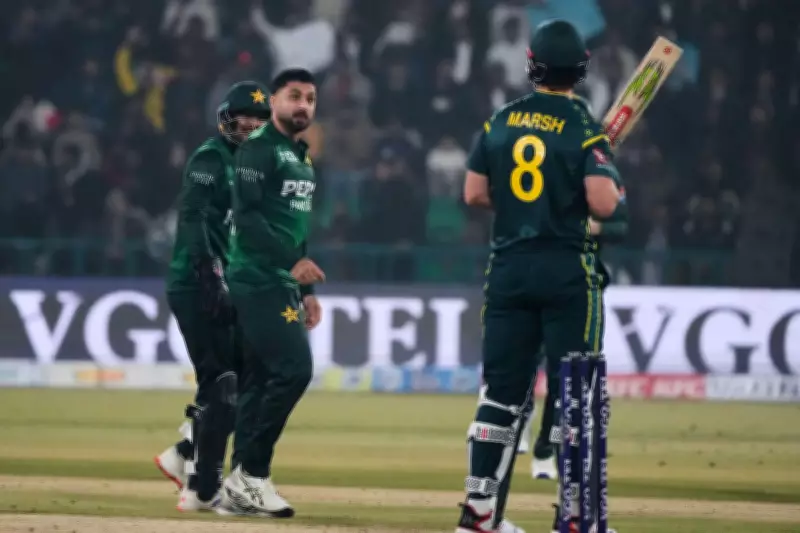
The Australian batting lineup crumbled under relentless pressure from Pakistan's spin attack, managing a mere 108 runs in just 15.4 overs while chasing a formidable target of 199. Leg-spinners Abrar Ahmed and Shadab Khan were the chief architects of this collapse, sharing six crucial wickets between them. Abrar Ahmed delivered a masterful spell, claiming 3 wickets for only 14 runs, while Shadab Khan supported with 3 wickets for 26 runs, effectively dismantling the Australian middle order.
Captain Agha and Usman Khan Power Pakistan to 198-5
Earlier in the match, after winning the toss and opting to bat on a slow surface, Pakistan posted a challenging total of 198-5. Captain Salman Ali Agha led from the front with a blistering 76 runs off just 40 balls, showcasing his ability to handle both spin and pace with confidence. Usman Khan provided solid support, contributing a well-made 53 off 36 deliveries. Pakistan made a strong start, reaching 72-2 during the powerplay, setting a solid foundation for the innings.

However, not all was smooth sailing for the home side. Babar Azam, batting in his new role at number 4, continued to struggle, managing only 2 runs before being dismissed leg-before-wicket. This ongoing adjustment period for one of Pakistan's key batsmen remains a point of concern as the team looks ahead to future challenges.
Post-Match Reflections and World Cup Uncertainty
Following the match, a jubilant Salman Ali Agha described the performance as "a perfect game for us" and expressed hope to replicate this success in upcoming matches. He explained his decision to promote himself to number 3, stating, "I know I can play spin well and intend to do the same in Sri Lanka." This reference to Sri Lanka is particularly significant as Pakistan is scheduled to play their T20 World Cup matches there, with the tournament being co-hosted by India and Sri Lanka starting February 7.
Despite the on-field success, Pakistan's participation in the T20 World Cup remains shrouded in uncertainty. The Pakistan Cricket Board recently cancelled the official unveiling of the team's jersey, citing "unavoidable circumstances." Reports indicate that the board is awaiting government approval before confirming their involvement in the global tournament, casting a shadow over what should be a celebratory period for Pakistani cricket.
Australia's Struggles and Captain's Assessment
The Australian innings never gained momentum, with key batsmen failing to make substantial contributions. Travis Head fell cheaply once again, while captain Mitchell Marsh managed only 18 runs before falling to Abrar Ahmed. Josh Inglis and Matt Renshaw also failed to build meaningful partnerships, leaving the middle order exposed. Cameron Green top-scored with 35 runs but found little support from his teammates as the innings unraveled.
Australian captain Mitchell Marsh acknowledged Pakistan's superiority, admitting, "They put us under great pressure in the power play. It was probably a 160-170 wicket. We have got experienced guys who know that partnerships are really important in run-chases. We were not able to do that today, so some really good lessons." This candid assessment highlights the challenges Australia faced against Pakistan's disciplined bowling attack and strategic field placements.
As Pakistan celebrates this comprehensive victory, the cricketing world watches closely to see how the uncertainty surrounding their World Cup participation will unfold. The team's dominant performance against a strong Australian side demonstrates their potential on the field, even as off-field developments create uncertainty about their future in international tournaments.