Rohit Sharma Reflects on Iconic India-Pakistan T20 World Cup Battles
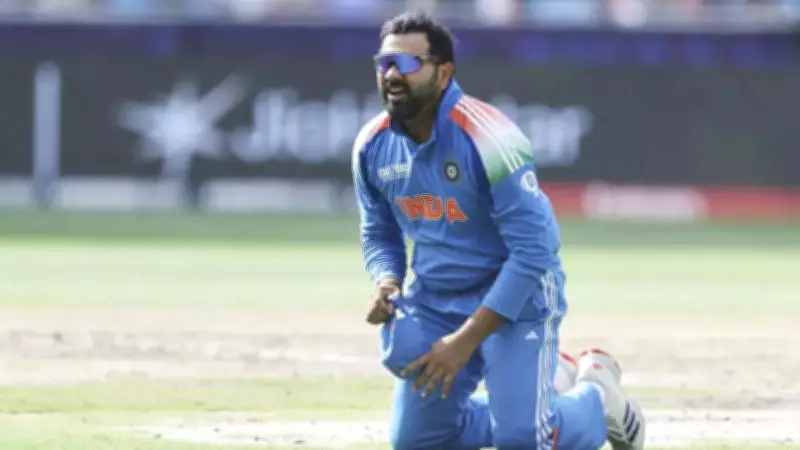
Former India captain Rohit Sharma has shared his personal reflections on the most defining moments that have shaped the legendary India-Pakistan rivalry in T20 World Cup history. In a recent interview, Sharma identified the 2007 final as his most cherished encounter against their Asian neighbors, while also recalling other unforgettable clashes that have defined this high-stakes cricketing contest.
The 2007 Triumph: A Historic Beginning
"My favorite T20 World Cup match against Pakistan was definitely the final we played, nothing can beat that. We went on to win the World Cup," Rohit Sharma stated in his conversation with the International Cricket Council. The inaugural 2007 edition featured two dramatic encounters between the arch-rivals, with both matches leaving an indelible mark on cricket history.
Before the historic final, India and Pakistan played a group-stage match that ended in a tie, requiring the tournament's first-ever bowl-out to determine the winner. "In that same year, we also played a league game against Pakistan, which was the only match in the tournament decided by a bowl-out, and we came out on top there as well. So in 2007, both World Cup games were special," Sharma recalled, emphasizing the significance of India's early dominance in this format against their traditional rivals.

The 2022 Melbourne Miracle
Another unforgettable chapter unfolded at the Melbourne Cricket Ground during the 2022 T20 World Cup. After being dismissed early in the match, Rohit Sharma experienced the game from an unusual perspective—watching nervously from the sidelines as India staged one of the most dramatic comebacks in cricket history.
"Yeah, I was in the dressing room. Then I came out, but I got nervous and went back inside. When games are this tight, especially when you're off the field and know you can't do anything, it just takes that sense of control away from you, and I felt helpless," Sharma confessed. "You actually do feel helpless watching the game unfold when you can't do anything about it."
Chasing 160 runs, India found themselves in deep trouble at 31/4 before an extraordinary innings from Virat Kohli completely transformed the contest. "Kohli played a blinder there. That was again very, very special to watch because we were in no position to win that game, especially after how we started," Sharma acknowledged.
"But the way we finished was magnificent. It has to be one of the greatest cricket games we've ever played—because of the occasion. It was a World Cup game, an important one for us to win, and to come back from that situation made it even more special," the 2024 T20 World Cup-winning captain emphasized, highlighting the match's significance beyond just the result.
A Career Defined by Nerves and Motivation
Rohit Sharma, who recently retired from T20 Internationals after playing 160 matches for India, revealed that nervousness was a constant companion throughout his illustrious career. "I've played 160 T20 Internationals for India. I don't remember a single game where I wasn't nervous. I was nervous for each and every game," he admitted.
Rather than viewing this anxiety as a weakness, Sharma explained how it fueled his motivation and performance. "That feeling gives me nervousness, and I don't think that as long as I'm holding this bat, going out there and taking the field, that feeling will ever go away. It stays with me. And that feeling means you still want to go out there, play the game, and give your best," the veteran cricketer concluded, offering insight into the psychological aspects of competing at the highest level.
Until the recent ICC Men's T20 World Cup fixtures, Rohit Sharma had featured in every India-Pakistan clash at the T20 World Cup. His journey in this high-voltage rivalry spans from making his debut as a young player in 2007 to leading India to memorable victories over Pakistan in both 2022 and 2024, marking a significant chapter in one of cricket's most storied competitions.