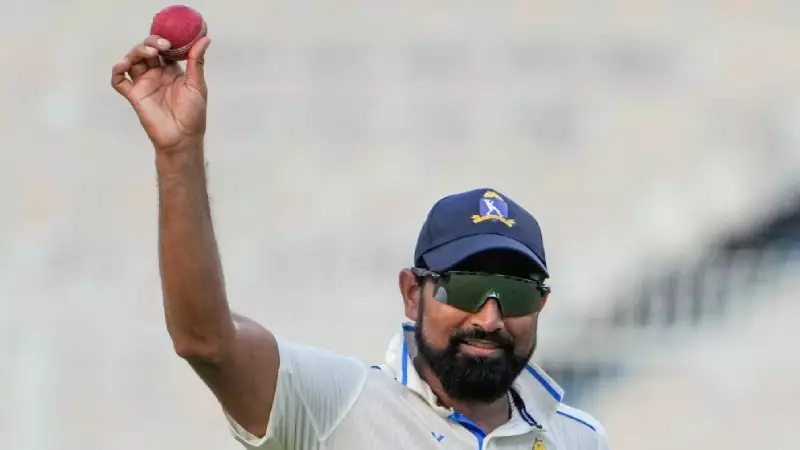
The frustration in Badruddin Siddiqui's voice is palpable. The long-time coach of Mohammed Shami is struggling to comprehend why his most famous protege, despite proving his fitness and form emphatically in the ongoing domestic season, continues to be overlooked by the Indian national selectors.
A Season of Dominance Across Formats
Since the domestic cricket season began three months ago, Mohammed Shami has been a force of nature. The seasoned pacer has not only played across all three formats but has excelled in each, silencing any doubts about his sharpness after a period of intermittent injuries.
His statistics tell a compelling story of a bowler at the peak of his powers. In the Ranji Trophy, he has been instrumental for Bengal, picking up 20 wickets in just four matches at an impressive average of 18.60. His workload has been significant, bowling an average of 20 overs per innings. The shorter formats have seen similar dominance: 16 wickets in seven Syed Mushtaq Ali Trophy games and 11 scalps in five Vijay Hazare Trophy matches at an average of 22.50.

"He has art, wickets, fitness, form... what more does he need?" fumes coach Badruddin Siddiqui in a conversation, echoing the sentiment of countless Shami supporters. "What else does he need to prove? I simply don't understand why he is not in the team," he adds, his voice tinged with resignation.
The Selectors' Conundrum and Valid Concerns
While Shami's non-selection remains a mystery to his camp, the selectors' perspective likely involves a degree of risk assessment. Betting on a 36-year-old seamer, which Shami will be by the time the 2027 ODI World Cup arrives, is a high-stakes gamble, especially given his history of injuries.
Building a pace attack around two premier but injury-prone bowlers like Shami and Jasprit Bumrah could leave the team vulnerable if either breaks down at a crucial juncture. With a relatively thin bench strength of proven quality seamers, the selection committee might be inclined to groom younger alternatives as a defensive, yet rational, long-term strategy.
However, this logic clashes with Shami's proven pedigree and big-match temperament. He is, statistically, India's greatest World Cup bowler, holding records for the most wickets (55) and the most five-wicket hauls (4) in the tournament's history. The dream of winning the 2027 World Cup remains a burning motivation for the pacer.
An Unwavering Commitment and a Door Still Ajar
Badruddin Siddiqui points to Shami's relentless work ethic as a sign of his undiminished hunger. After a knee injury in 2024, Shami retreated to his farmhouse in Alinagar, Sahaspur, where he undertook a grueling rehabilitation regimen. "He used to run barefoot in the mud multiple times a day to ensure full fitness and bowled hundreds of balls in the nets to regain rhythm," the coach recalls, marveling at the commitment shown by a player who has already achieved so much.
The coach remains a keen observer, scrutinizing every available clip of Shami's bowling from domestic games. He is pleased with what he sees. "He is in great shape and bowling with great rhythm. When he gets into that rhythm, everything falls into place. If he keeps bowling like this, he would be difficult to ignore," Siddiqui states.
Yet, the haunting question returns: "What more does he have to prove?" As the new year progresses, Shami, his coach, and his legion of fans await a clear answer from the national selectors, hoping that the door for one of India's finest seamers remains firmly ajar.