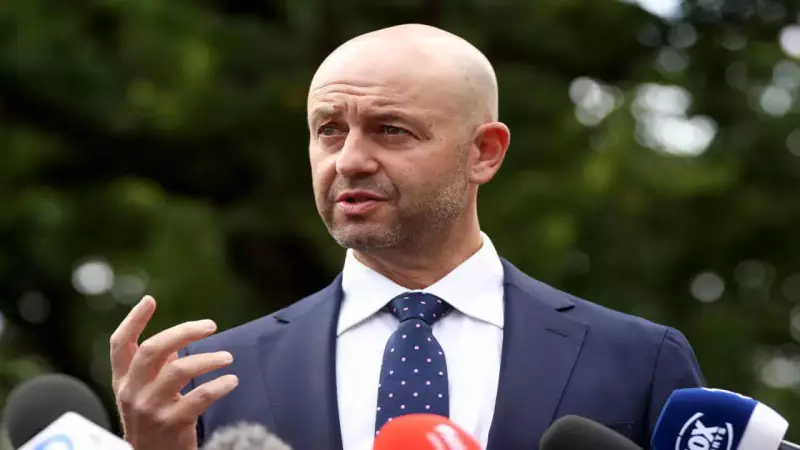
Cricket Australia's top official, Todd Greenberg, has publicly demanded a thorough explanation after a significant technical glitch in the Snicko technology during the ongoing Ashes series cost England a vital wicket. The issue, which first emerged during the third Test in Adelaide, has thrown the reliability of the Decision Review System (DRS) into sharp focus once again.
The Adelaide Incident: How Carey Survived
The controversy erupted on the opening day of the Adelaide Test. England appealed for a caught behind against Australian batter Alex Carey off the bowling of Josh Tongue. The on-field umpire, Ahsan Raza, turned down the appeal, prompting England to review the decision.
Despite a clear sound being picked up by the stump microphone, the television umpire, Chris Gaffaney, upheld the original 'not out' call. The replay appeared to show the noise occurring before the ball passed Carey's bat. Carey, then on 72, went on to score a century, making 106 runs in Australia's first innings.

It was later revealed that the Snicko technology, operated by BBG Sports, had malfunctioned. The company accepted responsibility for the error, and Carey himself acknowledged he had hit the ball. This admission turned the technical fault into a major talking point.
Greenberg's Strong Reaction and Fallout
Expressing his frustration, CEO Todd Greenberg stated the error caused him "heartburn," emphasizing that the core purpose of technology is to eliminate glaring mistakes. "From what I can understand having dug into it last night and this morning is human error," Greenberg said on SEN radio. "There's two human errors there -- one is the actual decision from the umpire, and then there's supposed to be a failsafe with the technology and it didn't happen. In my view it's not good enough."
He confirmed that Cricket Australia is asking tough questions of the technology provider through the broadcasters to ensure such a failure is not repeated. As a direct consequence of the error, match referee Jeff Crowe took the rare step of restoring England's lost review, granting them two reviews for the second day instead of one.
Controversy Refuses to Die Down
The Snicko system found itself under scrutiny again on day two. England's Jamie Smith was given out for 22 after Australia claimed a faint edge to wicketkeeper Carey off Pat Cummins. The decision further fueled the debate, with Australian fast bowler Mitchell Starc heard saying "Snicko needs to be sacked" over the broadcast microphones.
This series of events has prompted England to plan discussions with the International Cricket Council (ICC) about improving the technology. Notably, while the ICC mandates the use of DRS in World Test Championship matches, it does not specify or standardise the technology providers, leading to variations. The Snicko system used in Australia is different from the one employed in England.
Offering a historical perspective, former England captain Mike Atherton suggested a calmer view. He noted that for a generation accustomed to human error from on-field umpires, it is challenging to become overly agitated by technological mistakes, acknowledging that errors are probable in any system involving human input.
The incident has undoubtedly added another intense chapter to the storied Ashes rivalry, raising critical questions about the consistency and dependability of the technological aids meant to uphold fairness in the modern game.