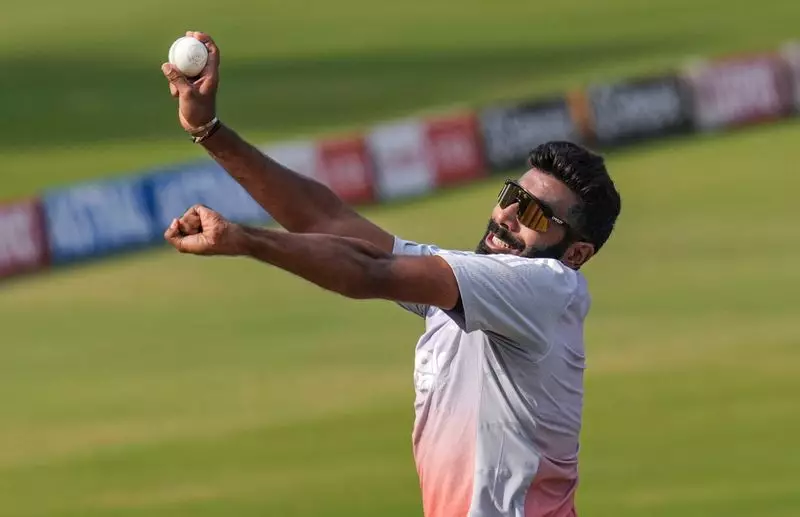
Former Indian cricketer Robin Uthappa has emphasized the critical importance of managing the workload of pace spearhead Jasprit Bumrah. Uthappa's comments come as a crucial insight into preserving one of India's most valuable bowling assets, whose unique action places extraordinary demands on his body.
The Unique Challenge of Bumrah's Bowling Mechanics
Uthappa pointed directly to the unorthodox and demanding nature of Bumrah's bowling action as the primary reason for caution. Unlike many fast bowlers with more classical, fluid run-ups and deliveries, Bumrah employs a distinctive approach characterized by a short run-up and a braced front leg at the point of release.
This action generates his exceptional pace and deadly accuracy but also creates significant stress on his body. The immense force is channeled through a relatively compact kinetic chain, making him more susceptible to wear and tear. Uthappa stressed that this biomechanical reality is not a weakness but a factor that necessitates intelligent management.

High Pace and Intensity: A Double-Edged Sword
Complementing his tricky action is Bumrah's ability to consistently bowl at high speeds exceeding 140 kph. Maintaining this level of pace requires peak physical conditioning and immense effort every ball. Uthappa highlighted that this combination of a stressful action and high intensity makes Bumrah a special case.
The former batsman argued that treating Bumrah like any other fast bowler would be a mistake. The very qualities that make him a match-winner also make him vulnerable. Therefore, the team management and medical staff must adopt a proactive and personalized strategy to ensure his longevity.
Strategic Rest and Long-Term Planning are Key
Uthappa's analysis underscores a broader philosophy in modern cricket: protecting key players for the most important matches. This means strategically resting Bumrah from certain bilateral series or tournaments to keep him fresh for pinnacle events like the World Test Championship finals or ICC World Cups.
This approach is not about coddling a player but about making a pragmatic investment in the team's future success. A fit and firing Bumrah in a crucial knockout game is far more valuable than a fatigued or injured one. The management's recent decisions to manage his return from a long-term back injury reflect this understanding.
In conclusion, Robin Uthappa's observations serve as a timely reminder. Jasprit Bumrah is a generational talent whose value to the Indian cricket team is immeasurable. His unique skill set demands an equally unique management plan. By carefully balancing his playing time, monitoring his fitness with advanced metrics, and granting him adequate rest, India can hope to enjoy the services of their pace ace for many more years to come.