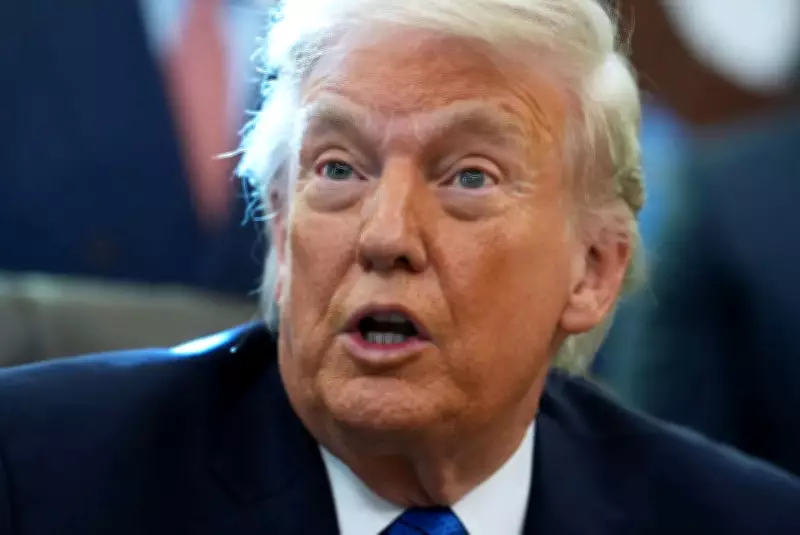
The German Football Federation (DFB) has decisively rejected calls for a boycott of the upcoming FIFA World Cup, firmly stating its commitment to participate in the tournament despite growing political tensions involving U.S. President Donald Trump. In a strong statement released late Friday, the federation emphasized the unifying power of international sports and dismissed any consideration of withdrawing from the global event.
DFB Stands Firm Against Boycott Proposals
The DFB's executive committee convened recently to discuss the controversial option of boycotting the 2026 World Cup, which will be jointly hosted by the United States, Canada, and Mexico. This discussion was prompted by DFB Vice President Oke Göttlich, who publicly suggested last week that Germany should "seriously consider" a boycott in response to Trump's recent actions and statements. Göttlich, who also serves as president of Bundesliga club St. Pauli, argued that such a move would send a powerful message to the American administration.
Internal Debates Should Remain Private
In what appears to be a clear public rebuke to Göttlich's public stance, the DFB firmly stated that "debates on sports policy should be conducted internally and not in public." The federation made it unequivocally clear that a boycott "is not currently under consideration" and reaffirmed its dedication to thorough preparation for the tournament scheduled from June 11 to July 19, 2026.

The DFB revealed that it is actively engaged in comprehensive discussions with representatives from various sectors including politics, security, business, and sports organizations to ensure Germany's successful participation in the World Cup. This coordinated approach demonstrates the federation's commitment to navigating the complex geopolitical landscape while maintaining its focus on competitive football.
Political Context and Historical Precedents
The debate occurs against a backdrop of increasing diplomatic tensions between Europe and the United States. President Trump has recently sowed discord across the continent through his controversial bid to acquire Greenland and threats to impose tariffs on European nations that opposed this move. Additionally, U.S. actions in Venezuela and domestic responses to protests in American cities have raised significant international concerns.
This situation echoes previous World Cup controversies, though with different outcomes. Former FIFA President Sepp Blatter, who last week advised fans to stay away from the 2026 tournament, had previously opposed calls to boycott the 2018 World Cup in Russia despite concerns about Ukraine. At that time, Blatter famously declared that "football can not be boycotted in any country," establishing a precedent that the DFB now appears to be following.
Practical Challenges for Fans and Participants
Beyond political considerations, practical challenges threaten to impact the World Cup experience. Football enthusiasts have expressed growing concerns about exorbitant ticket prices that could limit accessibility. Furthermore, travel restrictions implemented by the Trump administration might prevent supporters from certain competing nations from attending matches in person, potentially affecting the tournament's atmosphere and global appeal.
Despite these multifaceted challenges, the German national team remains fully committed to participation. The DFB emphasized its competitive spirit, stating: "We want to compete fairly against the other qualified teams next summer. And we want fans worldwide to celebrate a peaceful festival of football in the stadiums and at fan zones — just as we experienced at the 2024 European Championship in our own country."
This statement highlights Germany's successful hosting of EURO 2024 as a model for how major football tournaments can foster international unity and celebration, reinforcing the DFB's belief in sport's positive global impact over political boycotts.