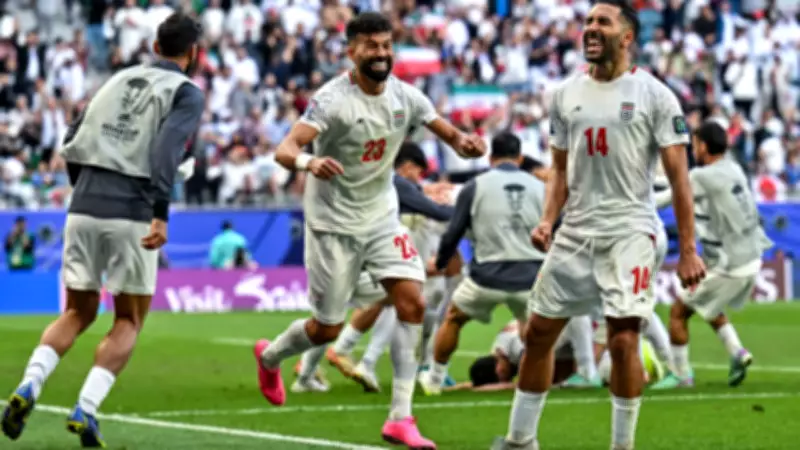
Iran Initiates FIFA Talks to Shift 2026 World Cup Matches from US to Mexico
In a significant development for international football, Iran's football federation has formally commenced discussions with FIFA to transfer its FIFA World Cup 2026 group-stage matches from the United States to Mexico. This request stems from heightened security apprehensions and the ongoing geopolitical conflict in West Asia, which Iranian officials believe could jeopardize the safety of their national team players and staff during travel to the United States.
Security Worries Prompt Formal Request
Iranian authorities have explicitly cited the current volatile situation as the primary motivation behind this unprecedented move. The federation fears that escalating tensions, particularly following recent military engagements involving Iran, the United States, and Israel, could pose substantial risks. Iran's embassy in Mexico has confirmed that these negotiations are actively underway, emphasizing the country's proactive stance in safeguarding its delegation.
Mehdi Taj, president of the Iranian football federation, elaborated on the concerns, stating that the team is deeply worried about traveling to the United States under the present circumstances. He asserted that unless the American government can provide unequivocal guarantees for the squad's security, Iran would prefer not to compete there. Taj confirmed that talks with FIFA are already in progress to explore the feasibility of hosting Iran's matches in Mexico as an alternative.

Original Schedule and Proposed Changes
The 2026 FIFA World Cup is set to be jointly hosted by the United States, Canada, and Mexico. Initially, Iran was scheduled to play two of its group matches in Los Angeles and one in Seattle. Specifically, the team was slated to face New Zealand and Belgium in Los Angeles, with a final group match against Egypt in Seattle. Additionally, Iran's base camp had been planned for Tucson, Arizona.
Iranian officials are now pushing for all these matches to be relocated to Mexico. Abolfazl Pasandideh, Iran's ambassador to Mexico, highlighted logistical hurdles, including difficulties in obtaining visas and securing adequate support from the United States, as further justification for the request. He criticized these challenges and reiterated Iran's proposal to FIFA for the shift.
Firm Rejection of Exclusion and Broader Context
In a strong rebuttal, Iranian officials have dismissed any notion that their team could be barred from participating in the tournament. They insisted that no country, including the United States, possesses the authority to prevent Iran from competing in the World Cup. This stance underscores the federation's determination to ensure its team's involvement while addressing security issues.
The controversy arises against a backdrop of recent large-scale attacks by the United States and Israel on Iranian targets, which prompted retaliatory missile and drone strikes by Iran on American and Israeli positions across West Asia. These events have exacerbated regional tensions, fueling Iran's security concerns.
Current Status and Implications
As of now, FIFA has not announced any final decision regarding Iran's request. The outcome of these negotiations could set a precedent for how international sporting bodies handle security-related match relocations amid geopolitical conflicts. The situation remains fluid, with stakeholders closely monitoring developments.
This move by Iran highlights the intricate intersection of sports, politics, and security on the global stage, potentially influencing future tournament logistics and diplomatic relations in the lead-up to the 2026 World Cup.