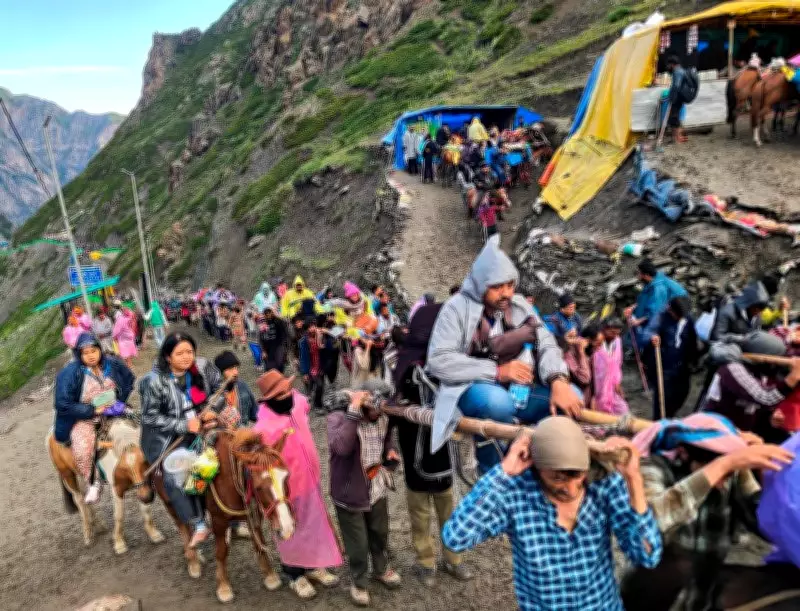
Historic Pilgrimage Numbers in First Week
More than 100,000 pilgrims have already performed darshan of the ice Shivling at the Amarnath cave shrine in just the first five days of the annual yatra, according to officials. The pilgrimage, which began on July 3, has seen a steady stream of devotees from across India and abroad.
Yatra Route and Security Arrangements
The two main routes to the cave shrine are the traditional Pahalgam route and the shorter Baltal route. Both routes are heavily secured by the Indian Army, Central Reserve Police Force (CRPF), and Jammu and Kashmir Police. This year, the administration has introduced advanced crowd management systems and real-time tracking of pilgrim movements to ensure safety.
Ice Lingam Formation and Significance
The ice Shivling, a stalagmite formation inside the cave, is considered a natural representation of Lord Shiva. It forms over months due to freezing water dripping from the cave ceiling. The lingam waxes and wanes with the phases of the moon, adding to its mystique. Devotees believe that the lingam symbolizes the presence of Lord Shiva.

Concluding Date and Expected Footfall
The 62-day yatra will conclude on August 28, coinciding with the festival of Raksha Bandhan. Officials expect over 5 lakh pilgrims to visit the shrine this year, surpassing previous records. The yatra was suspended for two years due to the COVID-19 pandemic.
Quotes from Pilgrims and Officials
"After waiting for two years, I finally got the chance to have darshan of Baba Amarnath. It is a dream come true," said a pilgrim from Maharashtra. A senior official stated, "We have made elaborate arrangements for the safety and comfort of pilgrims. The response has been overwhelming."
Environmental and Logistical Measures
The Shri Amarnath Shrine Board (SASB) has implemented strict environmental guidelines to minimize the ecological impact of the yatra. This includes waste management protocols, use of eco-friendly materials, and restricted use of plastic. Over 5,000 sanitation workers are deployed along the routes.
Weather and Medical Facilities
The weather in the region remains unpredictable, with occasional rain and low temperatures. Medical facilities have been set up at base camps and along the routes, staffed with doctors and paramedics. Over 20,000 portable toilets have been installed to maintain hygiene.