Novak Djokovic's Australian Open Defeat: A Turning Point in His Quest for History
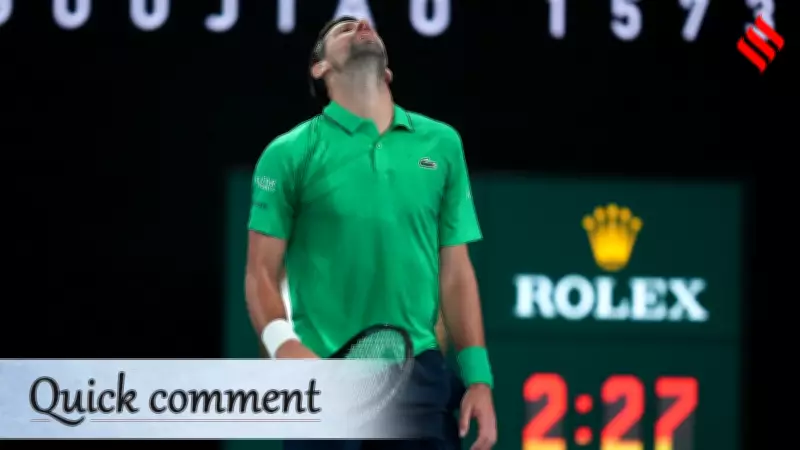
As Novak Djokovic picked up the microphone following his four-set defeat to Carlos Alcaraz in the Australian Open final, an unusual note of resignation colored his typically optimistic tone. The 38-year-old tennis legend, who had just missed a golden opportunity to secure a record-breaking 25th Grand Slam title, offered a surprisingly candid reflection on his future.
"I always believe in myself, but I have to be honest. I did not expect to be speaking during the closing ceremony of a Grand Slam tournament again," Djokovic told the Melbourne crowd, acknowledging the uncertainty that now surrounds his career trajectory.
The Perfect Setup That Ultimately Unraveled
Everything had aligned perfectly for Djokovic's historic pursuit. The Serbian superstar had turned back the clock with a stunning semifinal victory over Jannik Sinner, demonstrating that his competitive fire still burned as brightly as ever. His path to the final had been remarkably smooth, benefiting from a walkover and a retirement earlier in the tournament, preserving his 38-year-old body for the championship match.

Djokovic entered the final with significant advantages. He had spent considerably less time on court than his opponent, while Alcaraz had endured a grueling five-and-a-half-hour semifinal battle against Alexander Zverev just two days earlier. The conditions at Rod Laver Arena seemed tailor-made for Djokovic's game, with cooler night temperatures creating a heavier ball that complemented his precise serving and groundstrokes.
Alcaraz's Rise and Djokovic's Reality Check
The match began exactly as Djokovic would have hoped. He captured the first set with clinical efficiency, his timing and placement reminiscent of his peak years. For a moment, it appeared the stage was set for another chapter in his historic career.
However, Carlos Alcaraz had other plans. The 22-year-old Spaniard, widely regarded as Rafael Nadal's heir apparent, gradually found his rhythm and began dismantling Djokovic's game plan. Once Alcaraz deciphered the veteran's second serve, he applied relentless pressure with heavy topspin and creative angles that pushed Djokovic uncomfortably behind the baseline.
The fourth set proved particularly telling. For the first time in the match, Djokovic appeared physically drained as he served to stay in contention. The prospect of forcing a fifth set against a younger, fresher opponent seemed increasingly daunting, and the Serbian ultimately succumbed to the mounting pressure.
The Historical Context and Future Implications
The symbolism of the moment was not lost on tennis observers. Rafael Nadal, who had defeated Djokovic at the US Open sixteen years earlier to become the youngest player to complete the career Grand Slam, watched from the stands as his compatriot Alcaraz claimed that same record against the same opponent.
Djokovic's achievement in reaching a Major final after a two-year drought remains impressive, particularly given his age and recent physical challenges. His ability to compete with the world's top two players at 38 stands as a testament to his extraordinary longevity and skill.
Yet the defeat raises uncomfortable questions about his future prospects. Has Djokovic missed his best opportunity to add to his Grand Slam collection? The combination of favorable circumstances—a manageable draw, advantageous conditions, and a fatigued opponent—may not align so perfectly again in what could be the twilight of his career.
The Physical and Mental Toll of Elite Competition
Defeating both Jannik Sinner and Carlos Alcaraz in consecutive matches represents an enormous physical and technical challenge for any player, let alone a 38-year-old with a history of recent physical issues. While Djokovic demonstrated remarkable resilience throughout the tournament, the cumulative demands of elite competition appear increasingly taxing.
The Serbian's post-match comments revealed a competitor grappling with his own mortality in the sport. His acknowledgment of uncertainty about what the next six to twelve months might bring suggests even the most determined champions must eventually confront the realities of aging in professional sports.

Djokovic's Australian Open campaign showcased both his enduring greatness and the emerging challenges he faces. While his competitive spirit remains undiminished, the combination of younger, physically dominant opponents and the inevitable effects of time create significant obstacles to further Grand Slam success.