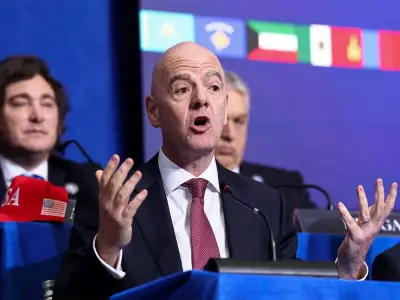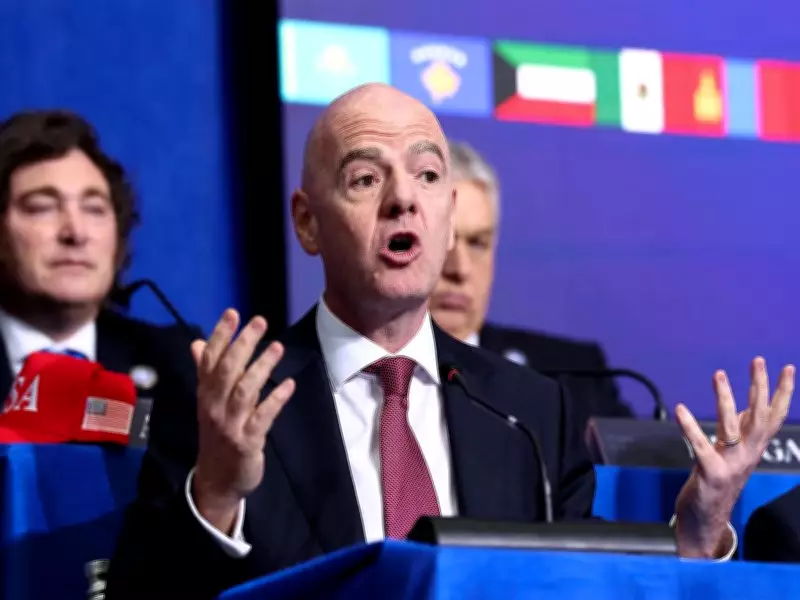
FIFA President Gianni Infantino has defended the newly introduced hydration breaks at the ongoing FIFA World Cup 2026, asserting that the measure is purely a sporting decision and generates no additional revenue for FIFA. All commercial agreements were signed well in advance, Infantino stated in response to criticism that the breaks serve as a commercial opportunity for broadcasters.
Hydration Breaks Introduced to Combat Extreme Heat
Since the tournament began, matches have featured two three-minute hydration breaks per half—one in the 22nd minute and another in the 67th minute. The breaks are designed to help players cope with extreme heat conditions across North America. However, they have opened up advertising slots for broadcasters, leading to accusations that FIFA is prioritizing profit over the sport.
Infantino countered these claims in a statement quoted by Reuters: "There is no additional revenue for FIFA, as all commercial agreements were signed well in advance. So, this is not a financial issue for us. For us, it is purely a sporting matter."

Coaches and Players Express Concerns
England manager Thomas Tuchel has been one of the most vocal critics, stating that the breaks "interrupt and change the identity of the football match." Uruguay coach Marcelo Bielsa echoed this sentiment, arguing that dividing the game into shorter chunks undermines the fundamental characteristic of the sport.
On the other hand, Spain coach Luis de la Fuente and Netherlands captain Virgil van Dijk have supported the intent behind the breaks but questioned their necessity in cooler conditions or at covered, air-conditioned venues.
Infantino Emphasizes Player Welfare and Fairness
Infantino explained that the primary reason for the breaks is heat, but in a tournament spanning 39 days with teams potentially playing eight matches, a moment of rest becomes crucial. "What matters even more to us is ensuring that all teams, in every match, are playing under the same conditions," he said.
He further argued that it would be unfair if a coach could influence a match through adjustments solely because of higher temperatures, while another match with slightly cooler conditions offered no such opportunity. Infantino also noted that the breaks have not diminished the intensity of matches, as players have maintained high performance levels throughout games.
Impact on Game Momentum and Tactics
Critics, including several coaches, have complained that the hydration breaks disrupt game momentum and force tactical changes, effectively dividing the match into four quarters. Despite these concerns, Infantino remains firm that the breaks are a necessary adaptation for player welfare and competitive fairness in a tournament held across diverse climatic conditions.