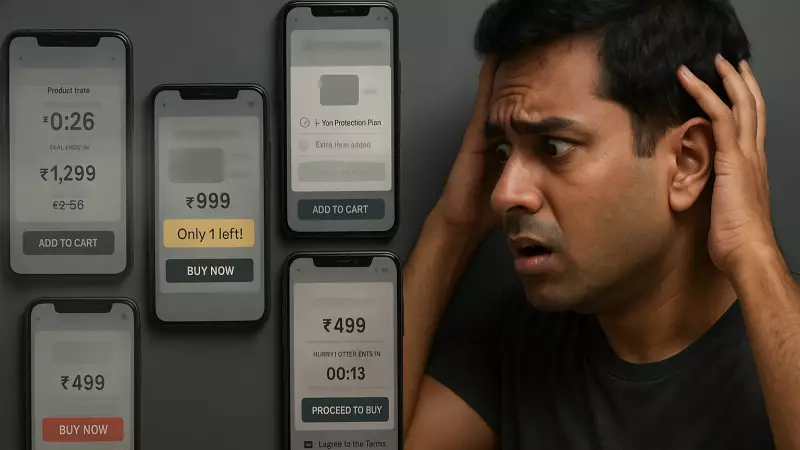
Have you ever completed an online purchase and then paused, wondering how you agreed to an extra subscription or added an unintended item to your cart? If this sounds familiar, you are far from alone. A recent nationwide investigation has confirmed that the vast majority of popular digital platforms in India are deliberately designed to trick users into spending more money or giving up personal data.
The Shocking Scale of Digital Manipulation
A comprehensive audit examined 290 major digital platforms across shopping, travel, food delivery, and financial technology sectors. The findings, released in early December 2025, are alarming: 97% of these Indian apps were found to be using deceptive "dark patterns." These are intentionally manipulative design tactics crafted to steer user behavior, often pushing consumers to spend more, agree to unwanted terms, or surrender control without their clear consent.
While these tricks are present throughout the year, they become particularly aggressive during high-sales periods. The festive season, with its relentless barrage of deals, flash sales, and promotional notifications, offers the perfect environment for these practices to thrive. India's massive $125-billion e-commerce ecosystem leverages this period to amplify these dark patterns, capitalizing on the surge in consumer spending and the urgency created by limited-time offers.

How E-Commerce Apps Engineered Your Choices
Dark patterns are subtle but powerful tools in a designer's arsenal. They work by exploiting common psychological biases. For instance, you might encounter a countdown timer for a deal that may not actually be expiring, creating a false sense of scarcity. Another common tactic is making the button to accept a costly subscription or add-on service brightly colored and prominent, while the option to decline is hidden in small, grey text.
Other manipulative methods include:
- Confirm Shaming: Using language that guilts you into opting for a service (e.g., "No, I don't want to save money").
- Forced Action: Requiring you to sign up for a newsletter or create an account to simply browse products.
- Basket Sneaking: Automatically adding extra items or services to your cart during the checkout process.
- Roach Motel: Making it extremely easy to sign up for a service but incredibly difficult and confusing to cancel it.
These designs are not accidents; they are carefully planned strategies to increase revenue at the expense of transparent user choice.
A Moving Target for Regulators
Despite the government issuing warnings and guidelines against such unfair trade practices, enforcement remains a significant challenge. Experts point out that regulation is a "moving target," as the tactics used by companies evolve rapidly. The sheer scale of the problem, with 97% of audited apps implicated, highlights that vigilance and effective enforcement are currently the weakest links in protecting Indian consumers.
The situation calls for greater consumer awareness. Shoppers must learn to recognize these dark patterns—like pre-checked boxes for add-ons or misleading urgency cues—and pause before clicking. While authorities work on stronger regulatory frameworks, the first line of defense is an informed and cautious user who questions the design nudges guiding their online behavior.