India's growth story is increasingly being written by a generation that refuses to slow down. Raised in an era of constant connectivity and limitless aspiration, young consumers are reshaping markets in their own image. Nowhere is that more visible than in the energy drinks category, where adults aged 18 to 35 account for nearly 70% of consumption. With the market valued at over USD 1.4 billion in 2024 and expected to nearly double by 2033, the surge is about far more than refreshment. It signals a cultural recalibration in which energy, focus and performance have evolved from athletic pursuits into everyday necessities for a generation in perpetual motion.
The Changing Face of Marketing to Young Indians
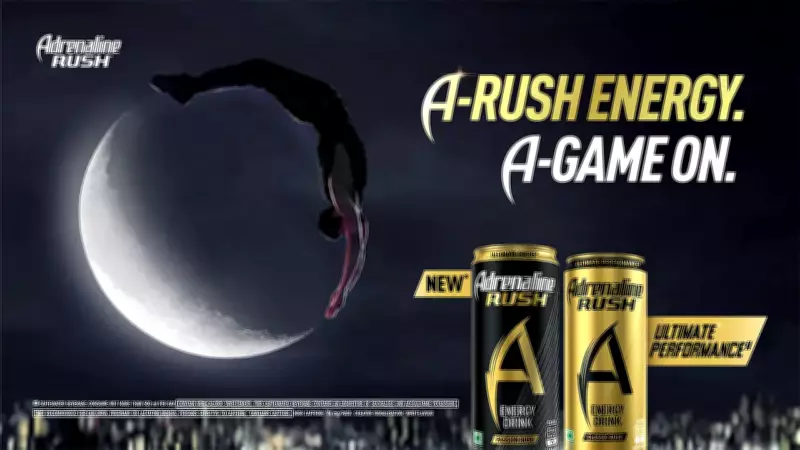
For brands trying to reach this audience, the traditional launch playbook is increasingly inadequate. The internet-native consumer has grown a sophisticated immunity to overt advertising – the splashy press conference, the celebrity endorsement, the perfectly engineered tagline. What cuts through, more reliably, is something harder to manufacture: genuine curiosity. The sense that something is unfolding, that a mystery is in the air, and that you might want to be part of solving it. It was precisely that instinct that a cryptic image of the moon triggered when it began circulating across Indian social media – no logo, no copy, no brand name attached. Just a visual and an internet left to wonder. The image would eventually be traced back to Adrenaline Rush, PepsiCo India's new premium energy drink, but not before it had already done something far more valuable than announcing itself: it had made people search for it.
Long Before the Reveal, Social Media Was Consumed by a Single Question: Who Owns the Moonshot?
What began as a minimalist visual provocation snowballed into one of the more talked-about digital mysteries in India's recent marketing calendar. The image set off widespread speculation across platforms: consumers, creators and online communities trading theories, decoding symbols and attempting to identify the force behind it. The conversation grew organically, which is precisely what made it stick.

The phenomenon drew participation from well beyond the intended audience. The campaign quickly spilled beyond its original category, drawing responses from brands across technology, commerce, entertainment and consumer goods. The result was a rare phenomenon: competitors voluntarily extending the reach of a rival's marketing effort in service of a cultural moment that had taken on a life of its own.
India's Creator Ecosystem Added Its Own Momentum
Over 100 content creators and meme communities contributed theories, reaction content, humorous interpretations and speculative storytelling, extending a conversation that had, by then, moved well beyond any single platform or intended audience.
The reveal eventually named Adrenaline Rush as the brand behind the moonshot, connecting weeks of online speculation to the energy drink's positioning around performance and ambition. By the time the product was identified, the conversation around it had already run its own course, shaped less by the brand than by the people who had picked it up and carried it.
The Campaign, Built Around the Platform 'A-Rush, A-Game On'
Entered the premium energy drink segment positioned around what the brand calls Ultimate Focus and Ultimate Performance. But its more significant entry was into public consciousness, not as an advertisement, but as a cultural artefact that people had voluntarily engaged with, shared and argued about before they even knew what it was selling.
As brands across categories search for ways to break through a landscape saturated with content, the Adrenaline Rush launch offers a compelling case study in the architecture of earned attention. Culture-led storytelling, deployed with enough restraint to invite participation rather than demand it, produced something that conventional launch formats rarely achieve: a moment where brands, creators and consumers found themselves inside the same conversation, not because they were targeted, but because they chose to be there.

In a market growing as fast as India's energy drink segment, first-mover advantage matters but so does first-memory advantage. The moonshot campaign made the case that in the attention economy, the most effective way to introduce a brand may not be to announce it at all, but to make the audience feel, however briefly, that finding it was their own idea.
Disclaimer: This article has been produced on behalf of A-Rush by Times Internet's Spotlight team.