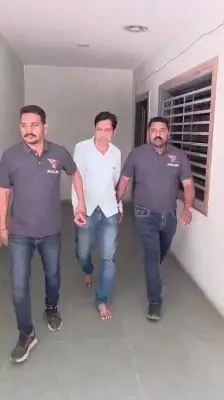
A magistrate's court in Mumbai has acquitted Dr Arshad Shaikh, a Bhiwandi-based laboratory owner, in a case where he was accused of fabricating a breast cancer diagnosis using a forged Tata Memorial Hospital (TMH) letterhead. The trial, which spanned 15 years, concluded with the court ruling that the prosecution failed to prove the charges beyond a reasonable doubt.
Case Background
The case dates back to 2009 when a woman, Devaki Pujari, underwent a tumour removal surgery. The tumour was sent for pathological examination to Maxim Lab in Kalyan, owned by Dr Shaikh. The prosecution alleged that instead of conducting the test, Dr Shaikh kept the diagnostic fees and generated a fake breast cancer diagnosis dated September 12, 2009, using a scanned TMH letterhead and splicing together data from two genuine cancer patients.
The fabricated report led Devaki and her treating doctors to believe she had a severe malignancy. However, when she was referred to TMH for radiation therapy in 2010, hospital doctors noticed that her physical symptoms did not match the severe cancer described in the report. An internal investigation revealed that the requisition and case numbers on her documents belonged to other patients, and no legitimate record existed for her in the hospital's system.

Police Investigation and Charges
An FIR was registered at Bhoiwada police station in 2010. The police alleged that Dr Shaikh admitted to fabricating the report during a confrontation with TMH's vigilance department on March 15, 2010. He was charged with cheating, forgery, and other offenses.
However, during the trial, the prosecution examined only Devaki's son, Rajesh Pujari, who testified that the tumour was sent by the surgeon to the lab and that he never met Dr Shaikh before the incident. The defence argued that the prosecution failed to establish a direct link between Dr Shaikh and the alleged forgery.
Court's Observations
Judicial Magistrate First Class P S Shinde, in a 13-page judgment, noted several lapses in the investigation. The court pointed out that the investigating officer did not record a statement from Devaki Pujari, the alleged victim. Additionally, the physical slides produced during the hospital inquiry were never sent for DNA testing to confirm they originated from her tumour.
The magistrate also highlighted that the prosecution did not examine Dr Harish, the surgeon who removed the tumour, to establish the chain of custody. The chargesheet did not include any statement from Dr Harish, creating doubt about whether the tumour was actually sent to Dr Shaikh's lab.
Furthermore, the court noted the lack of digital evidence. The investigating officer failed to confiscate the computers allegedly used to morph the hospital letterhead, which was crucial to prove the forgery and cheating charges.
Acquittal and Rationale
Given these deficiencies, the court concluded that the prosecution could not prove beyond a reasonable doubt that Dr Shaikh personally conducted the pathological examination or issued the fabricated report. The magistrate stated, "The prosecution will not be in a position to prove beyond reasonable doubt that the accused himself conducted pathological examination of breast tumour of Devaki and accordingly, issued fabricated pathological report. Resultantly accused will have to be acquitted by giving benefit of reasonable doubt."
The court also noted that Rajesh Pujari admitted during cross-examination that the alleged report was sent to the hospital by Dr Harish, not directly by the accused. This further weakened the prosecution's case.
Conclusion
The acquittal of Dr Arshad Shaikh highlights significant flaws in the investigation and prosecution. The case serves as a reminder of the importance of thorough evidence collection and witness examination in criminal trials. The 15-year-long ordeal for both the accused and the victim's family has ended with a verdict that underscores the principle of 'innocent until proven guilty.'