BJMC vs General Mass Communication: Which Degree Builds a Better Media Career?
With India's media industry evolving rapidly, the choice between a BJMC and a general mass communication degree has become critical for students and parents. AAFT University of Media and Arts in Raipur offers B.A. and M.A. programs in Journalism and Mass Communication that prepare graduates for broadcast journalism, digital media, and PR roles. Understanding the differences between these degrees can shape a student's career trajectory.
Core Differences Between BJMC and General Mass Communication
A BJMC degree is a specialized professional program focusing on journalism and mass communication. It covers news reporting, broadcast production, digital journalism, public relations, documentary filmmaking, and media law. Students gain hands-on experience in studios, radio booths, editing labs, and field assignments, building a portfolio of real work.
In contrast, a general mass communication degree offers breadth across advertising, PR, journalism, film theory, and communication research without deep specialization. While it provides flexibility, graduates often lack the depth needed for immediate employment in specific roles.

Why BJMC Produces Stronger Career Outcomes
For students targeting newsrooms, digital platforms, broadcast channels, PR firms, or content creation, a BJMC degree provides job-specific training. AAFT University's B.A. in Journalism and Mass Communication covers news writing and editing, TV production, live news anchoring, radio journalism, documentary filmmaking, social media journalism, mobile journalism, podcast production, corporate communication, and AI tools in the Honors track.
The B.A. Honors or Honors with Research track extends to four years and 160 credits, covering media ethics, rural journalism, science communication, and dissertation research. This track suits students aiming for academic, research, or senior editorial roles. The M.A. program is a two-year postgraduate degree for senior roles in broadcast journalism, documentary production, media research, or advanced PR strategy.
When General Mass Communication Makes Sense
A general mass communication degree can benefit students unsure about their specific media focus. It offers exposure to advertising, PR, event management, and journalism before specialization. However, many programs cover topics superficially, leaving graduates with surface-level knowledge. This works if students plan postgraduate specialization but is less effective for direct employment.
AAFT University's BJMC program includes advertising, PR, digital marketing, corporate communication, and event management alongside core journalism training, ensuring breadth and depth.
The Portfolio Problem at Placement Time
Hiring managers prioritize practical experience. A BJMC graduate from AAFT University has a portfolio of news bulletins, radio shows, documentary segments, digital content campaigns, and PR campaign briefs produced using professional infrastructure. This portfolio demonstrates capability beyond exam scores.
Infrastructure for Real Production Training
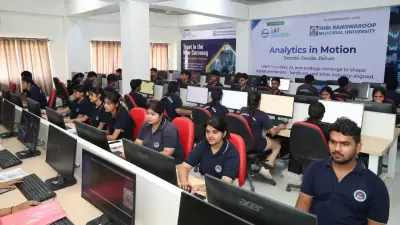
AAFT University's 27-acre campus in Raipur features a multi-camera TV studio, in-house radio station, post-production editing labs with industry-standard software, and a digital newsroom with content management platforms. Students earn certifications in Digital Marketing, Mobile Journalism, Video Editing, Fact-Checking, and Social Media Management.
Industry Data Supports Specialized Journalism Education
India's digital news industry is growing, with regional platforms, OTT content, and corporate communication departments expanding hiring. Employers prefer candidates with hands-on production experience. A general mass communication graduate without practical work cannot compete with a BJMC graduate who has produced news packages, radio episodes, and PR campaigns.

Faye D'Souza Leads the Journalism School
AAFT University's School of Journalism and Mass Communication is led by Industry Dean Faye D'Souza, a renowned broadcast journalist and RedInk Award recipient. The faculty includes Head of Department Mr. Somanath Sahoo, Ms. Ankisha Mishra, Ms. Rashmi Priya, and Dr. Shiv Gopal, all with professional media experience. Placement partners include NDTV, India TV, R. Bharat, News Nation, and News India.
Career Roles for BJMC Graduates
Graduates work as News Anchors, TV Reporters, Radio Producers, Digital Content Writers, PR Officers, Documentary Filmmakers, Social Media Journalists, Event Managers, and in government media roles like Indian Information Service. Government roles are popular among students from Chhattisgarh and neighboring states.
Admissions for 2026 Are Now Open
Class 12 graduates from any stream can apply for the B.A. program, and graduates from any discipline can apply for the M.A. program. Both require clearing the AAFT Global Entrance Exam, including an aptitude test and personal interview. Financial assistance is available through NSDC Skill Loans. Early applications are recommended due to limited seats.
For Admissions and Media Inquiries, Contact: AAFT University, Vill. Manth, Kharora, District Raipur, Chhattisgarh 493225, India. Admission Office: GF-18, Ground Floor, Shyam Plaza, Pandri, Raipur, Chhattisgarh 492001. Phone: +91 9109112078 / +91 8064057209.
Disclaimer: The content above is presented for informational purposes as a paid advertisement. The Tribune does not take responsibility for the accuracy, validity, or reliability of the claims, offers, or information provided by the advertiser. Readers are advised to conduct their own independent research and exercise due diligence before making any decisions based on its contents.