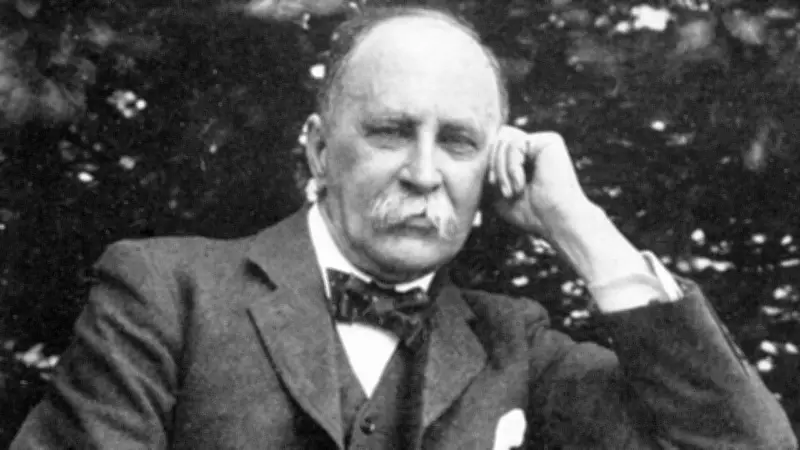
History is filled with individuals who conceived brilliant ideas first but received no recognition. Someone else later articulated the concept more clearly, promoted it more vigorously, and ultimately claimed the fame. This may seem unfair, and indeed it is, but it reflects how the world has always operated. This sharp observation, popularized by the eminent physician Sir William Osler, encapsulates that hard truth in a single line: the prize does not go to the originator of an idea, but to the one who persuades the world to believe it.
Quote of the Day by Sir William Osler
"In science the credit goes to the man who convinces the world, not to the man to whom the idea first occurs."
Sir William Osler: Medicine's Most Quotable Doctor
Sir William Osler, born in 1849 in Canada, is often hailed as the father of modern medicine. He co-founded the renowned Johns Hopkins Hospital in the United States and revolutionized medical training by insisting that students learn at the patient's bedside rather than solely from textbooks. Osler was also one of the most quotable figures in medical history. Witty, wise, and endlessly practical, he left behind a treasure trove of sayings that doctors still recite more than a century later. This line about credit and ideas is among his most enduring, and it carries a twist that makes it even more compelling.

Ideas Are Cheap, Persuasion Is Rare
The essence of the quote is an uncomfortable observation about how recognition works. We tend to assume that the person who first conceives a great idea is the one who is remembered. In reality, this is often not the case. Osler's point is that ideas themselves are surprisingly common; many people have flashes of insight. What is rare, and what truly moves the world, is the ability to take an idea and convince everyone else of its importance. This involves explaining it clearly, proving it, fighting for it, and refusing to let it be ignored. The thinker who quietly has an idea and moves on tends to be forgotten, while the one who champions it until the world listens earns a place in history. In short, having the idea is only the beginning; persuading people is the real work and the real source of credit.
A Quote That Proves Its Own Point
Here is the delightful twist: this very quote is a perfect example of the phenomenon it describes. The words are almost always attributed to Osler, and he certainly loved to repeat them. However, he was not the first to say them. The line appears to trace back to Sir Francis Darwin, a scientist and son of Charles Darwin, who expressed a nearly identical sentiment in a lecture in the early twentieth century. So consider what happened: Francis Darwin had the idea first; Osler convinced the world of it; and the world, as the quote predicts, handed the credit to the man who spread it rather than the one who first thought it. You could not invent a clearer demonstration of the idea in action. The quote about credit going to the great communicator has itself gone to the great communicator. It is almost too neat to be true, yet it is.
How to Apply This Quote in Your Own Life
You do not need to be a scientist for this lesson to apply. It pertains to anyone who has ever had a good idea at work, at home, or in a project they care about. Do not assume a good idea will speak for itself; it almost never does. If you believe in something, be ready to explain it, repeat it, and push for it, because the idea alone will not do that work for you. Treat communication as a real skill, not an afterthought. Learning to present clearly and persuade others is not showing off; it is often the difference between an idea that changes things and one that quietly dies. Do not sit on your idea waiting to be discovered; the person who acts and shares usually wins out over the one who keeps a brilliant thought to themselves. Speak up sooner rather than later. When you build on someone else's idea, give them credit anyway. The quote describes how the world tends to work, not how it should always work. Naming the people whose thinking you borrowed is simply fair and costs you nothing.

A Thought to Carry with You
There is a gentle warning buried in this quote, along with a piece of encouragement. The warning is that the world does not automatically reward the first or the cleverest; it rewards the persuasive. If you want your ideas to count, you cannot just have them; you must carry them out into the world and make the case for them. The encouragement is that this is a skill anyone can build. You may not be the most original thinker in the room, but you can learn to listen, explain, and convince. Osler himself was proof of this: he took an idea that was not even his own, believed in it, said it well, and made it last. More than a hundred years later, we are still repeating his version. That, in the end, is exactly what the quote is about.
About the Author
TOI Science Desk: The TOI Science Desk stands as an inquisitive team of journalists, ceaselessly delving into the realms of discovery to curate a captivating collection of news, features, and articles from the vast and ever-evolving world of science for the readers of The Times of India. Consider us your scientific companion, delivering a daily dose of wonder and enlightenment. Whether it is the intricacies of genetic engineering, the marvels of space exploration, or the latest in artificial intelligence, the TOI Science Desk ensures you stay connected to the pulse of the scientific world. At the TOI Science Desk, we are not just reporters; we are storytellers of scientific narratives. We are committed to demystifying the intricacies of science, making it accessible and engaging for readers of all backgrounds. Join us as we craft knowledge with precision and passion, bringing you on a journey where the mysteries of the universe unfold with every word.