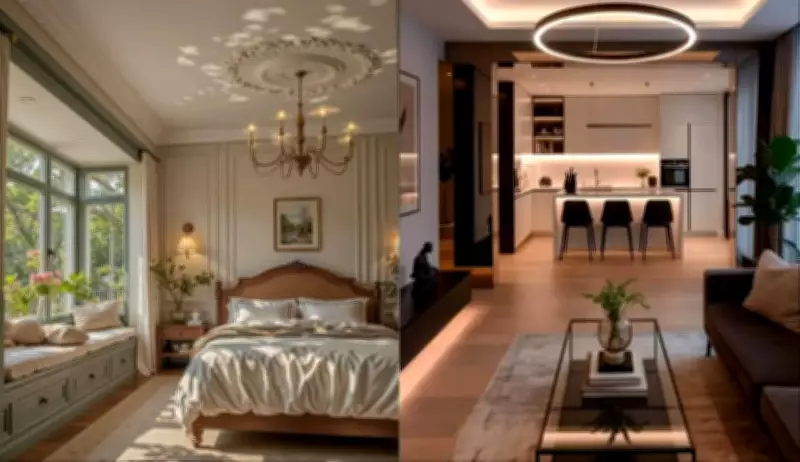
Good design is not about spending more but about making more intentional choices with what you already have. There is a common assumption that a better-looking home requires a renovation, a designer, or a significant sum of money. In reality, many of the most effective changes cost very little and take even less time.
The principles that make exhibition spaces feel polished and immersive, where every detail is considered and every inch of space is used with purpose, are more transferable to everyday homes than most people realise. An April 2026 report in NoBroker Interiors Design Guide found, "Low-budget interior design shows that a stylish and comfortable home doesn't require a massive investment. With smart space planning, strategic colour choices, and multi-functional furniture."
In an interview with the Times of India, Sam Allen, Managing Director at Noisy&Co, a UK-based hybrid creative agency specialising in immersive brand experiences and exhibition design, shared, "We're constantly working out how to make a space feel bigger, more welcoming, and more memorable, without necessarily having unlimited resources. The same logic applies whether you're dressing a trade show stand or a living room."

Layout and Flow: Move Before You Buy
One of the first things exhibition designers consider is how people move through a space. A room that feels cramped or uncomfortable is often a layout problem, not a size problem. "Before anything else, we look at circulation," said Sam. "If you can't move through a space naturally, it will always feel awkward, no matter how well it's decorated. At home, try pulling furniture away from the walls slightly and creating a clear path through the room. It's surprising how much of a difference that makes."
Walk through your room as if you're a visitor. If anything interrupts your movement, rearrange it. According to a January-February 2026 study published in the International Journal For Multidisciplinary Research (IJFMR), "Simplifying spaces to promote functionality, serenity and clarity... The absence of clutter and the organisation of space fostered a sense of peace, lowered stress and encouraged intentional living." This paper uniquely synthesises evidence linking minimalist design to psychological well-being.
Create a Focal Point
Every well-designed exhibition space has a "hero" area, one spot that draws the eye and anchors everything else around it. Homes benefit from exactly the same thinking. This could be a styled shelf, a coffee table arrangement, or a corner with a lamp and a piece of art. The point is to give the eye somewhere to land. Without a focal point, rooms can feel visually flat, even when they are full of nice things.
Edit Rather Than Add
Exhibition designers work within strict limits on what goes into a space, and that discipline is worth borrowing. A common mistake in home decor is filling every surface and corner, when the more effective move is often to take things away. "We're ruthless about editing," Sam explained. "Every element in an exhibition space has to earn its place. At home, people tend to accumulate things over time without stepping back to ask whether each item is actually adding anything. A curated space almost always looks more considered than a busy one." Try removing a third of what is on your shelves or surfaces and see how the room changes.
Layer Your Lighting
Lighting is a powerful tool in exhibition design and one of the most overlooked in the home. Overhead lighting alone tends to flatten a space. Layering in floor lamps, table lamps, and warm-toned bulbs adds depth and atmosphere that no amount of new furniture can replicate. "Lighting changes how a room feels entirely," said Sam. "In exhibitions, we use it to guide attention and create mood. At home, swapping a harsh ceiling light for a couple of lamps in the evening can make a space feel completely different."
Introduce Texture
When budgets are tight, texture is a cost-effective way to refresh a room. Soft furnishings, natural materials like linen, wood, or woven baskets, and layered fabrics add visual interest and warmth without requiring any structural changes. The principle from exhibition design is simple: varied surfaces make spaces feel richer. A room with only smooth, flat surfaces tends to feel cold, even if the colour palette is warm.

Use Your Walls
Exhibition designers rarely leave walls bare. Vertical space is often completely unused in homes, yet it offers real opportunity for storage, decor, and the visual impression of height. "We treat walls as usable space," Sam noted. "Whether that's shelving, wall-mounted lighting, or a piece of art positioned at the right height, drawing the eye upward makes a room feel taller and more considered."
Engage More Than One Sense
The most memorable exhibition spaces work on multiple levels. Scent, sound, and texture all contribute to how a space feels, not just how it looks. At home, a candle, a textile with an interesting feel, or background music can shift the atmosphere of a room in ways that are hard to pin down but immediately noticeable.
Rotate Rather Than Replace
Exhibition designers are experts at refreshing spaces without starting from scratch. Seasonal swaps, moving a piece of art from one room to another, changing a throw or a vase can make a space feel new again without any additional spending. "Most people don't realise how much they already have to work with," said Sam. "An object that's been in the same spot for two years becomes invisible. Move it somewhere unexpected, and it becomes interesting again. Familiarity is often the enemy of a room feeling fresh."
Talking about top home renovation ideas for 2026, a Spacescape Architects Blog suggested, "Rethink placement before replacing: Rearranging furniture in order to improve flow can completely change how a room feels... Fix lighting before anything else: Good lighting changes how a room feels."
Good design is about how intentionally you use what you have. Sam said, "In exhibition design, we're always working to make spaces feel considered and purposeful, and that discipline is something anyone can apply at home." The homes that feel the most put-together are rarely the most expensive ones. They are the ones where someone has thought carefully about layout, light, and what to leave out. Sam Allen concluded with the advice, "Small tweaks, whether that's repositioning a lamp, clearing a surface, or adding a natural texture, can change how a space feels when you're in it. Applying that kind of thinking doesn't require a big budget or a design background. It just requires a bit of intention."