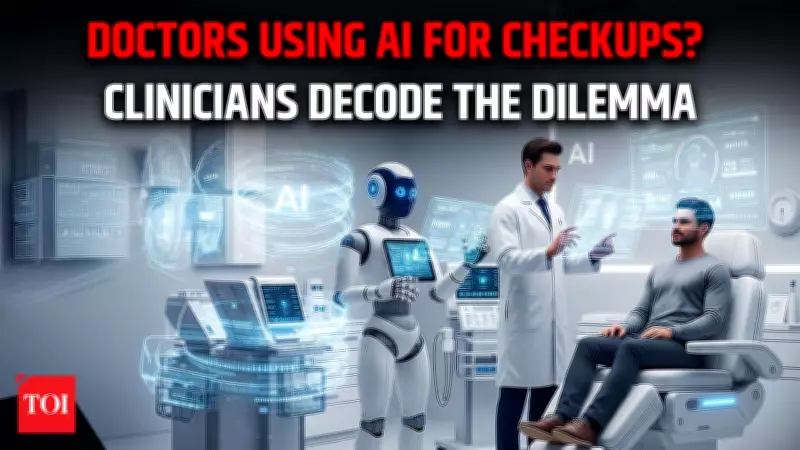
Artificial Intelligence is rapidly transforming healthcare, but not in the way many people imagine. While patients increasingly turn to AI chatbots to understand symptoms, decode lab reports, and seek possible diagnoses, doctors are using AI very differently. Rather than replacing clinical judgment, healthcare professionals are leveraging AI to reduce administrative workload, summarize research, improve documentation, and free up more time for patient care.
How Doctors Are Adapting to AI
In this article, we explore how doctors are adapting to AI, why clinicians believe medicine is much more than symptom matching, and where AI still falls short. Experts explain that diagnosis often begins the moment a patient enters the clinic, through observations, context, behavior, and medical experience that algorithms cannot fully replicate. At the same time, doctors acknowledge that AI can empower patients to ask better questions and better understand their health.
Where AI Falls Short
Despite its capabilities, AI lacks the nuanced understanding that comes from years of clinical training. A doctor can read a patient's body language, notice subtle changes in tone, or pick up on environmental cues that a machine might miss. AI also struggles with ethical decision-making and complex cases that require human empathy and judgment.

What Patients Should Know
Doctors encourage patients to use AI as a tool for education, not as a replacement for professional medical advice. AI can help patients prepare for appointments by generating questions or explaining test results, but it should never be used to self-diagnose or self-treat. The best outcomes come from a partnership between informed patients and skilled physicians who use AI responsibly.
As AI becomes a permanent part of healthcare, the emerging consensus is clear: the future is not doctors versus AI, but doctors and patients using AI responsibly to improve communication, understanding, and care.