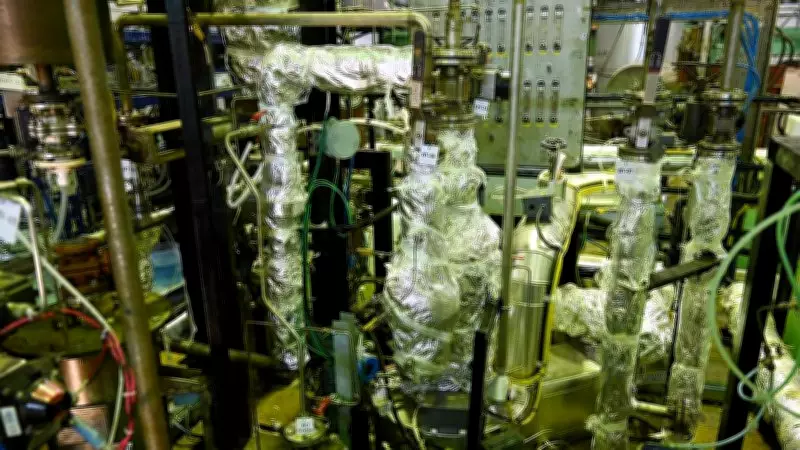
India has achieved a global first by launching the world's first nuclear heat-based hydrogen production facility at the Indira Gandhi Centre for Atomic Research (IGCAR) in Kalpakkam, Tamil Nadu. The facility uses a copper-chlorine (Cu-Cl) cycle to split water into hydrogen and oxygen, utilizing heat from nuclear reactors instead of fossil fuels.
Breakthrough in Clean Hydrogen Technology
Officials said the successful demonstration opens the door to scalable, carbon-free hydrogen production using advanced nuclear reactors in the future. Hydrogen is increasingly viewed as a key energy carrier in the global transition to clean energy systems. The Cu-Cl thermochemical cycle operates at lower temperatures (around 530°C) compared to other cycles, making it compatible with existing nuclear reactors.
Strategic Importance for Energy Security
The project aligns with India's Atmanirbhar Bharat initiative and its commitment to decarbonization. By integrating nuclear energy with hydrogen production, India aims to reduce its reliance on imported fossil fuels and enhance energy security. The facility is expected to produce hydrogen at a cost competitive with conventional methods once scaled up.

Technical Collaboration and Future Plans
The development involved collaboration between BARC and IGCAR. Researchers optimized the Cu-Cl cycle for efficiency and reliability. Future plans include linking the facility to a high-temperature reactor for continuous operation. According to a scientist involved, "This is a major step towards sustainable hydrogen production without carbon emissions."
Global Implications
Nuclear hydrogen production could provide a baseload clean energy source, complementing intermittent renewables. The International Atomic Energy Agency has highlighted nuclear hydrogen as a key technology for deep decarbonization. India's success could accelerate global adoption of nuclear-powered hydrogen plants.