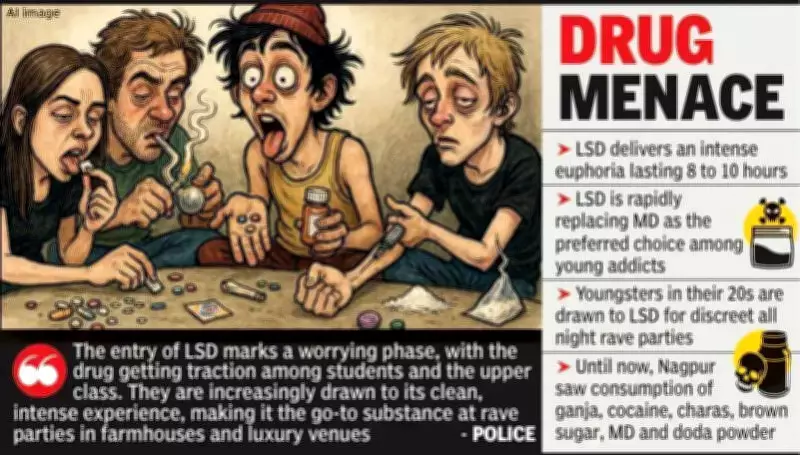
Nagpur police on Friday seized an LSD consignment valued at Rs 1.7 lakh, marking the city's first-ever bust of the powerful hallucinogen. The seizure signals a dangerous shift from MD to acid-trip drugs, officials said.
Details of the Seizure
Seventeen LSD dots, wrapped in perforated sticker sheets priced between Rs 1,500 and Rs 1,800 each, were recovered, according to police. Code-named ‘million tree', the seizure came from two computer engineering students from a reputed college, triggering intense police raids across the city.
Sources indicated that LSD is rapidly replacing other synthetic stimulants as the preferred choice, particularly in elite campuses and upscale rave parties.

Operation and Arrests
Acting on a tip-off from constable Raj Choudhary, a joint team of MIDC police, crime branch, anti-narcotics, and bharosa cell units intercepted two students near Jaitala. A woman police officer posed as a decoy customer before senior officers zeroed in on the suspects. While the peddler managed to flee, the students were trapped inside their apartment when police moved in.
LSD: The 'Last Stage Drug'
Known as the ‘last stage drug' in local parlance, LSD triggers intense euphoria lasting 8 to 10 hours, an insider explained. "Users place the tiny sticker on the roof of the mouth and chew for an immediate psychedelic effect," he said, adding that many youngsters from areas like Jaripatka, Wardhaman Nagar, Khamla, Lakadganj, Civil Lines, Byramji Town, and surrounding areas are suffering from addiction and acute withdrawal symptoms.
Shift in Drug Trends
Police sources confirmed that until now, Nagpur primarily witnessed seizures of ganja, cocaine, charas, brown sugar, MD, and doda powder. The entry of LSD marks a worrying phase, with the drug gaining traction among students and the upper class. "They are increasingly drawn to its clean, intense experience, making it the go-to substance at rave parties in farmhouses and luxury venues," a police official said.
Police Response: Operation Thunder
Police commissioner Ravinder Singal stated that ‘Operation Thunder' has entered a new dynamic phase in the crackdown against drugs. The strategy combines intelligence-based operations, technology-driven surveillance, campus monitoring, youth awareness campaigns, and community participation.