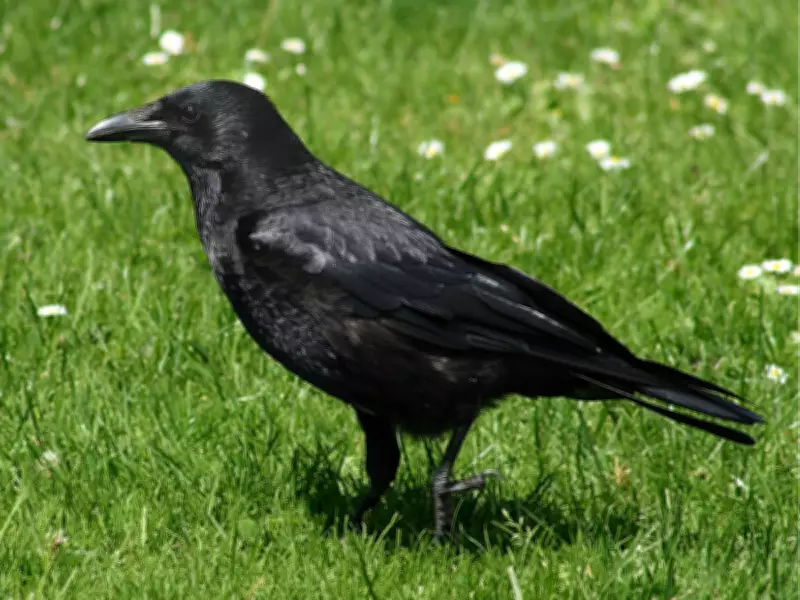
A woman in Canada who rescued an injured crow has found herself at the centre of an extraordinary friendship with a local flock, after birds began leaving small "thank-you gifts" in what appears to be a show of appreciation.
The Rescue
Leah Wilson, of British Columbia, noticed something was amiss when a large flock of crows was cawing and swooping down on her neighbours' house. She investigated and found that a young crow was trapped inside the gutters and could not escape.
As reported by CTV News and later republished by others, Wilson called her neighbours for help, who then called the fire department. With the help of a ladder from the firefighters, they rescued the crow, and then Wilson transported him to a wildlife rehab facility. After being cared for, he was released back into the wild.

An Unexpected Bond
What happened next shocked even Wilson. "He latched on to my finger and held on," Wilson recalled of the rescue. The encounter left a lasting impression on her. What she did not expect was that the crow, and perhaps its companions, would seem to remember her too.
Presents Started Appearing
Shortly after her rescue, Wilson was out walking her dog when a crow swooped down and dropped what she described as a beautiful bundle of feathers at her feet. This was not the first offering. Since the encounter, the crows have been dropping small natural items like sticks and moss along Wilson's path during dog walks. Wilson believes the crows are simply giving back in the best way they know how.
The crow Wilson rescued is easily identifiable because it was tagged in rehab and is often one of the crows to visit Wilson as she walks around the neighbourhood. In addition to visiting Wilson, they are often in the company of other crows who accompany her throughout the entire walk.
This has captured a lot of attention worldwide, mostly because it touches upon an age-old question scientists are very interested in: Do crows remember humans?
Science Suggests They Do
It turns out that crows have some of the most advanced brains of any birds on earth. As early as 2012, researchers at the University of Washington published findings from an experiment indicating that crows can, in fact, recognise human faces and will hold onto this knowledge for many years after a single meeting. The findings were published in the journal Proceedings of the National Academy of Sciences.
The scientists found that these crows could not simply identify humans as a species, but could recall and place positive or negative encounters with specific people in their memories. Brain-imaging work indicated that familiar human faces activated regions associated with attention, learning, memory and threat assessment.
Why Do Crows Leave Objects for Humans?
While scientists are unsure exactly why crows leave gifts for humans, anecdotal reports suggest corvids may leave objects for people who regularly feed or care for them. Wildlife biologist John Marzluff of the University of Washington, who has extensively researched crows' social behaviours, said these birds form intricate social circles and remember enemies as well as friends. Marzluff has discussed reports of crows leaving objects for humans with whom they appear to associate positive interactions.
What is striking about Wilson's case is the sheer number of birds who appear to have gotten involved, not just the one she rescued.
A Relationship Grounded in Respect for Nature
Wilson is Métis and says she believes maintaining a connection with nature is incredibly important, a belief that was deeply ingrained in her throughout childhood. It would seem as though this belief has even translated itself into her current relationship with the crows. What began as a rescue has attracted widespread attention and sparked discussion about how wildlife perceives and remembers human interactions.
For so many people, the story of Wilson and the crows has truly highlighted the fact that we might not realise how much wildlife really pays attention to us. If the crows in the neighbourhood are any indication, kindness really does go noticed.