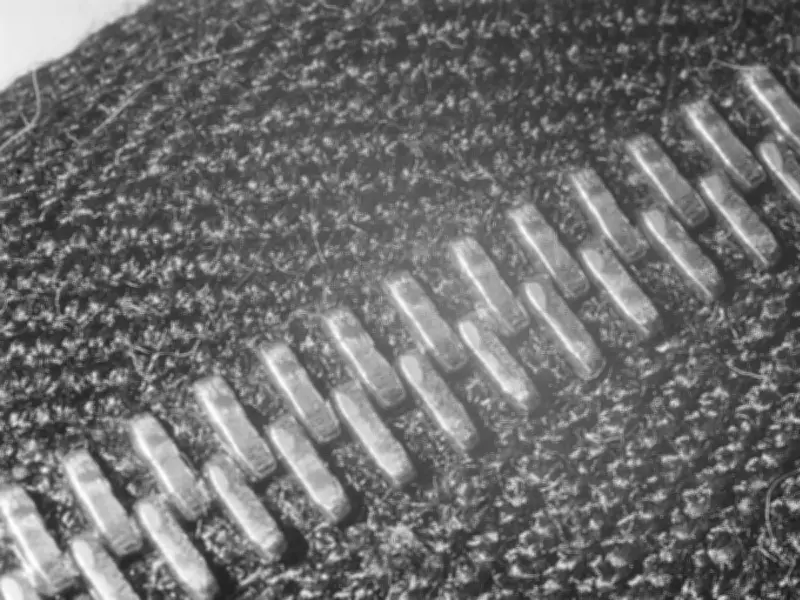
It is something we all use on a daily basis but never give a moment's thought. Be it our jackets providing us with warmth or our backpacks transporting our laptops; there's always the zipper. However, from its inception in the form of its rather crude prototypes to becoming an integral part of our lives, the zipper has had anything but an easy route. It was not a simple case of a stroke of inspiration leading to perfection. Rather, it is a perfect example of patience and engineering triumphing over ingenuity. The early models didn't become a hit owing to their cumbersome nature and tendency to get stuck.
The early failures of quick clothing fasteners
Prior to developing the modern zip as we know it today, a few inventors attempted to create solutions that would enable rapid dressing. Traditionally used techniques such as buttons, hooks, and laces took up too much time, leading people to explore alternatives. As described in the Smithsonian Libraries article, the history of development began with a device called "Automatic Continuous Clothing Closure", invented in 1851 by Elias Howe. Later on, in 1893, an American inventor Whitcomb Judson patented another system named "Clasp Locker". These inventions helped to define the basic principle, but showed their shortcomings at the same time.
The history shows that a successful product needs more than a good idea. Judson's early invention did not succeed in the marketplace, since he failed to produce anything reliable. Fastening devices that get jammed or easily opened cannot attract customers. The early history of the zipper shows that such a device must prove its reliability before consumers will trust it in clothing. What made the difference was the precision needed to keep the mechanism aligned. Whitcomb L. Judson (March 7, 1843 – December 7, 1909) was an American machine salesman, mechanical engineer and inventor.

Gideon Sundback and the 1913 invention
The critical moment in the history of the fastener came when the focus of attention moved from the conceptual level to the purely mechanical one. According to the biography provided by the Lemelson-MIT program, Gideon Sundback, a Swedish-American engineer, managed to improve the initial invention by redesigning Judson's fastener to a more compact and reliable version. Sundback built on his predecessor's work and refined the mechanism so it could withstand daily use.
In his December 1913 revision, the inventor ensured that more components were present per inch for optimal efficiency. In this sense, the history of the zipper is as much about engineering as fashion, because the invention was perfected through improvements to its mechanics and usability. Sundback managed to take what had been a rather difficult product to work with and turn it into an efficient reality thanks to engineering ingenuity.
From novelty to everyday use
Of course, even after Sundback's innovative mechanical revisions, the zipper did not instantly become widely adopted by consumers all around the world. While the device was ready to go from a technical standpoint, it needed time to be tried out and improved in actual practical application. The mechanism actually proved most useful in the beginning as a means of securing equipment in tough situations before being adopted in more luxurious garments. In fact, the military utilized the reliable mechanism to keep the uniforms and equipment of its soldiers safe during World War I.
The zipper's evolution reflects an industrial era in which small changes to existing machines could have a wide impact. A simple need of human nature like fastening clothes required almost half a century of experiments before it was finally solved. The breakthrough came through technology once the design allowed the two teeth to come together with precision. Even today, the zipper remains an example of technological ingenuity that has changed everyday life.
About the Author
TOI Science Desk

The TOI Science Desk stands as an inquisitive team of journalists, ceaselessly delving into the realms of discovery to curate a captivating collection of news, features, and articles from the vast and ever-evolving world of science for the readers of The Times of India. Consider us your scientific companion, delivering a daily dose of wonder and enlightenment. Whether it's the intricacies of genetic engineering, the marvels of space exploration, or the latest in artificial intelligence, the TOI Science Desk ensures you stay connected to the pulse of the scientific world. At the TOI Science Desk, we are not just reporters; we are storytellers of scientific narratives. We are committed to demystifying the intricacies of science, making it accessible and engaging for readers of all backgrounds. Join us as we craft knowledge with precision and passion, bringing you on a journey where the mysteries of the universe unfold with every word.