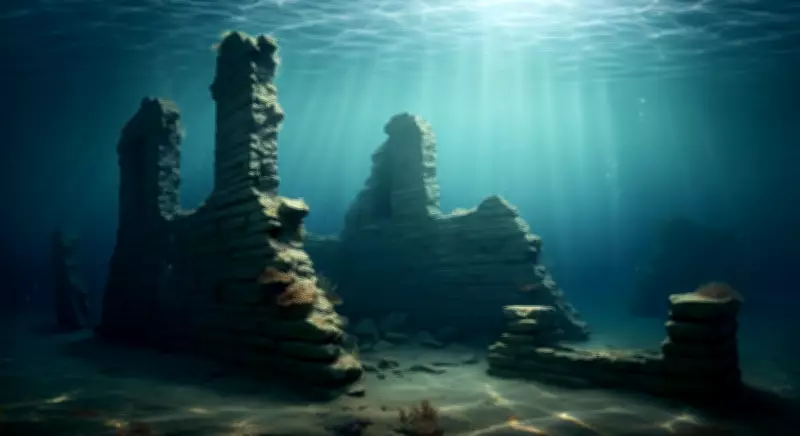
Beneath the depths of Lake Huron lies evidence of a prehistoric landscape that once connected parts of Ontario and Michigan. Known as the Alpena-Amberley Ridge, this submerged site has yielded stone hunting tools estimated to be at least 9,000 years old, providing researchers with a unique window into early human life in the region.
A Landscape Lost Beneath Water
According to the National Oceanic and Atmospheric Administration (NOAA), the Alpena-Amberley Ridge was dry land before rising lake waters submerged it. Today, the site preserves 9,000-year-old stone structures, artifacts, and environmental remains. What makes this ridge significant is not just the presence of ancient stone features but that they exist within a once-functioning landscape. NOAA states that the site contains evidence of “9,000-year-old stone structures, artifacts, and ancient environmental materials,” allowing researchers to study human activity alongside the environment.
This ridge formed a natural pathway connecting regions that were not separated by water in the past. Prehistoric people crossed this area and hunted when the geography was vastly different from the Great Lakes of today. As lake levels rose after the Ice Age, the ridge became submerged. The underwater environment has helped preserve archaeological remains better than many land-based sites.

Stone Lanes and Hunting Blinds
The most significant discoveries include stone hunting drives and blinds used for organized caribou hunts. According to NOAA’s expedition documentation, these structures were built on exposed land before submergence. Researchers believe some stone alignments may have directed migrating animals toward concealed hunters. The NSF Public Access Repository summary describes the Lake Huron project as an effort to identify prehistoric caribou hunting sites beneath the lake, indicating that the structures were closely linked to food-gathering and organized hunting activities.
Caribou hunting required planning and coordination. The construction of drive lanes and blinds shows that inhabitants understood how to adapt their physical environment for efficient hunting.
Technology Unlocking the Lake Floor
Archaeologists used modern underwater methods to explore the finds. The Alpena-Amberley Ridge Project employed multibeam sonar surveys to map the lake bottom, followed by remotely operated vehicles (ROVs) and scuba divers for closer inspection. Sonar mapping reveals patterns such as stone alignments over vast areas, while dives allow direct observation. The study aims to create virtual reality models of the ridge as it appeared thousands of years ago.
Why the Discovery Matters
The Alpena-Amberley Ridge is an exemplary site for studying hidden chapters of human history. It helps researchers understand how environmental changes after the Ice Age affected humans, forcing adaptation to new migration paths and resources. The site tells a story of how people organized movement, gathered food, and adjusted to a changing world. It also provides continuity between past and present, as lost shorelines become visible through sonar and other research tools.
About the Author: The TOI Science Desk is a team of journalists dedicated to covering discoveries in science, from genetic engineering to space exploration, making complex topics accessible to all readers.