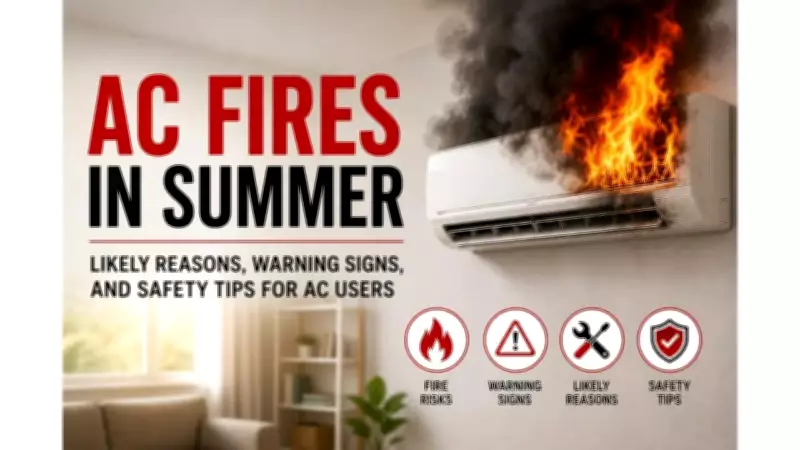
As summer heat rises across the country, reports of air conditioner (AC) fires and related incidents are also increasing, raising concerns about safety in homes and offices. Experts say that most of these incidents are linked to poor maintenance, overuse, or electrical faults that build up over time.
Why Do AC Fires Happen More Often in Summer?
AC units have to work harder when it's extremely hot outside, and they often run for long periods without stopping. This constant use puts stress on parts like compressors, wiring, and filters. If the system isn't properly maintained, this stress can cause overheating or electrical problems, leading to fires. Dust, blocked airflow, and poor ventilation further increase the risk. Small issues that go unnoticed over time turn into bigger problems during peak summer usage.
Common Reasons Behind AC Fires
- Dirty air filters: Dust and dirt block airflow, forcing the AC to work harder and increasing fire risk.
- Blocked vents: Furniture or curtains covering vents restrict airflow, leading to uneven cooling and extra pressure on the system.
- Electrical issues: Loose wiring, faulty connections, or poor installation can trigger short circuits or overheating.
- Incorrect temperature settings: Setting the AC to very low temperatures for long periods strains the system.
- Improper AC size: An AC that is too large or too small for a room may switch on and off frequently, increasing wear and tear.
- Poor insulation: If cool air escapes easily, the AC has to work harder, leading to overheating over time.
Warning Signs Before an AC Fire
AC systems often show early signs before a major failure. Users should watch for:

- Burning smell or smoke: Indicates overheating or electrical faults.
- Unusual noises: Loose or damaged parts may cause strange sounds.
- Frequent on-off cycles: Can signal internal issues.
- Weak or uneven cooling: May point to blocked airflow or system problems.
Ignoring these signs increases the risk of serious damage or fire.
Split vs Window AC: Safety Variations
Window ACs are single units housing all parts, so heat builds up faster if airflow is blocked or maintenance is poor. The electrical load is concentrated, making overheating more likely. Split ACs have indoor and outdoor units, which helps control indoor heat but introduces risks like wiring issues between units, refrigerant leaks, and poor outdoor unit ventilation. Window ACs require better airflow around the unit, while split ACs need proper installation, wiring checks, and outdoor unit care.
Safety Tips for Window AC Users
- Ensure proper installation: The unit should be securely fixed and slightly tilted outward for drainage.
- Avoid blocking airflow: Keep both front and back sides clear for heat release.
- Clean filters frequently: Dirty filters block airflow and cause overheating.
- Use a dedicated power source: Avoid extension cords and ensure stable wiring.
- Check for overheating signs: If the unit feels too hot or smells burnt, switch it off immediately.
- Keep surroundings dust-free: Dust buildup affects internal parts and increases fire risk.
Role of Installation in Preventing AC Fires
Correct installation is key to reducing fire risk. Even a good-quality AC can become unsafe if installed improperly. Poor wiring, wrong placement, or lack of ventilation often start at installation. ACs draw high power, so they must be connected to a proper circuit with correct wiring, earthing, and a dedicated power supply. Loose connections or shared sockets can lead to overheating and short circuits. For window ACs, improper fitting or blocked rear ventilation traps heat. For split ACs, placing the outdoor unit in a closed space can cause compressor overheating. Correct sizing and load calculation are also critical: an undersized AC overworks continuously, while an oversized one cycles frequently, increasing stress. Installation should always be done by trained technicians following safety standards.

Tips to Optimize Cooling Performance of Split ACs
Voltas recommends these tips:
Tip 1: Set the Right Temperature (24°C–26°C)
This is the most energy-efficient range. Running at very low temperatures forces the compressor to work harder, increasing power usage and wear. Government recommendations suggest 24°C for comfort and efficiency. Each degree lower than 24°C can increase power consumption by 6%.
Tip 2: Clean AC Filters Regularly
Dusty filters block airflow, reducing cooling efficiency and increasing energy use by up to 15%. Clean filters every two weeks during peak summer, or weekly in dust-prone areas. Simply remove filters, rinse under cold water, dry, and reattach.
Tip 3: Use Smart Features (Sleep Mode, Timers, Eco Mode)
Sleep mode adjusts temperature at night to prevent overcooling. Timer turns off the AC automatically after a few hours. Eco mode maintains moderate cooling with reduced compressor usage. These features cut down unnecessary energy use.
Tip 4: Keep Your Room Sealed & Shaded
Use thick curtains or blackout blinds to block sunlight. Seal gaps in doors and windows with weather stripping. A well-insulated room cools faster and stays cool longer.
Tip 5: Schedule Regular Maintenance
Annual servicing should include gas level inspection, condenser coil cleaning, fan and blower check, thermostat calibration, and electrical connections check. Schedule maintenance before summer begins. Proper servicing improves efficiency by 10%–15% and extends AC life.
Bonus Tips to Maximize Cooling and Savings
- Use ceiling fans alongside AC: Fans distribute cold air evenly, allowing you to raise the thermostat by 1–2 degrees without discomfort.
- Avoid heat-generating appliances during the day: Microwaves, ovens, and irons release heat, making your AC work harder. Use them in early mornings or late evenings.
- Use Energy Star-rated ACs: If your AC is over 8–10 years old, consider upgrading to a BEE 5-star or Energy Star model for long-term savings.
How to Clean AC Air Filters
Clean filters every two weeks or when the filter-cleaning reminder appears. Steps: Slide the filter off, use a soft brush or vacuum to remove dust, soak in water and mild detergent for 30 minutes, rinse, air dry in shade, and reinstall.
Conclusion
Cooling your home in summer doesn't have to cost a fortune. With smart adjustments—setting the right temperature, cleaning filters, using smart modes, sealing the room, scheduling maintenance, and using fans—you can cut electricity bills and improve AC performance. Small changes lead to big savings. A well-maintained, efficiently used AC lasts longer and keeps you cool without breaking the bank.