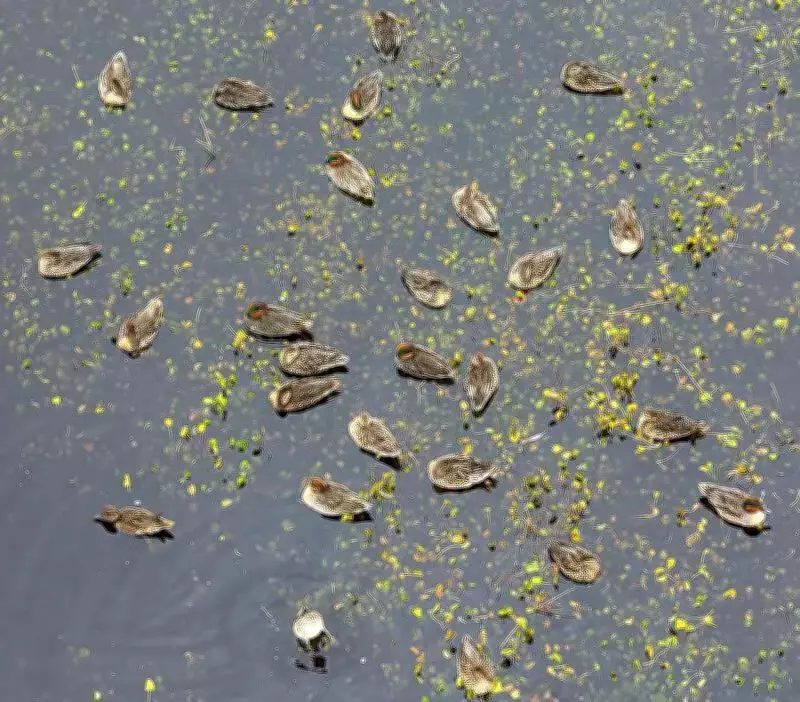
A researcher of Gujarat origin has developed an advanced system combining drones and artificial intelligence that is transforming the way waterbird populations are monitored in wetlands. This innovative approach offers significantly greater accuracy than conventional methods and opens new avenues for science-driven conservation.
Innovative Monitoring Approach
Akshit Suthar, a PhD candidate at Clemson University in South Carolina, has pioneered an integrated method that merges drone-based aerial surveys with passive acoustic monitoring. This tackles longstanding challenges in bird counting within dense and hard-to-access wetland ecosystems. Suthar was honored with the Best Graduate Researcher Award from Clemson University's College of Agriculture, Forestry and Life Sciences.
Limitations of Traditional Surveys
Traditional bird surveys, conducted from the ground using binoculars or scopes, are often hampered by poor visibility, difficult terrain, and disturbance to birds, leading to undercounting and incomplete ecological data. Suthar's approach overcomes these limitations by deploying drones equipped with color and thermal imaging cameras. This enables the detection of birds even in thick vegetation through their heat signatures.

Acoustic Monitoring and AI Analysis
The system is further enhanced by passive acoustic monitoring, where recording devices capture bird calls, especially of elusive or nocturnal species. These recordings are later analyzed using AI-based tools to identify species. Preliminary findings indicate that drone-based surveys can detect 60–70% more birds than traditional ground-based methods, marking a substantial improvement in monitoring accuracy. Suthar's work is also among the first to systematically develop a drone-based aerial strip transect method that integrates both color and thermal imaging.
Environmental Modeling and Conservation Insights
Beyond counting birds, Suthar's research links bird populations with habitat variables such as water levels and vegetation structure through environmental modeling. This provides actionable insights for wetland managers and supports more effective biodiversity conservation strategies. The study focuses on historically significant wetland impoundments along coastal South Carolina, originally developed in the 18th and 19th centuries for rice cultivation. Today, these wetlands serve as vital habitats for migratory waterfowl along the Atlantic Flyway.
Collaboration and Background
Working at the James C Kennedy Waterfowl and Wetlands Conservation Center under Dr. Jim Anderson, Suthar combines drone technology, deep machine learning, and ecological science to create scalable and cost-effective monitoring tools. Originally from Petlad in Anand district of Gujarat, Suthar moved to the US in 2019. He noted that while such integrated technologies are not yet widely applied in Gujarat, they hold strong relevance as wetland characteristics that support waterbird populations are similar across regions globally.
Recognition and Future Impact
Suthar has published 16 research papers, with several more under review, and has a book chapter in press. He has also secured multiple research grants and travel awards, with his work gaining recognition for advancing the use of emerging technologies in wildlife conservation. This breakthrough holds promise for wetland ecosystems worldwide, offering a new paradigm for bird population monitoring and conservation.