While artificial intelligence continues to generate discussions about potential job displacement across various sectors, prominent technology leaders are now highlighting a significant counter-narrative. Several tech executives have acknowledged AI-led workforce reductions while simultaneously emphasizing the technology's remarkable capacity to generate entirely new categories of employment opportunities.
Davos Declaration: The Largest Infrastructure Buildout in History
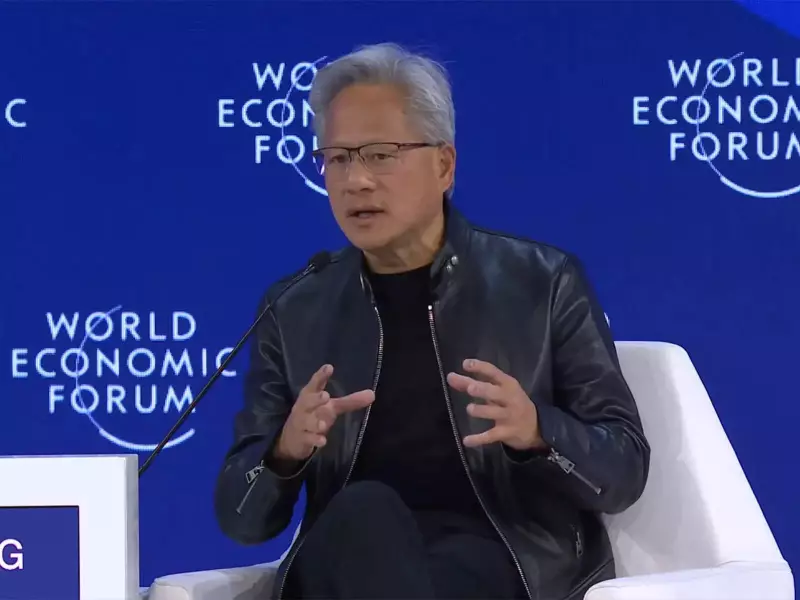
Speaking at the prestigious World Economic Forum 2026 in Davos, Switzerland, Nvidia CEO Jensen Huang made a compelling prediction about an unexpected employment gold rush emerging in traditionally lower-paying sectors. Huang declared that the massive global infrastructure required to power next-generation AI data centers will fundamentally transform conventional blue-collar occupations into lucrative six-figure careers.
Transforming Traditional Trades into High-Tech Careers
Huang presented a detailed vision during his conversation with BlackRock CEO Larry Fink, arguing that the $7 trillion global initiative to construct data centers and specialized AI factories represents the largest infrastructure buildout in human history. This monumental undertaking, according to Huang, will not be confined to software engineers and computer scientists but will create unprecedented opportunities for skilled tradespeople who physically construct these technological marvels.

The Nvidia CEO elaborated: "First of all, this is the largest infrastructure buildout in human history. That's going to create a lot of jobs. And it's wonderful that the jobs are related to tradecraft. We're going to have plumbers and electricians and construction and steel workers and network technicians and people who install and fit out the equipment."
Six-Figure Salaries for Skilled Trades
Huang specifically highlighted the United States as experiencing a significant boom in this sector, noting that salaries for these positions have nearly doubled in recent times. "All of these jobs we're going to see... in the United States we're seeing quite a significant boom in this area. The salaries have gone up nearly double. And so we're talking about six-figure salaries for people who are building chip factories or computer factories or AI factories," he emphasized, pointing to a fundamental shift in pathways to high-paying careers.
The technology leader expressed particular enthusiasm about this development, adding: "And we have a great shortage in that and I'm really delighted to see so many people in so many countries really recognizing this important area. Everybody should be able to make a great living."
Industry Leaders Echo Workforce Concerns
Adding substantial weight to Huang's predictions, BlackRock CEO Larry Fink shared his own observations about workforce limitations. "I've even told members of the Trump team that we're going to run out of electricians that we need to build out AI data centers. We just don't have enough," Fink revealed during the Davos conversation, highlighting the critical shortage of skilled tradespeople that could potentially constrain AI infrastructure development.
Consistent Predictions from Technology Leadership
This is not the first time Huang has highlighted this emerging trend. Last October, the Nvidia CEO predicted that demand for electricians, plumbers, and carpenters would rise dramatically as data center construction accelerates globally. Speaking to Channel 4 News in the United Kingdom, Huang stated: "If you're an electrician, you're a plumber, a carpenter—we're going to need hundreds of thousands of them to build all of these factories. The skilled craft segment of every economy is going to see a boom. You're going to have to be doubling and doubling and doubling every single year."

Rethinking Educational Priorities
In a particularly revealing comment about shifting educational priorities, Huang suggested that if he were a student today, he would choose physical sciences over software disciplines. "For the young, 20-year-old Jensen, that's graduated now, he probably would have chosen... more of the physical sciences than the software sciences," he remarked, indicating a potential rebalancing of educational focus toward the trades that will build AI's physical infrastructure.
This comprehensive perspective from technology leadership suggests that while AI will undoubtedly transform the employment landscape, it may create unexpected opportunities in sectors that have traditionally been overlooked in discussions about technological advancement. The massive global investment in AI infrastructure appears poised to create a renaissance for skilled trades, offering lucrative career paths that combine traditional craftsmanship with cutting-edge technology.